Operational excellence is not built overnight—it is created through consistent discipline, structured systems, and a culture of continuous improvement. One of the most proven approaches to achieve this is the five s methodology lean tools framework.
Across industries, especially in 5s methodology in manufacturing, organizations are using 5S to streamline operations, reduce waste, and build highly efficient workplaces. At Faber Infinite Consulting, we’ve seen first hand how structured five s methodology implementation can transform factories and offices into performance-driven environments.
What is the Five S Methodology?
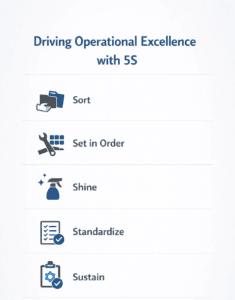
The five s lean manufacturing approach originates from Japan and focuses on workplace organization and standardization.
| Step | Japanese Term | Meaning | Key Focus |
| 1 | Seiri | Sort | Remove unnecessary items |
| 2 | Seiton | Set in Order | Organize for easy access |
| 3 | Seiso | Shine | Clean and inspect |
| 4 | Seiketsu | Standardize | Maintain consistency |
| 5 | Shitsuke | Sustain | Build discipline |
This structured approach is widely used in five s in manufacturing India to improve productivity and safety.
Why 5S is the Foundation of Operational Excellence
Operational excellence requires visibility, control, and consistency. 5S enables all three.
Key Impact Areas
| Area | How 5S Helps | Business Outcome |
| Productivity | Reduces search time | Faster operations |
| Quality | Eliminates errors due to clutter | Fewer defects |
| Safety | Removes hazards | Lower accidents |
| Cost | Cuts waste | Improved margins |
| Culture | Builds discipline | Sustainable improvement |
Step-by-Step Guide: 5S Implementation
How to Implement Five S Methodology in Your Small Factory
| Step | Action | Practical Example |
| Sort | Identify unnecessary items | Remove unused tools |
| Set in Order | Assign fixed locations | Label racks and shelves |
| Shine | Clean regularly | Daily cleaning checklist |
| Standardize | Create SOPs | Visual work instructions |
| Sustain | Monitor and audit | Weekly 5S audits |
This step-by-step approach is crucial for five s methodology implementation success.
Role of Visual Management in 5S
Visual management systems for 5S make processes transparent and easy to follow.
Examples
- Color-coded storage zones
- Floor markings
- Shadow boards
- Visual SOP charts
These tools help teams instantly identify abnormalities, improving efficiency and control.
How 5S Improves Factory Efficiency
Improve Factory Efficiency with 5S
| Problem | 5S Solution | Result |
| Time wasted searching | Organized storage | Faster workflows |
| Equipment downtime | Clean and inspect | Better maintenance |
| Space constraints | Remove clutter | More usable space |
Organizations adopting five s methodology consultants often see measurable gains within weeks.
Can 5S Reduce Manufacturing Lead Time?
Yes—by eliminating waste and improving flow.
How it Works
- Faster material movement
- Reduced waiting time
- Improved layout efficiency
Result: Shorter lead times and quicker order fulfilment.
Why 5S Fails Without Leadership Buy-In
One of the most common reasons for failure is lack of leadership involvement.
Key Issues
- No accountability
- Inconsistent audits
- Lack of training
Solution
| Leadership Role | Impact |
| Set expectations | Drives discipline |
| Participate in audits | Builds seriousness |
| Provide resources | Enables execution |
The role of management in 5S success is critical for long-term sustainability.
5S and Employee Safety in India
How the Five S Methodology Improves Employee Safety India
- Eliminates workplace hazards
- Improves visibility
- Ensures proper storage
- Reduces accidents
In Indian manufacturing environments, workplace organization India 5S is becoming essential for compliance and safety.
Common 5S Implementation Challenges & Solutions
5S Implementation Challenges Solutions
| Challenge | Root Cause | Solution |
| Resistance to change | Lack of awareness | Conduct training |
| Poor sustainability | No audits | Regular monitoring |
| Inconsistent standards | No SOPs | Standardization |
| Low engagement | No ownership | Assign responsibilities |
Expert Insights & Industry Standards
The 5S methodology is a core part of lean manufacturing systems, widely adopted by global leaders.
Authoritative References
- Lean Enterprise Institute
- Industry 4.0 integration frameworks
These standards validate the effectiveness of five s methodology lean tools in achieving operational excellence.
How 5S Extends Beyond Manufacturing
5S is not limited to factories—it is equally effective in offices.
Step by Step Guide to the Five S Methodology in Offices
- Organize digital files
- Standardize documentation
- Maintain clean workspaces
- Implement visual dashboards
Conclusion: Turning Discipline into Results
The five s methodology in manufacturing is more than just cleaning and organizing—it is a strategic tool for driving operational excellence.
Actionable Takeaways
- Start small but stay consistent
- Focus on behavior change, not just tools
- Use visual systems for control
- Ensure leadership involvement
- Track measurable outcomes
Organizations that treat 5S as a culture—not a one-time activity—achieve long-term success.
FAQs
-
What is the main goal of the five s methodology?
The goal is to create a clean, organized, and efficient workplace that improves productivity, safety, and quality.
-
How long does 5S implementation take?
Initial implementation can take 4–8 weeks, but sustaining it requires continuous effort.
-
Can small businesses use 5S?
Yes, especially for those looking for how to implement five s methodology in your small factory, it is highly effective and cost-efficient.
-
What industries benefit from 5S?
Manufacturing, healthcare, logistics, offices, and retail—all benefit from five s lean manufacturing principles.
-
Do we need consultants for 5S implementation?
While not mandatory, five s methodology consultants help accelerate results and avoid common mistakes.
If you’re looking to improve factory efficiency with 5S or build a culture of operational excellence, Faber Infinite Consulting can help you implement a structured, result-driven approach.