The manufacturing landscape in Egypt is undergoing a profound transformation. As part of the Egypt Vision 2030 strategy, the nation is aggressively pursuing a 20% industrial contribution to the GDP. With nearly EGP 252.8 billion in targeted investments for the 2025/2026 fiscal year, a staggering 154% increase from previous periods, the pressure on facilities to perform has never been higher.
In this high-stakes environment, the physical arrangement of a facility is no longer just a logistical detail; it is a strategic asset. A well-executed factory layout design acts as the silent engine of growth, determining whether a company can scale to meet export demands or if it will be held back by internal friction and rising costs.
How does factory layout design in Egypt influence the 2030 industrial vision?
The ambitious targets set by the Egyptian government require more than just new equipment; they require a fundamental rethink of how space is used. For Egyptian manufacturers, the transition from traditional setups to modern configurations is essential to move higher on the Smart Industry Readiness Index (SIRI).
A strategic layout ensures that the influx of capital into sectors like automotive components and chemicals results in actual output. When a facility is planned with the national vision in mind, it integrates better with global supply chains. By minimizing the distance materials travel, often reducing movement by over 20% in optimized settings, plants can handle the increased volume that the 2026 growth targets demand.
Why is industrial layout design Egypt critical for local market competitiveness?
Egypt’s domestic market scale is one of its greatest strengths, currently ranked 17th globally in PPP. However, to capture this market, local producers must compete with high-quality imports. Industrial layout design directly affects the unit cost of production.
By eliminating “dead zones” and optimizing the “hidden factory,” those areas where redundant processes occur unnoticed, manufacturers can lower overheads significantly. Data from various implementation frameworks suggests that reorganizing a production line can increase space utilization by up to 17% without the need for expensive structural expansions. This allows local firms to reinvest savings into product quality and innovation, ensuring they remain the preferred choice for Egyptian consumers.
What role does factory layout planning in Egypt play in workforce safety and morale?
With a target to double industrial employment to seven million jobs by 2030, the human element of manufacturing cannot be overlooked. Factory layout planning in the Egyptian context must prioritize ergonomics and safety to maintain a stable, productive workforce.
A layout that separates pedestrian traffic from heavy machinery, like forklifts, reduces the risk of accidents. Furthermore, reducing “unnecessary motion,” one of the key wastes identified in operational excellence frameworks, lessens worker fatigue. When tools and materials are placed within a natural “reach zone,” productivity naturally rises. Statistics show that safe and organized environments lead to higher retention rates, which is vital as the sector competes for skilled labor in emerging technical fields.
Can a manufacturing plant layout in Egypt support the transition to green industry?
Sustainability is a cornerstone of the current industrial plan, with a goal to increase green industries to 5% of the sector. A manufacturing plant layout designed for the future incorporates energy-efficient systems and waste management directly into the floor plan.
- Resource Audits: Strategic layouts allow for easier monitoring of energy and water usage by zone.
- Waste Reduction: By positioning recycling stations and scrap collection points at the source of generation, plants can minimize the contamination of materials and improve recovery rates.
- Emissions Control: Properly planned ventilation and filtration zones ensure that heavy industrial processes do not negatively impact the surrounding environment or worker health.
How does a smart factory layout in Egypt integrate Industry 4.0 technologies?
As Egyptian manufacturers adopt digital twins and AI-driven predictive maintenance, the physical floor must be ready to support these technologies. A smart factory layout is characterized by its “digital readiness.”
This includes ensuring robust Wi-Fi or 5G coverage across the floor for IoT sensors and providing flexible utility access (power and data) so that machines can be reconfigured as AI algorithms suggest new optimizations. In many modern Egyptian facilities, the use of custom software to track daily yield and machinery maintenance is becoming the norm. A layout that supports this visibility, perhaps through centrally located digital dashboards, allows managers to make real-time decisions that prevent unplanned downtime.
Why is a lean factory layout in Egypt the foundation for operational excellence?
Lean factory layout principles focus on the relentless pursuit of flow. In a typical non-optimized plant, a product might spend 90% of its time waiting or being moved, and only 10% being actually processed.
By applying value stream mapping (VSM), designers can visualize the entire journey of a product from raw material to finished good. The goal is a “straight-line” or “U-shaped” flow that eliminates backtracking. In high-growth sectors like ready-made garments, which saw a 21.7% export growth in late 2025, even a small reduction in lead time through a lean layout can mean the difference between meeting an international shipping deadline and losing a contract.
How does lean manufacturing layout Egypt reduce long-term operational costs?
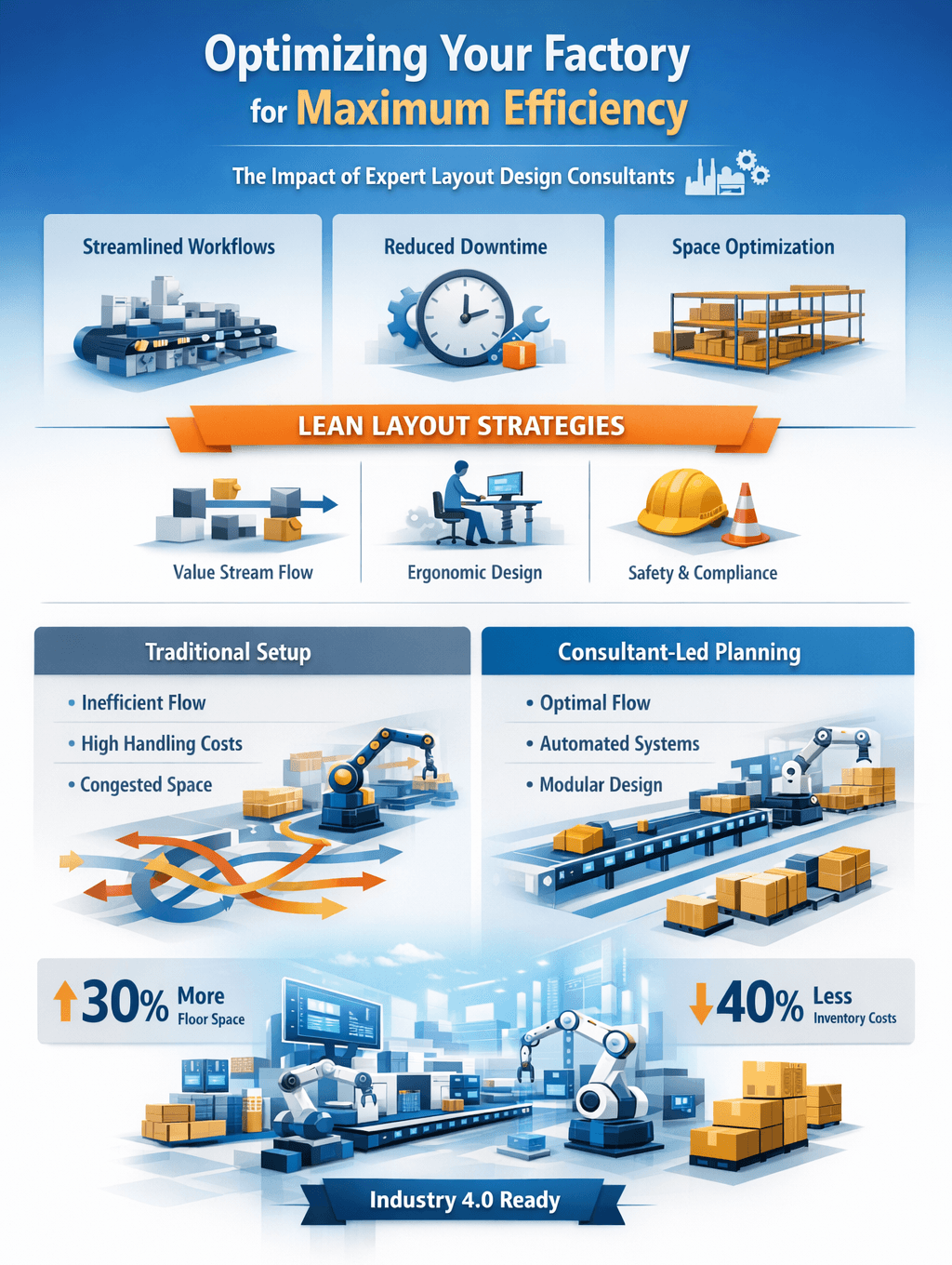
Implementing a lean manufacturing layout is one of the most cost-effective ways to improve the bottom line. Unlike purchasing new technology, which requires high capital expenditure, redesigning a layout often involves rearranging existing assets to work more harmoniously.
| Benefit Category | Impact of Lean Layout | Typical Metric Improvement |
| Inventory | Reduces Work-in-Progress (WIP) by shortening lead times. | Up to 34% reduction |
| Productivity | Minimizes non-value-added movement and waiting. | Up to 42% improvement |
| Space | Eliminates clutter and optimizes storage density. | ~15-20% more usable space |
These improvements contribute to a healthier EBITDA multiple, making Egyptian companies more attractive to the foreign direct investment (FDI) the government is actively seeking.
FAQs
How does factory layout design improve productivity in Egypt?
Productivity is improved by aligning the physical space with the production sequence. By minimizing the “travel distance” of both parts and people, a well-designed layout reduces the time wasted on logistics, allowing the workforce to focus on value-added tasks. This is particularly effective in Egypt’s burgeoning automotive and electronics sectors.
What is Industry 4.0 factory layout design in Egypt?
It involves creating a “flexible” floor plan that can accommodate sensors, robotics, and automated guided vehicles (AGVs). It often utilizes “Digital Twins,” virtual replicas of the factory, to simulate changes before they are physically implemented, saving time and reducing the risk of costly errors.
Is reducing manufacturing costs through factory layout design in Egypt possible?
Yes. Beyond just saving space, a strategic layout reduces “material handling” costs, which can account for a significant portion of total operating expenses. By streamlining the path from receiving to shipping, companies reduce the need for excess forklifts, labor, and storage racks.
Where can I find lean factory layout design consultants in Egypt?
There is a growing ecosystem of consultancy firms in Egypt specializing in Lean Design. We at Faber Infinite specialize in Lean Facility Design (LFD). Our experts use data-driven 15-step frameworks to help both Greenfield (new) and Brownfield (existing) projects achieve global efficiency standards.
Are there factory layout redesign case studies in Egypt?
Many companies in the FMCG and pharmaceutical sectors have successfully undergone “re-layouting.” These projects typically report significant gains in throughput and a reduction in “throughput time” by rearranging workstations into cells rather than traditional functional departments.
Conclusion
The manufacturing sector is the heartbeat of the “New Egypt.” By investing in professional factory layout design, manufacturers are not just moving machines; they are building the infrastructure for a more competitive, sustainable, and prosperous future.