Indian manufacturing is at a defining moment. Rising input costs, global competition, supply chain volatility, and stricter compliance norms are pushing factories to operate smarter—not just harder.
Yet, in our experience working with multiple Indian manufacturing plants at Faber Infinite Consulting, one pattern consistently emerges: most factories don’t fail due to lack of strategy. They struggle because daily execution is inconsistent.
That’s where Daily Work Management becomes critical.
This blog explores why daily work management in Indian manufacturing plants is no longer optional, how it drives measurable impact, and how organizations can implement a structured daily work management system for sustained results.
What Is Daily Work Management?
Daily Work Management (DWM) is a structured system that ensures daily alignment between production targets, manpower utilization, quality standards, and business objectives.
It integrates:
- Daily operations management
- Performance management system
- Standard work management
- Lean daily management principles
In simple terms, it ensures that what gets planned at the leadership level actually gets executed on the shop floor—every single day.
Why Daily Work Management in India Matters More Today
Indian factories operate in a complex ecosystem:
| Challenge | Impact Without DWM | Impact With DWM |
| High labor variability | Inconsistent output | Structured manpower deployment |
| Frequent machine downtime | Reactive firefighting | Proactive issue tracking |
| Multi-product production | Planning confusion | Clear daily production boards |
| Cost pressures | Margin erosion | Daily cost visibility |
| Skill gaps | Quality rework | Standardized work instructions |
According to a report by McKinsey & Company, manufacturing productivity gaps can range between 20–30% due to operational inefficiencies. Many of these losses stem from weak daily control mechanisms.
Real-World Experience from Indian Factories
At Faber Infinite Consulting, we have seen firsthand how a structured daily work management system in India transforms plant performance.
Case Insight: Auto Component Manufacturer (India)
Situation:
- OEE at 58%
- Daily firefighting meetings
- No standard performance dashboard
Intervention:
- Introduced structured Daily Management System
- Created visual performance boards
- Defined escalation matrix
- Implemented standard work audits
Results in 90 Days:
| KPI | Before | After |
| OEE | 58% | 72% |
| Rejection Rate | 4.8% | 2.9% |
| Daily Review Duration | 2 hrs unstructured | 30 min structured |
| On-Time Delivery | 81% | 94% |
The shift wasn’t about adding complexity—it was about creating rhythm and accountability.
Core Elements of a Daily Work Management System
- Clear Daily KPIs
Every production line must track:
- Output vs Plan
- Downtime (categorized)
- Rejection %
- Manpower productivity
- Safety incidents
This aligns with lean principles advocated by Lean Enterprise Institute, emphasizing visual management and daily accountability.
- Structured Daily Review Meetings
A strong daily management system includes:
| Level | Frequency | Focus |
| Shop Floor | Daily | Output, downtime, quality |
| Department | Daily | Bottlenecks, cross-functional issues |
| Plant Leadership | Weekly | Trend analysis, escalation |
Meetings must be data-driven—not discussion-driven.
- Standard Work Management
Without defined standard work:
- Variations increase
- Quality fluctuates
- Training becomes inconsistent
Standard work ensures that performance does not depend on individual heroics.
- Visual Management Systems
Visual boards create transparency.
Examples include:
- Production tracking boards
- Downtime heat maps
- Daily action tracker
- Safety metrics display
Factories practicing lean daily work management in India consistently outperform those relying on verbal reporting.
- Escalation & Accountability Framework
A DWM system must clearly define:
- Who solves what
- Escalation timelines
- Review frequency
- Closure validation
This prevents recurring problems.
How to Implement Daily Work Management in India
Many plants ask: How to implement daily work management in India without disrupting production?
Here is a practical roadmap:
| Step | Action | Outcome |
| 1 | Identify 5–7 critical KPIs | Clarity of measurement |
| 2 | Create daily performance board | Transparency |
| 3 | Fix 20-minute daily review slot | Discipline |
| 4 | Define escalation matrix | Faster issue resolution |
| 5 | Conduct weekly leadership review | Trend correction |
| 6 | Audit adherence monthly | Sustainability |
The key is consistency, not complexity.
Linking DWM to Operational Excellence
Daily work management for operational excellence in India is not a separate initiative—it is the foundation.
According to research by Boston Consulting Group, plants with structured daily management routines show up to 15–20% higher productivity compared to reactive operations.
Why?
Because daily discipline compounds into long-term excellence.
Common Mistakes in Daily Work Management in Indian Factories
| Mistake | Consequence |
| Too many KPIs | Confusion |
| No visual tracking | Lack of ownership |
| Meetings without data | Wasted time |
| No escalation rule | Repeated issues |
| Leadership inconsistency | System collapse |
Building a Continuous Improvement Culture
A strong daily work management system strengthens:
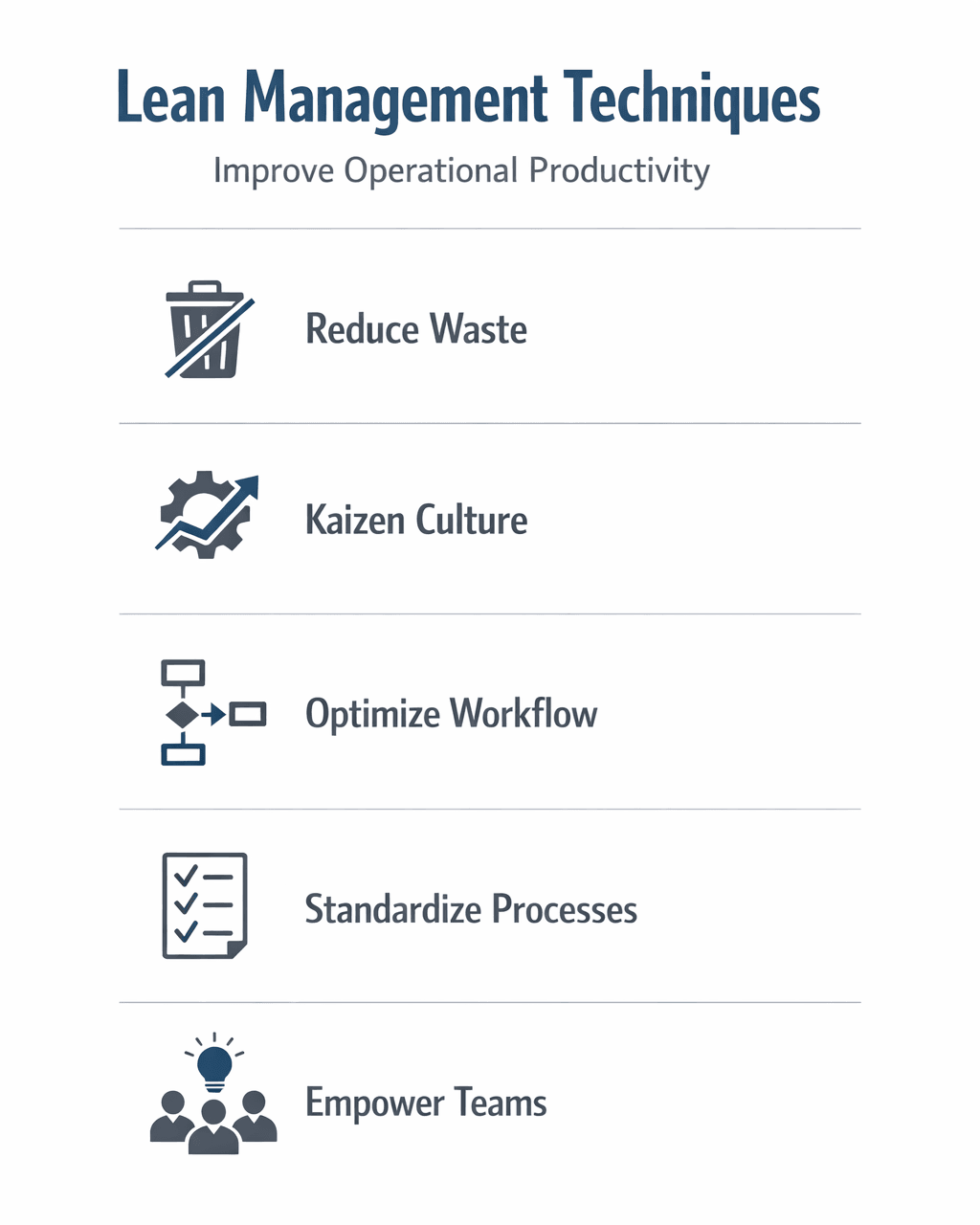
- Lean daily management
- Performance management system
- Continuous improvement culture
When teams see daily metrics improving, engagement increases. Workers feel connected to plant goals. Leadership gets predictable performance.
That’s how daily work management for productivity improvement in India becomes sustainable.
The Strategic Advantage for Indian Manufacturers
Indian factories competing globally cannot rely on periodic reviews or monthly dashboards.
They need:
- Daily visibility
- Real-time decision-making
- Structured accountability
- Process-driven culture
Daily operations management is no longer optional—it is a competitive advantage.
Actionable Takeaways
If you are a plant head or operations leader:
- Audit your current daily review process.
- Reduce KPIs to critical few.
- Make performance visible.
- Fix structured meeting cadence.
- Track adherence weekly.
- Train supervisors on standard work management.
Small daily discipline creates large annual impact.
FAQs
- What is daily work management in Indian manufacturing plants?
Daily work management in Indian manufacturing plants is a structured system to track daily KPIs, review performance, and resolve operational issues systematically.
- How does lean daily work management in India improve productivity?
Lean daily management reduces waste, improves visibility, standardizes work processes, and ensures quick problem resolution, leading to higher output and lower rework.
- How long does it take to implement a daily work management system in India?
Basic implementation can start within 30 days. Stabilization and cultural integration typically take 3–6 months.
- What KPIs should be tracked in daily work management?
Key KPIs include output vs plan, downtime, rejection rate, manpower productivity, and safety incidents.
- Why do daily management systems fail in Indian factories?
They fail due to lack of leadership consistency, excessive KPIs, no structured escalation process, and absence of visual management.
Final Thought
Daily work management in Indian factories is not about meetings or boards—it is about discipline, transparency, and leadership commitment.
Factories that master daily execution build resilience, productivity, and operational excellence—one day at a time.
Contact us