
The Six Sigma DMAIC approach is a structured problem-solving methodology widely used to improve manufacturing performance, reduce defects, and enhance operational efficiency. In industries across Egypt, it is one of the most effective frameworks for achieving consistent quality improvement and operational control.
DMAIC is commonly implemented by Six Sigma consultants in Egypt for manufacturing quality improvement to solve complex production issues using data-driven analysis rather than assumptions.
It provides a clear, step-by-step roadmap that helps organizations move from identifying problems to implementing sustainable solutions.
Key Takeaways
- DMAIC is a structured Six Sigma methodology for process improvement
- It includes five phases: Define, Measure, Analyze, Improve, Control
- It helps reduce defects, improve efficiency, and stabilize processes
- It is widely used in Egyptian manufacturing industries
- It supports data-driven decision-making and continuous improvement
- It is a core tool in Lean Six Sigma consulting
What Is the Six Sigma DMAIC Approach?
DMAIC is a core Six Sigma methodology used to improve existing processes. It stands for:
- Define
- Measure
- Analyze
- Improve
- Control
Each phase focuses on a specific stage of problem-solving, ensuring that improvements are structured, measurable, and sustainable.
Unlike traditional improvement methods, DMAIC is based on statistical analysis, root cause identification, and performance measurement, making it highly effective in manufacturing environments.
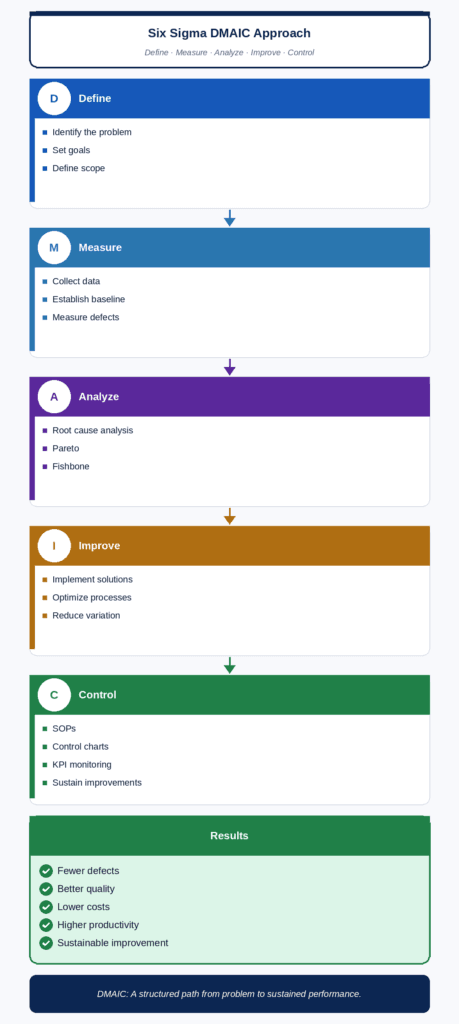
When Should Organizations Use the Six Sigma DMAIC Approach?
The Six Sigma DMAIC approach is most effective when an organization needs to improve an existing process rather than create a new one. It is commonly used when recurring defects, inconsistent quality, excessive waste, process variation, or rising operational costs indicate that a process is not performing as expected. Because DMAIC follows a structured, data-driven methodology, it helps teams identify the true root causes of problems instead of relying on assumptions or temporary fixes.
Organizations also use DMAIC to improve customer satisfaction, increase process efficiency, strengthen quality management, and establish measurable performance improvements over time. By following the Define, Measure, Analyze, Improve, and Control phases, teams can prioritize improvements based on data, monitor the effectiveness of implemented solutions, and maintain long-term process stability through continuous monitoring and control.
Why the Six Sigma DMAIC Approach Is Important for Egyptian Industries
The adoption of Six Sigma methodology in Egypt is increasing due to challenges faced by manufacturing sectors. Challenges such as:
- High defect rates in production lines
- Inefficient workflows and bottlenecks
- Equipment downtime and instability
- Inconsistent product quality
- Rising operational costs
DMAIC provides a structured framework that helps organizations systematically eliminate these issues while improving efficiency and quality.
The Five Phases of the Six Sigma DMAIC Approach
1. Define Phase
The Define Phase focuses on clearly identifying the problem, project goals, and customer requirements.
Typical activities include:
- Defining defect or performance issues
- Understanding customer expectations
- Setting project scope and objectives
- Identifying key stakeholders
A well-defined problem ensures that improvement efforts are focused and aligned with business needs.
2. Measure Phase
The Measure Phase involves collecting data to understand the current performance of the process.
Key actions include:
- Gathering production and quality data
- Measuring defect rates and cycle times
- Establishing baseline performance metrics
- Identifying process inputs and outputs
This phase ensures that decisions are based on accurate, real-world data rather than assumptions.
3. Analyze Phase
The Analyze Phase focuses on identifying the root causes of defects and inefficiencies.
Common tools used include:
- Pareto Analysis
- Fishbone (Ishikawa) Diagrams
- Process mapping
- Regression and statistical analysis
This phase is critical because it explains why problems occur, not just what the problems are.
4. Improve Phase
The Improve Phase focuses on implementing solutions that eliminate root causes and enhance process performance.
Typical improvements include:
- Process redesign and optimization
- Machine calibration improvements
- Workforce training and standardization
- Quality control enhancements
This is where Lean Six Sigma consulting often delivers visible operational improvements for Egypt’s industrial zones.
5. Control Phase
The Control Phase ensures that improvements are sustained over time.
It includes:
- Standard Operating Procedures (SOPs)
- Control charts and monitoring systems
- Performance audits
- KPI tracking systems
This phase prevents processes from reverting to previous inefficiencies and ensures long-term stability.
How Six Sigma DMAIC Improves Manufacturing Quality and Reduces Defects
Six Sigma DMAIC improves manufacturing quality by systematically eliminating variation and inefficiencies across production systems.
Key improvements include:
- Reduced defect rates through root cause elimination
- Improved process stability and consistency
- Higher production efficiency
- Lower operational waste and rework
- Better quality control systems
By addressing the root causes of problems, Six Sigma DMAIC ensures that improvements are permanent rather than temporary fixes.
DMAIC in Lean Six Sigma Consulting
In modern Lean Six Sigma consulting, Six Sigma DMAIC is combined with Lean principles to maximize efficiency and quality simultaneously.
This integration allows organizations to:
- Eliminate waste (Lean)
- Reduce defects and variation (Six Sigma)
- Improve process flow and speed
- Increase productivity and efficiency
This makes Lean Six Sigma particularly powerful in manufacturing environments where both quality and speed are critical.
Benefits of DMAIC Implementation
Organizations implementing DMAIC typically experience the following benefits:
1. Improved Quality Control
DMAIC implementation improves quality control by identifying and eliminating the root causes of defects, resulting in more consistent products and services.
2. Higher Operational Efficiency
By streamlining workflows and removing process bottlenecks, DMAIC increases operational efficiency, reduces delays, and enhances productivity.
3. Cost Reduction
Organizations lower operational costs by reducing waste, scrap, rework, and unnecessary resource consumption through continuous process improvement.
4. Better Data-Driven Decision-Making
DMAIC relies on data analysis rather than assumptions, helping organizations make informed decisions and implement effective, measurable solutions.
5. Greater Operational Stability
Standardized and well-controlled processes create predictable outcomes, improve reliability, and support long-term continuous improvement.
Conclusion
The Six Sigma DMAIC approach plays a critical role in improving manufacturing quality and reducing defects in Egyptian industries. By following a structured, data-driven process, organizations can identify inefficiencies, eliminate root causes, and achieve sustainable improvements.
As industries in Egypt continue to evolve, companies that adopt DMAIC through and Lean Six Sigma consulting services gain a strong competitive advantage in both local and global markets.
FAQs
What is DMAIC in Six Sigma?
DMAIC is a structured methodology used to improve processes through Define, Measure, Analyze, Improve, and Control phases.
How does Six Sigma DMAIC approach reduce defects in manufacturing?
It identifies root causes of defects and eliminates them through data-driven analysis and process improvements.
What is the main benefit of Six Sigma DMAIC approach?
The main benefit is achieving consistent, measurable, and sustainable process improvement.
Is DMAIC part of Lean Six Sigma?
Yes, DMAIC is the core framework used in Six Sigma and is widely applied in Lean Six Sigma systems.
Contact us