In the modern industrial environment, Operational Excellence relies heavily on how efficiently a facility manages its shop floor. For industrial units aiming to scale their output and minimize operational losses, the Five S (5S) methodology serves as the foundational bedrock. As a critical component of Five S Lean manufacturing, this framework provides a structured, disciplined approach to workplace organization, visual management, waste reduction, and standardization.
Industrial facilities across Egypt are facing growing domestic and international competitive pressures. To thrive in this dynamic landscape, plant managers must optimize asset utilization, reduce operational friction, and eliminate hidden inefficiencies that drain profitability. Implementing a robust Lean manufacturing Five S framework allows organizations to transform chaotic, cluttered work areas into highly organized, visual, and productive environments where every square meter adds value to the manufacturing process.
What is Five S Lean Manufacturing and How it Works in Egypt?
The Five S methodology originates from five Japanese terms that translate into structured steps for workplace organization. When integrated into broader Operational Excellence initiatives, 5S Lean manufacturing bridges the gap between disorganized shop floors and streamlined, predictable processes. By establishing order and clarity, plants create an environment where abnormalities become immediately visible to operators and supervisors alike.
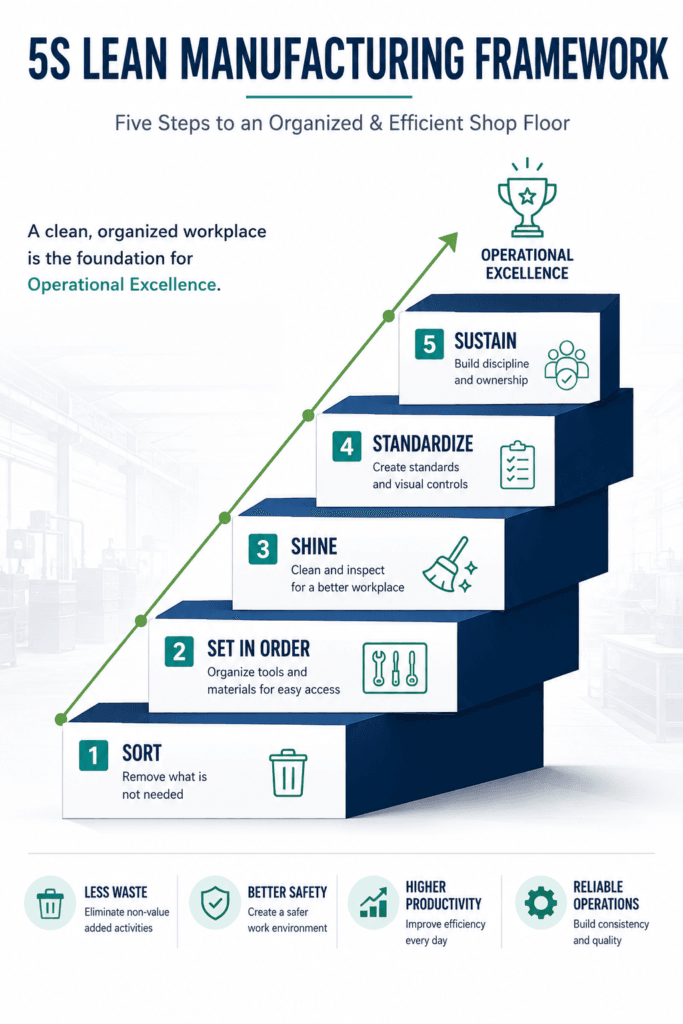
The framework consists of five core pillars that build upon one another:
- Sort (Seiri): Removing all unnecessary items, tools, equipment, and materials from the work area, retaining only what is essential for current production operations.
- Set in Order (Seiton): Organizing the remaining items logically and ergonomically so they can be easily retrieved, used, and returned. A place for everything and everything in its place.
- Shine (Seiso): Cleaning the workspace, machinery, and equipment thoroughly to maintain a pristine environment, eliminate safety hazards, and detect equipment anomalies early.
- Standardize (Seiketsu): Establishing clear rules, visual controls, and standard operating procedures to maintain the first three pillars consistently across all shifts.
- Sustain (Shitsuke): Building a culture of discipline and accountability where employees autonomously follow, review, and audit the Five S in manufacturing Egypt standards daily without external pressure.
Adopting this structured approach in plants across Egypt helps eliminate wastes such as excessive motion, searching for misplaced tools, inventory clutter, and unplanned equipment downtime. It shifts the operational culture from reactive firefighting to proactive problem solving.
Core Pillars of the Five S Framework for Egypt Plants
Structuring a successful operational transformation requires a deep understanding of each phase within the Five S Lean manufacturing Egypt ecosystem. Each pillar plays a distinct role in driving shop floor efficiency.
Phase 1: Sorting and Red Tagging
Unused inventory, broken equipment, obsolete documentation, and redundant tools clutter shop floors, consuming valuable floor space and creating mental fatigue for operators. The sorting phase uses red tag strategies to segregate necessary items from clutter. Supervisors and operators evaluate every item in a designated zone, question its necessity, and relocate or dispose of items that do not add current value. This immediately clears up physical space, improves safety, and reduces capital tied up in unnecessary inventory.
Phase 2: Systematic Arrangement and Visual Management
Once clutter is removed, the focus shifts to organizing what remains based on frequency of use and ergonomic principles. Utilizing shadow boards, floor markings, color coding, and clearly labeled storage bins ensures that operators spend zero time looking for tools or components. This directly supports workplace organization using Five S, driving speed, precision, and repeatability across assembly and production lines.
Phase 3: Rigorous Cleaning and Inspection
Cleaning in a lean environment is not merely custodial work or end-of-shift tidying; it is an active inspection process. Operators clean machinery and workstations down to their base components, allowing them to spot minor oil leaks, loose bolts, frayed wiring, or structural wear before they turn into major catastrophic breakdowns. This proactive stance increases asset longevity.
Phase 4: Developing Standardized Work Routines
Without standardization, shop floors quickly revert to old habits and untidy conditions. Creating visual management boards, step-by-step checklists, and clear responsibility matrices ensures that process compliance becomes second nature to every shift. Standardization turns individual effort into an organizational system.
Phase 5: Sustaining Through Leadership and Governance
The final phase focuses on behavioral change and long term cultural alignment. Long term success with a sustainable Five S implementation model depends on continuous management commitment, regular peer audits, leadership walk-throughs, and employee recognition programs that celebrate sustained workplace excellence.
Why Should Factories Adopt Five S Methodology in Egypt?
Factory leaders frequently ask why they should prioritize basic workplace organization over advanced technological investments. The answer lies in operational stability. Advanced automation and expensive machinery cannot deliver expected returns if the surrounding process is chaotic, undisciplined, or disorganized.
Adopting 5S Lean manufacturing services Egypt delivers multiple strategic and operational advantages:
- Drastic Reduction in Waste: Eliminates motion waste, searching time, and material degradation by establishing clear geographical boundaries for every item on the floor.
- Enhanced Safety Standards: Clean, well organized floors significantly reduce the incidence of slips, trips, ergonomic strains, and material handling accidents.
- Improved Employee Morale: Working in a clean, structured, and predictable environment instills pride, ownership, and accountability among frontline manufacturing teams.
- Higher Equipment Reliability: Routine cleaning and inspection cycles reduce unexpected equipment failures and support Total Productive Maintenance (TPM) initiatives.
- Optimized Floor Space: Removing redundant inventory and equipment reclaims valuable square footage for potential capacity expansion or new product lines.
How to Implement 5S Lean Manufacturing Successfully in Egypt?
Achieving sustainable operational results requires more than painting floor lines or conducting a one time cleanup campaign. It requires strategic guidance from experienced Five S implementation consultants Egypt who understand change management, shop floor dynamics, and structured deployment methodologies.
- Secure Leadership Alignment: Plant management must actively sponsor the initiative, allocate necessary resources, and participate in steering committee reviews to set the tone for cultural transformation.
- Train the Workforce: Conduct interactive workshops, practical simulations, and on the floor training sessions to educate employees on the philosophy and mechanics of Five S in manufacturing.
- Pilot Zone Selection: Start with a single pilot line, cell, or zone to demonstrate quick wins, measure baseline improvements, and build internal confidence before scaling.
- Establish Visual Controls: Implement clear signage, shadow boards, and audit scorecards that make operational standards visible to everyone on the shop floor.
- Scale Across Facilities: Once the pilot proves successful, roll out the framework systematically across all plant operations, supported by standard auditing protocols and continuous improvement incentives.
Frequently Asked Questions
What is Five S Lean manufacturing and how does it work in Egypt?
It is a structured workplace organization and waste-reduction methodology based on five steps: Sort, Set in Order, Shine, Standardize, and Sustain. In Egypt plants, it helps streamline operations, clear shop floor clutter, and build a foundation for continuous improvement.
How does Five S in manufacturing improve productivity in Egypt?
By eliminating motion waste, reducing the time spent searching for tools or materials, improving machine accessibility, and creating a disciplined operational rhythm that maximizes output stability.
Why should factories adopt Five S methodology in Egypt?
Factories adopt it to improve workplace safety, reduce operational costs, boost employee morale, enhance floor space utilization, and establish a stable baseline for advanced Lean tools.
How to implement 5S Lean manufacturing successfully in Egypt?
Successful implementation requires active leadership commitment, comprehensive employee training, starting with a focused pilot zone, establishing visual controls, and partnering with experienced Five S implementation consultants Egypt for sustainable governance.
Is Five S Lean manufacturing suitable for Egypt industries?
Yes, it is universally applicable across diverse manufacturing sectors, helping facilities enhance operational efficiency, meet quality benchmarks, and remain competitive in local and global markets.
Contact us