Manufacturers across Egypt are facing growing pressure to improve efficiency, increase operational visibility, and build more resilient production environments. As business priorities continue to evolve, many organizations are looking beyond traditional process improvements and exploring how Industry 4.0 manufacturing can support long-term Operational Excellence.
Industry 4.0 manufacturing is more than introducing new technologies into the factory floor. It represents a connected approach to manufacturing where data, automation, and integrated systems work together to improve decision making, streamline operations, and support continuous improvement.
For manufacturers in Egypt, the focus is not simply on adopting digital tools but on creating manufacturing environments that are more responsive, connected, and adaptable to changing business needs. A well planned transformation can help organizations improve productivity, strengthen collaboration across teams, and make better use of operational data without disrupting existing processes.
This article explores the key benefits of Industry 4.0 Manufacturing in Egypt, explains why manufacturers are prioritizing digital transformation, and outlines the practical considerations for building connected manufacturing operations.
What Is Industry 4.0 Manufacturing?
Industry 4.0 manufacturing refers to the integration of advanced digital technologies, intelligent automation, and connected systems throughout manufacturing operations. Rather than managing production, maintenance, quality, and planning independently, Industry 4.0 enables these functions to share information through integrated digital platforms.
The result is a manufacturing environment where operational data becomes more accessible, decision making becomes more informed, and processes become easier to monitor and improve.
Common technologies supporting modern manufacturing include:
- Connected industrial systems
- Cloud computing
- Artificial intelligence and machine learning
- Advanced analytics
- Industrial automation
- Connected manufacturing systems
- Edge computing
- Cybersecurity solutions
Together, these technologies support digital manufacturing technology adoption, helping manufacturers create more connected and data-driven operations.
Why Manufacturers in Egypt Are Prioritizing Industry 4.0
Manufacturing environments generate large amounts of operational information every day. Without connected systems, valuable insights often remain isolated across different departments, applications, and equipment.
Traditional manufacturing approaches may rely on manual reporting, disconnected systems, or delayed access to production information. This can slow decision making and make it more difficult to identify opportunities for operational improvement.
Industry 4.0 manufacturing initiatives address these challenges by improving connectivity across manufacturing operations in Egypt. Instead of working with fragmented information, manufacturers can establish a more unified view of production activities, maintenance schedules, quality performance, and operational trends.
This connected approach enables organizations to respond more effectively to changing operational requirements while supporting long term business objectives.
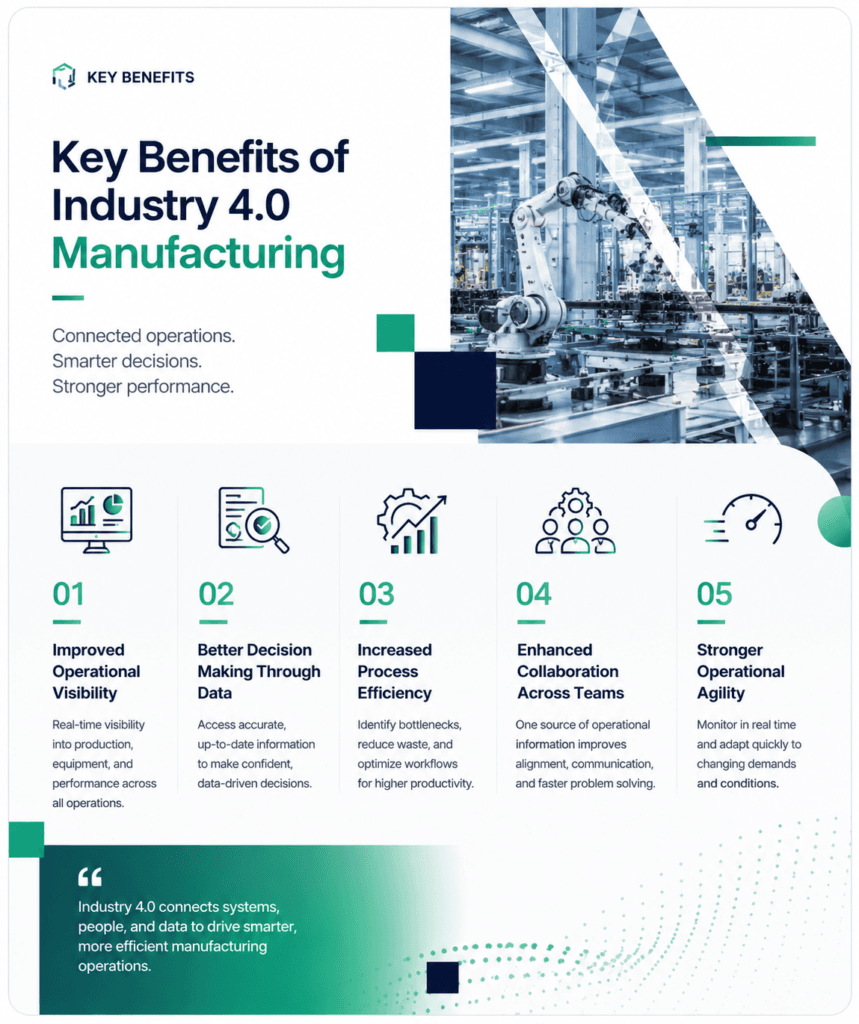
Key Benefits of Industry 4.0 Manufacturing
Improved Operational Visibility
One of the most significant benefits of Industry 4.0 manufacturing is improved visibility across manufacturing operations.
Connected systems enable production data, equipment information, and operational metrics to be viewed through centralized dashboards and reporting platforms. This provides decision makers with timely insights into manufacturing performance without relying on manual data collection.
Improved visibility also helps teams identify process inefficiencies earlier and respond more quickly to operational changes.
Better Decision Making Through Data
Modern manufacturing depends on accurate and accessible information.
By integrating operational data across production systems, manufacturers can make decisions based on current conditions rather than historical reports alone. Better access to information supports production planning, maintenance scheduling, resource allocation, and continuous operational improvement.
As organizations continue their digital manufacturing Industry 4.0 journey across Egypt, data becomes an increasingly valuable strategic asset.
Increased Process Efficiency
Connected manufacturing environments make it easier to identify process bottlenecks, repetitive manual activities, and opportunities for workflow optimization.
Instead of making isolated improvements, manufacturers can evaluate the entire production process and continuously refine operations using reliable operational insights.
This supports higher consistency, improved resource utilization, and better coordination across manufacturing activities.
Enhanced Collaboration Across Teams
Manufacturing performance depends on effective collaboration between multiple business functions.
Industry 4.0 manufacturing creates shared access to operational information, allowing production, maintenance, quality, engineering, and leadership teams to work from the same data.
This reduces communication gaps, improves coordination, and supports faster problem resolution across the organization.
Stronger Operational Agility
Manufacturing environments continue to evolve as customer expectations, production requirements, and business priorities change.
Connected manufacturing systems provide greater flexibility by enabling organizations to monitor operational performance in real time and adjust processes more efficiently when conditions change.
This agility supports continuous improvement while helping organizations respond more effectively to evolving operational demands.
Improved Maintenance Planning
Maintenance has traditionally been reactive, with repairs taking place only after equipment issues become apparent.
Industry 4.0 manufacturing supports a more proactive approach by providing continuous access to equipment performance information. Maintenance teams can monitor trends, identify potential issues earlier, and schedule maintenance activities based on operational conditions rather than fixed intervals alone.
This contributes to more efficient maintenance planning and improved equipment reliability.
Better Quality Management
Maintaining consistent product quality requires timely access to production information.
Connected manufacturing systems make it easier to monitor production processes, identify variations, and investigate quality trends before they become larger operational concerns.
By integrating quality data with production information, manufacturers can strengthen continuous improvement initiatives and improve overall process consistency.
Supporting Digital Manufacturing Technology Adoption
Successful digital manufacturing technology adoption requires more than implementing individual technologies. It depends on building a connected operational strategy that aligns technology investments with business objectives.
Manufacturers should begin by evaluating their existing processes, identifying areas where better connectivity can improve decision making, and prioritizing initiatives that deliver measurable operational value.
A phased implementation approach often allows organizations to integrate new capabilities while minimizing disruption to existing manufacturing operations.
Building a Connected Manufacturing Systems Strategy
Developing a connected manufacturing systems strategy involves creating an operational environment where information flows seamlessly between production assets, enterprise systems, and decision makers.
Key considerations include:
Assess Current Digital Maturity
Evaluate existing manufacturing systems, data availability, and operational processes to understand where improvements can deliver the greatest value.
Strengthen Data Integration
Integrate operational information across manufacturing systems to improve visibility and support informed decision making.
Focus on Business Outcomes
Technology investments should support clearly defined operational goals, such as improving efficiency, increasing visibility, or strengthening collaboration.
Enable Continuous Improvement
Industry 4.0 is not a one time project. Manufacturers should regularly review performance, refine processes, and expand digital capabilities as business needs evolve.
Why a Strategic Approach Matters
Many manufacturers begin their transformation journey by investing in individual technologies without first establishing a clear roadmap.
A strategic approach helps organizations prioritize initiatives, improve integration across systems, and ensure that digital investments support broader operational objectives.
This is one reason why many organizations in Egypt seek guidance through Industry 4.0 manufacturing consulting to assess digital maturity, identify priorities, and develop structured transformation roadmaps. Consulting can support planning and implementation strategy, while the success of any transformation ultimately depends on aligning technology with business goals and organizational readiness.
Conclusion
The benefits of Industry 4.0 manufacturing extend beyond technology adoption. Connected operations, integrated data, and informed decision making create opportunities for manufacturers across Egypt to improve operational efficiency, strengthen collaboration, and support continuous improvement.
As manufacturing continues to evolve, organizations that adopt a structured approach to digital transformation will be better positioned to build resilient, adaptable, and data driven operations. Rather than viewing Industry 4.0 as a collection of individual technologies, manufacturers should focus on creating connected manufacturing environments that deliver lasting operational value.
Frequently Asked Questions
How can Industry 4.0 manufacturing benefit Egyptian factories?
Industry 4.0 manufacturing helps manufacturers improve operational visibility, streamline processes, strengthen collaboration, support informed decision making, and create more connected production environments.
Why should manufacturers adopt Industry 4.0 manufacturing in Egypt?
Manufacturers can benefit from better access to operational data, improved efficiency, stronger process integration, and greater agility in responding to changing business requirements.
How does Industry 4.0 manufacturing improve efficiency in Egypt?
By connecting manufacturing systems, integrating operational data, and enabling continuous monitoring, Industry 4.0 helps organizations identify inefficiencies and optimize manufacturing processes over time.
What is digital manufacturing technology adoption?
Digital manufacturing technology adoption refers to integrating connected digital tools, automation, analytics, and data driven processes into manufacturing operations to improve productivity and operational visibility.
What is a connected manufacturing systems strategy?
A connected manufacturing systems strategy focuses on integrating production systems, business applications, and operational data so that information can flow seamlessly across the manufacturing environment, supporting better decision making and continuous improvement.
Contact us