Five s methodology and visual management belong together. 5S creates order in the workplace, and visual management makes that order easy to see, follow and protect. Without visual tools, 5S depends on memory and discipline alone. This guide explains five simple visual management tools that support the five s methodology, what each one does and how to use it well on the shop floor.
Visual management means arranging the workplace so that anyone can understand its status at a glance: where things belong, what is missing, what is normal and what needs attention. It turns the standards created by 5S into signals that work without explanation.
How does visual management support the five s methodology?
Visual management supports the five s methodology by making each step visible. Sorting is easier when red tags mark doubtful items. Setting in order works when every item has a labelled home. Shining is clearer when inspection points are marked. Standardising relies on photos and signs. Sustaining depends on being able to see quickly when something has slipped.
The idea is closely linked to visual control, where the workplace itself shows whether conditions are normal or abnormal. When problems are visible, they are noticed and fixed sooner.
The tools below are simple and inexpensive. What matters is that they are used consistently across areas, so people learn one visual language for the whole plant.
| Tool | What it shows | Which 5S step it supports |
|---|---|---|
| 1. Labels and location signs | Where each item belongs | Set in order |
| 2. Floor marking | Where aisles, work areas and storage are | Set in order and standardise |
| 3. Shadow boards | Which tools are present or missing | Set in order and sustain |
| 4. Min-max signals | When stock needs replenishing | Standardise and sustain |
| 5. Standard photos | What the area should look like | Standardise and sustain |
Tool 1: How should labels and location signs be used?
Labels and location signs give every item a clear home. Shelves, bins, racks, cabinets and drawers are labelled with what belongs there, and each item carries a matching label where practical. Anyone, including new or temporary staff, can then find and return items without asking.
Good labels are simple, consistent and readable from a working distance. Use the same format, colours and naming across the plant, and match labels to the codes used in stores and planning systems where possible.
Labels should be reviewed when layouts or products change. Outdated labels are worse than none, because they teach people to ignore the signs.
Tool 2: What should floor marking show?
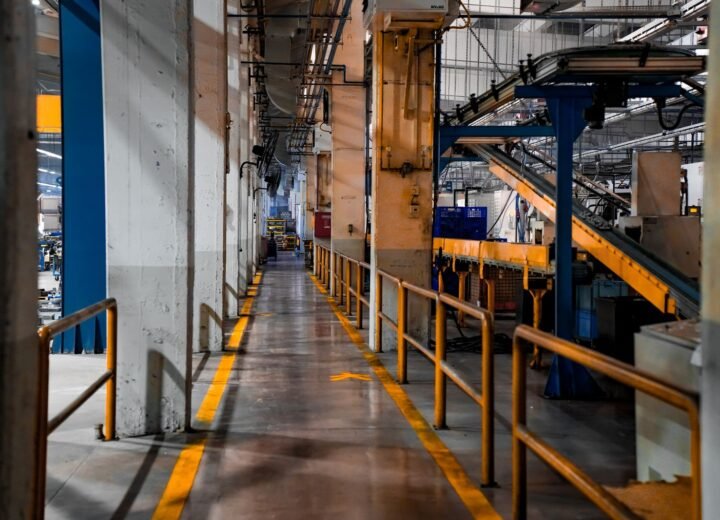
Floor marking divides the workplace into clear zones: walkways, vehicle routes, work areas, storage locations, quality hold areas and places that must stay clear, such as in front of electrical panels and fire equipment.
Use a consistent colour scheme across the plant so meanings are the same everywhere. Many plants use one colour for walkways, another for work in progress, another for finished goods and another for scrap or rejected material. Agree the scheme once and keep to it.
Floor marking also helps sustain the standard. When material sits outside its marked area, the problem is obvious to everyone passing by, not only to the people who work there.
Tool 3: Why are shadow boards so effective?
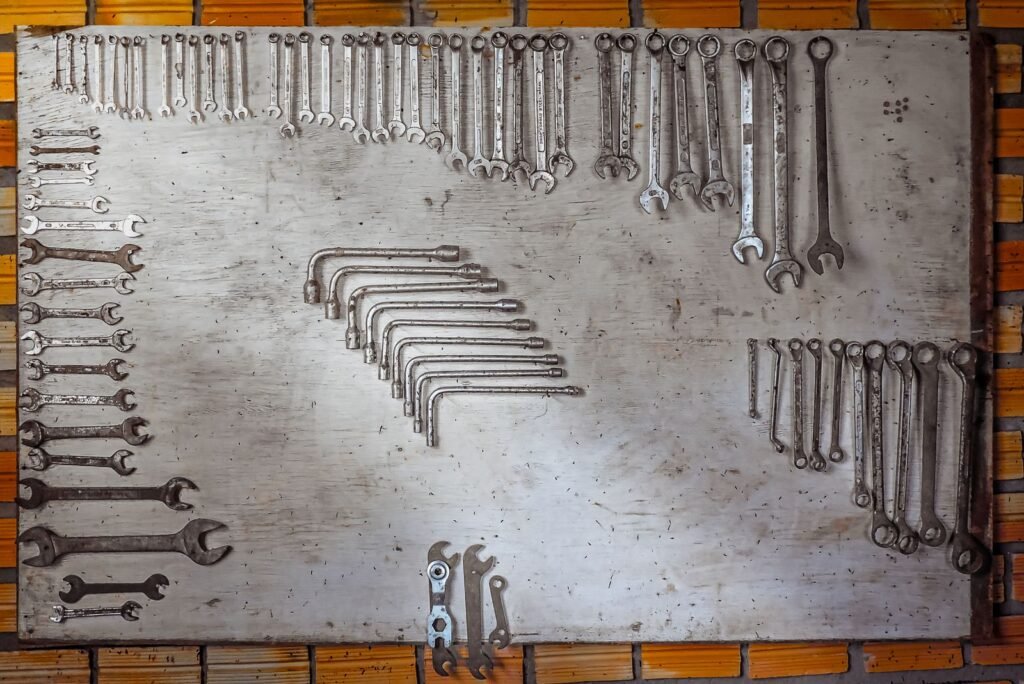
A shadow board holds tools in fixed positions, each with an outline showing its shape. A missing tool leaves an empty outline, so anyone can see at once what is not in place.
Shadow boards work best at the point of use, holding only the tools needed for that area or machine. Too many tools on one board makes it slower to use and harder to check.
Pair shadow boards with a simple rule: tools return to the board at the end of each task or shift. During the end-of-shift check, an empty outline becomes a question to answer before the next team starts.
Tool 4: How do min-max signals prevent shortages?
Min-max signals show when material or supplies need replenishing. A line on a bin, a coloured card or a marked shelf level indicates the minimum point. When stock reaches it, a refill is triggered. A maximum mark prevents overfilling.
These signals are a simple form of the pull systems used in lean manufacturing, such as kanban. They reduce both shortages and excess stock, because replenishment is based on actual use rather than guesswork.
Min-max signals work for production materials, consumables, maintenance spares and office supplies alike. The key is to set levels based on usage and replenishment time, and to review them when demand changes.
Tool 5: Why do standard photos matter?
Standard photos show exactly what an area should look like when it is at standard. They are displayed in the area, so the team can compare reality with the photo at any time.
Photos remove argument. Instead of debating whether an area is tidy enough, the team simply checks it against the photo. This makes audits faster, fairer and easier for new staff to understand.
Update photos when the standard improves. A photo that no longer matches the agreed layout confuses people and weakens trust in the standard.
But there is a more fundamental question worth asking: could a visitor walk into your area and tell, within a minute, whether it is normal or not?
If the answer is no, the five s methodology may be in place, but it is not yet visible. Visual management is what makes the standard self-explaining.
How do you introduce visual management alongside 5S?
Introduce visual tools as part of the 5S steps rather than as a separate project. When the team sets items in order, add labels and floor marking. When standards are agreed, take the photos. When sustaining begins, use shadow boards and min-max signals to make slips visible.
Start in one pilot area and involve the people who work there in choosing and placing visual tools. They know which signals will help and which will be ignored. Then use the pilot as a model for other areas, keeping the same visual language.
A 5S visual workplace approach treats these tools as part of one system, linked to daily reviews and audits rather than added as decoration.
What are the common mistakes with visual management?
The first mistake is using too many signs. When every surface carries a label or poster, people stop noticing any of them. Keep visual tools focused on what helps the work.
The second is inconsistency. Different colours or label styles in different areas force people to relearn meanings and lead to errors.
The third is letting visual tools decay. Faded floor marking, missing labels and outdated photos send the message that the standard no longer matters.
The fourth is treating visual tools as the goal. Signs and boards only help if they support a standard that people follow and leaders check.
Which other visual signals work well with 5S?
Beyond the five core tools, a few other signals fit naturally with the five s methodology. Status boards at each area show the plan, actual output and open problems for the shift. Colour-coded containers separate good parts, parts waiting for inspection and rejected material, so they cannot be mixed by mistake.
Simple machine status lights, often called andon signals, show whether equipment is running, stopped or waiting for help. Marked inspection points on machines show operators exactly where to look during their daily checks, linking 5S with equipment care.
Error-proofing ideas, sometimes called poka-yoke, can also be visual. A fixture shaped so a part fits only one way, or a tray with a space for each component, makes the right method the easy one.
Choose these extra signals carefully. Each should answer a real question the team has during the shift, such as whether a machine needs help or whether material is ready to move. Signals that answer no real question quickly become background noise.
Frequently asked questions
Is visual management part of the five s methodology?
Visual management is closely linked to 5S. It makes the order created by 5S visible, especially in the set in order, standardise and sustain steps.
What is the simplest visual tool to start with?
Labels and floor marking are usually the easiest starting points. They give every item and area a clear place and make the layout easy to understand.
How often should visual tools be checked?
During daily or weekly 5S checks. Damaged labels, faded markings and outdated photos should be fixed as part of normal upkeep.
Do visual tools work in offices too?
Yes. Labelled storage, clear filing locations, status boards and standard photos of shared spaces help offices in the same way as production areas.
Conclusion: five s methodology made visible
The five s methodology creates order, and visual management keeps that order visible. Labels, floor marking, shadow boards, min-max signals and standard photos each make a part of the standard easy to see and easy to follow. Used consistently, they help any area show its status at a glance. The Five S overview gives more background on the method itself.