Operational excellence is not built overnight—it is created through consistent discipline, structured systems, and a culture of continuous improvement. One of the most proven approaches to achieve this is the five s methodology lean tools framework.
Across industries, especially in five s methodology in manufacturing, organizations are using 5S to streamline operations, reduce waste, and build highly efficient workplaces. At Faber Infinite Consulting, we’ve seen firsthand how structured five s methodology implementation can transform factories and offices into performance-driven environments.
What is the Five S Methodology?
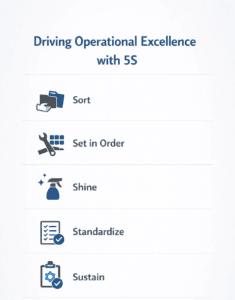
The five s lean manufacturing approach originates from Japan and focuses on workplace organization and standardization.
| Step | Japanese Term | Meaning | Key Focus |
| 1 | Seiri | Sort | Remove unnecessary items |
| 2 | Seiton | Set in Order | Organize for easy access |
| 3 | Seiso | Shine | Clean and inspect |
| 4 | Seiketsu | Standardize | Maintain consistency |
| 5 | Shitsuke | Sustain | Build discipline |
This structured approach is widely used in five s in manufacturing India to improve productivity and safety.
Why 5S is the Foundation of Operational Excellence
Operational excellence requires visibility, control, and consistency. 5S enables all three.
Key Impact Areas
| Area | How 5S Helps | Business Outcome |
| Productivity | Reduces search time | Faster operations |
| Quality | Eliminates errors due to clutter | Fewer defects |
| Safety | Removes hazards | Lower accidents |
| Cost | Cuts waste | Improved margins |
| Culture | Builds discipline | Sustainable improvement |
Step-by-Step Guide: 5S Implementation
How to Implement Five S Methodology in Your Small Factory
| Step | Action | Practical Example |
| Sort | Identify unnecessary items | Remove unused tools |
| Set in Order | Assign fixed locations | Label racks and shelves |
| Shine | Clean regularly | Daily cleaning checklist |
| Standardize | Create SOPs | Visual work instructions |
| Sustain | Monitor and audit | Weekly 5S audits |
This step-by-step approach is crucial for five s methodology implementation success.
Role of Visual Management in 5S
Visual management systems for 5S make processes transparent and easy to follow.
Examples
- Color-coded storage zones
- Floor markings
- Shadow boards
- Visual SOP charts
These tools help teams instantly identify abnormalities, improving efficiency and control.
How 5S Improves Factory Efficiency
Improve Factory Efficiency with 5S
| Problem | 5S Solution | Result |
| Time wasted searching | Organized storage | Faster workflows |
| Equipment downtime | Clean and inspect | Better maintenance |
| Space constraints | Remove clutter | More usable space |
Organizations adopting five s methodology consultants often see measurable gains within weeks.
Can 5S Reduce Manufacturing Lead Time?
Yes—by eliminating waste and improving flow.
How it Works
- Faster material movement
- Reduced waiting time
- Improved layout efficiency
Result: Shorter lead times and quicker order fulfillment.
Why 5S Fails Without Leadership Buy-In
One of the most common reasons for failure is lack of leadership involvement.
Key Issues
- No accountability
- Inconsistent audits
- Lack of training
Solution
| Leadership Role | Impact |
| Set expectations | Drives discipline |
| Participate in audits | Builds seriousness |
| Provide resources | Enables execution |
The role of management in 5S success is critical for long-term sustainability.
5S and Employee Safety in India
How the Five S Methodology Improves Employee Safety India
- Eliminates workplace hazards
- Improves visibility
- Ensures proper storage
- Reduces accidents
In Indian manufacturing environments, workplace organization India 5S is becoming essential for compliance and safety.
Common 5S Implementation Challenges & Solutions
5S Implementation Challenges Solutions
| Challenge | Root Cause | Solution |
| Resistance to change | Lack of awareness | Conduct training |
| Poor sustainability | No audits | Regular monitoring |
| Inconsistent standards | No SOPs | Standardization |
| Low engagement | No ownership | Assign responsibilities |
Expert Insights & Industry Standards
The 5S methodology is a core part of lean manufacturing systems, widely adopted by global leaders.
Authoritative References
- Lean Enterprise Institute
- Industry 4.0 integration frameworks
These standards validate the effectiveness of five s methodology lean tools in achieving operational excellence.
How 5S Extends Beyond Manufacturing
5S is not limited to factories—it is equally effective in offices.
Step by Step Guide to the Five S Methodology in Offices
- Organize digital files
- Standardize documentation
- Maintain clean workspaces
- Implement visual dashboards
Conclusion: Turning Discipline into Results
The five s methodology in manufacturing is more than just cleaning and organizing—it is a strategic tool for driving operational excellence.
Actionable Takeaways
- Start small but stay consistent
- Focus on behavior change, not just tools
- Use visual systems for control
- Ensure leadership involvement
- Track measurable outcomes
Organizations that treat 5S as a culture—not a one-time activity—achieve long-term success.
FAQs
-
What is the main goal of the five s methodology?
The goal is to create a clean, organized, and efficient workplace that improves productivity, safety, and quality.
-
How long does 5S implementation take?
Initial implementation can take 4–8 weeks, but sustaining it requires continuous effort.
-
Can small businesses use 5S?
Yes, especially for those looking for how to implement five s methodology in your small factory, it is highly effective and cost-efficient.
-
What industries benefit from 5S?
Manufacturing, healthcare, logistics, offices, and retail—all benefit from five s lean manufacturing principles.
-
Do we need consultants for 5S implementation?
While not mandatory, five s methodology consultants help accelerate results and avoid common mistakes.
If you’re looking to improve factory efficiency with 5S or build a culture of operational excellence, Faber Infinite Consulting can help you implement a structured, result-driven approach.