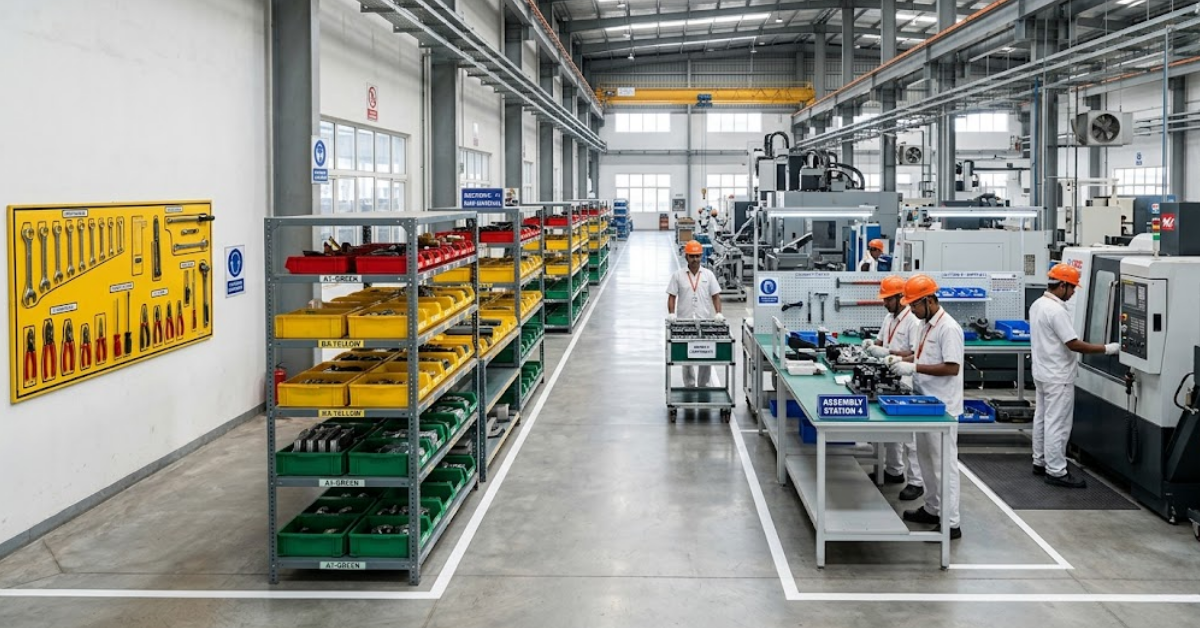
Manufacturing productivity is not just about working harder—it’s about building systems that make performance predictable. In our experience at Faber Infinite Consulting, factories that adopt structured daily work management with Lean and TPM see measurable gains in output, cost control, and workforce engagement within months.
Across Indian manufacturing plants, we’ve observed a consistent pattern: productivity gaps are rarely due to lack of effort. They stem from inconsistent daily operations management, unclear accountability, reactive maintenance, and weak review rhythms.
This blog explains how combining Lean daily management and Total Productive Maintenance (TPM) within a strong daily work management system in India can significantly improve performance.
Why Manufacturing Productivity Still Lags
According to the McKinsey & Company, many manufacturing plants operate at only 40–60% of their true productive potential due to inefficiencies in layout, downtime, and process instability. Similarly, research published in the International Journal of Production Research highlights that TPM adoption can improve Overall Equipment Effectiveness (OEE) by 15–25%.
In Indian factories specifically, common challenges include:
| Challenge | Impact on Productivity |
| Unplanned machine breakdowns | High downtime, missed delivery |
| Lack of visual performance tracking | Slow problem detection |
| Weak escalation systems | Issues repeat daily |
| Poor standard work management | Variation in output |
| Reactive firefighting culture | Low continuous improvement culture |
The solution lies in structured daily management systems aligned with Lean and TPM principles.
What is Daily Work Management?
Daily work management (DWM) is a structured approach to manage performance every single day at every level of the organization.
It includes:
| Component | Description |
| Tier meetings | Short structured review meetings |
| Visual dashboards | Real-time performance tracking |
| Standard work | Defined process for each task |
| Escalation system | Clear problem-solving hierarchy |
| Root cause discipline | Data-based corrective action |
When implemented correctly, daily work management in Indian manufacturing plants transforms operations from reactive to proactive.
Lean + TPM: The Productivity Multiplier
Lean focuses on eliminating waste. TPM focuses on maximizing equipment reliability. Together, they form the backbone of a strong performance management system.
Lean Daily Management Focus
| Lean Tool | Productivity Benefit |
| 5S | Organized workspace reduces motion waste |
| Value Stream Mapping | Identifies bottlenecks |
| Standard Work | Reduces variation |
| Kaizen | Encourages continuous improvement culture |
TPM Focus
| TPM Pillar | Productivity Impact |
| Autonomous Maintenance | Reduces minor stoppages |
| Planned Maintenance | Prevents breakdowns |
| Focused Improvement | Targets chronic losses |
| OEE Tracking | Quantifies performance |
The Japan Institute of Plant Maintenance reports that structured TPM can increase equipment uptime by up to 20% within the first year when properly deployed.
Real Experience: A Case from Indian Manufacturing
At Faber Infinite Consulting, we worked with a mid-sized automotive component manufacturer in India struggling with 62% OEE and frequent breakdowns.
Before Implementation:
- No structured daily work management system
- Maintenance was reactive
- No visual daily operations management
- Productivity loss: ~18% per month
After 6 Months of Lean Daily Work Management in India:
- Tier-based daily review system introduced
- OEE dashboards installed at shop-floor level
- TPM-based autonomous maintenance implemented
- Escalation matrix standardized
Results:
| KPI | Before | After |
| OEE | 62% | 78% |
| Breakdown Hours | 120 hrs/month | 65 hrs/month |
| Rejection Rate | 4.8% | 2.9% |
| Productivity | +22% increase | Sustained |
The biggest shift was cultural. Teams moved from firefighting to structured problem-solving.
How to Implement Daily Work Management in India
For companies asking “How to implement daily work management in India?”, here is a structured roadmap:
Step-by-Step Framework
| Step | Action | Outcome |
| 1 | Define critical KPIs | Focus on output, quality, downtime |
| 2 | Design tier meeting structure | Clear accountability |
| 3 | Build visual management boards | Transparency |
| 4 | Implement TPM pillars | Reduced downtime |
| 5 | Train supervisors in root cause analysis | Faster issue resolution |
| 6 | Establish audit rhythm | Sustain improvements |
Indian factories benefit from simple, disciplined systems rather than complex digital solutions at the start.
Building a Continuous Improvement Culture
Technology alone does not improve productivity. Discipline does.
The World Economic Forum emphasizes that operational excellence depends on leadership alignment and frontline ownership.
To build a sustainable continuous improvement culture, focus on:
- Daily structured reviews
- Data-driven decisions
- Clear ownership
- Recognition of improvement ideas
- Transparent communication
Lean daily work management in India succeeds when leadership actively participates in daily operations management reviews.
Key Metrics to Track in a Daily Management System
A strong daily work management system in India must track measurable indicators:
| Metric | Why It Matters |
| OEE | Measures machine efficiency |
| Plan vs Actual | Output discipline |
| First Pass Yield | Quality stability |
| Downtime Reasons | Identifies loss drivers |
| Safety Incidents | Workplace stability |
| Kaizen Count | Engagement indicator |
Tracking these daily ensures performance does not drift unnoticed.
Common Mistakes in Daily Work Management
| Mistake | Consequence |
| Too many KPIs | Confusion |
| No leadership involvement | Poor adoption |
| Irregular review meetings | System collapse |
| No standard escalation | Repeat problems |
| Ignoring TPM discipline | Persistent downtime |
Consistency is more important than complexity.
Conclusion: Turning Strategy into Daily Discipline
Manufacturing productivity improves when strategy is translated into structured daily action.
Lean removes waste. TPM stabilizes machines. Daily work management aligns people. Together, they create operational excellence in Indian factories.
Actionable Takeaways:
- Start with 5–7 critical KPIs.
- Implement tier-based daily meetings.
- Deploy TPM for reliability improvement.
- Build visual dashboards for transparency.
- Audit the system weekly to ensure discipline.
If your plant is still managing performance monthly, it is already late. Productivity improvement begins every morning.
FAQs
- What is daily work management in Indian manufacturing plants?
Daily work management in Indian manufacturing plants is a structured system of daily reviews, KPI tracking, escalation processes, and standard work to ensure stable and predictable operations.
- How does Lean daily management improve productivity?
Lean daily management eliminates waste, standardizes processes, and promotes continuous improvement culture, leading to reduced downtime and higher efficiency.
- What is the role of TPM in daily operations management?
TPM improves equipment reliability through planned and autonomous maintenance, increasing OEE and reducing breakdowns.
- How long does it take to see results from a daily work management system in India?
Most plants see measurable improvements within 3–6 months when leadership involvement and TPM discipline are strong.
- Is daily work management suitable for small Indian factories?
Yes. In fact, smaller factories often see faster results because decision-making is quicker and implementation is simpler.
Contact us