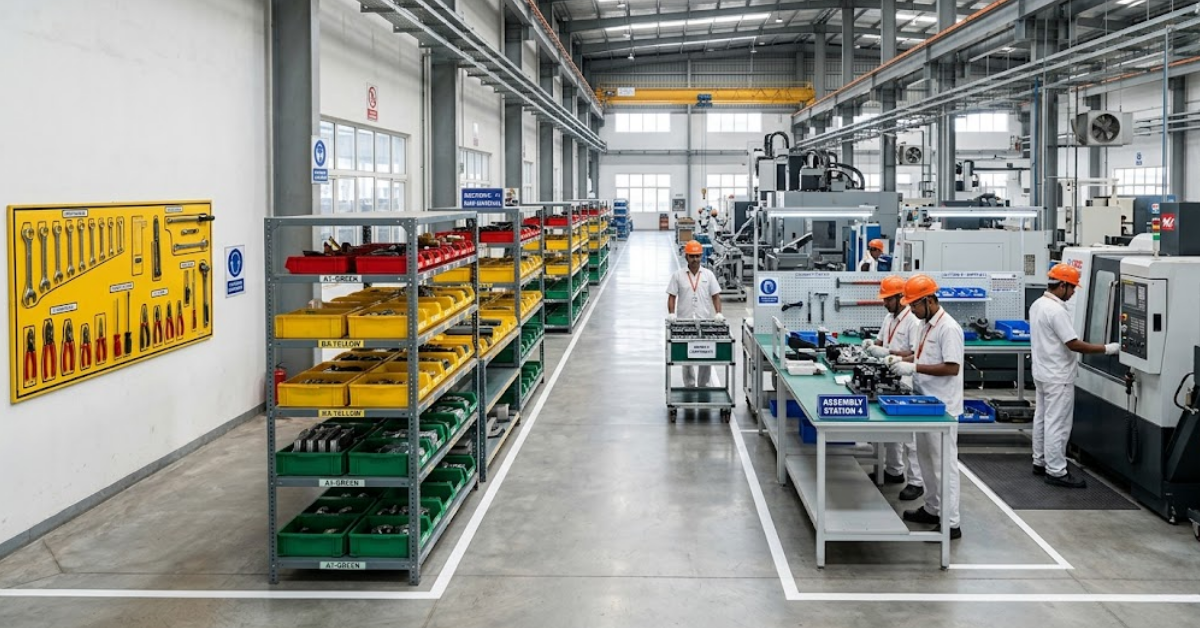
Operational waste silently drains profits, productivity, and morale. In Indian manufacturing plants, we often see machines running—but value not flowing. The real issue is rarely effort. It is structure. Without a strong Daily Work Management System, even experienced teams struggle to maintain consistency, visibility, and control.
At Faber Infinite Consulting, we have worked across 40+ industries in India and global markets, helping factories transform scattered operations into disciplined Daily Operations Management systems that reduce waste and improve performance sustainably.
This blog explains how organizations can systematically reduce operational waste using Lean Daily Management, supported by real experience, global standards, and practical frameworks.
Understanding Operational Waste in Manufacturing
The concept of waste in operations was formalized by the Toyota Motor Corporation through the Toyota Production System. It identified seven types of waste (Muda): overproduction, waiting, transport, overprocessing, inventory, motion, and defects.
According to research published by McKinsey & Company, many factories globally operate at only 40–60% of their true productive capacity due to hidden inefficiencies.
In Indian manufacturing plants, we commonly observe:
| Waste Type | Real Plant Observation | Business Impact |
| Waiting | Operators idle due to material delays | 8–12% productivity loss |
| Excess Inventory | High WIP between processes | Blocked working capital |
| Rework | Quality issues caught late | Increased cost per unit |
| Motion | Poor layout design | Fatigue & time loss |
Without a structured Daily Management System, these losses become normalized.
Why Daily Work Management Is the Real Lever
A Daily Work Management System in India is not just a meeting ritual. It is a structured operating rhythm that ensures problems are identified, solved, and prevented daily.
Core Objectives of Daily Work Management
| Objective | What It Solves | Result |
| Performance Visibility | Lack of data transparency | Faster decisions |
| Standard Work Management | Inconsistent execution | Reduced variation |
| Problem Escalation | Delayed response | Lower downtime |
| Accountability | Blurred ownership | Clear responsibility |
From our field experience in Daily work management in Indian factories, we have observed that plants implementing structured daily reviews reduce:
- Downtime by 15–25%
- Quality defects by 20–30%
- WIP inventory by 18–22%
How to Implement Daily Work Management in India
Step 1: Define Critical Metrics
Identify 5–7 key KPIs aligned with Daily Operations Management:
| Category | KPI Examples |
| Safety | Incident frequency rate |
| Quality | First Pass Yield |
| Delivery | On-Time Production |
| Cost | OEE, Conversion cost |
| Morale | Attendance rate |
Ensure metrics are measurable daily—not monthly.
Step 2: Create Tiered Daily Meetings
A structured Lean Daily Management in India approach follows tiered governance:
| Tier | Level | Focus | Duration |
| Tier 1 | Shopfloor | Hourly production | 10–15 mins |
| Tier 2 | Department | Daily targets | 20 mins |
| Tier 3 | Plant | Strategic alignment | 30 mins |
In our implementation across Indian plants, Tier 1 visual boards alone improved response time to breakdowns by 35%.
Step 3: Standard Work Management
Standard work defines:
- Who does what
- In what sequence
- Within what time
Without Standard Work Management, daily management collapses into discussion without execution.
| Element | Implementation Tip |
| SOP Display | Visual at workstation |
| Takt Time Monitoring | Real-time tracking |
| Escalation Matrix | Defined ownership |
Step 4: Problem-Solving Culture
Operational waste reduces only when root causes are solved—not patched.
We use structured methods aligned with:
- PDCA Cycle
- 5 Why Analysis
- A3 Reporting
These methodologies, widely endorsed by global manufacturing leaders and academic institutions like Massachusetts Institute of Technology, strengthen analytical rigor in daily reviews.
Real Case Insight: Indian Auto Component Plant
In a Tier-2 auto component manufacturer in Pune, India, we observed:
- OEE at 58%
- 22% unplanned downtime
- Frequent firefighting
After implementing a structured Daily Work Management System in India:
| Before | After 6 Months |
| OEE – 58% | OEE – 72% |
| Downtime – 22% | Downtime – 12% |
| Daily Escalations – Reactive | Proactive Issue Closure |
The breakthrough was not new machinery. It was disciplined Daily Management System governance.
Building a Continuous Improvement Culture
A sustainable Continuous Improvement Culture requires:
| Pillar | Practice |
| Leadership Discipline | Daily Gemba Walks |
| Data Transparency | Visual dashboards |
| Employee Involvement | Kaizen suggestions |
| Performance Management System | Linked KPIs |
When daily reviews connect to the broader Performance Management System, improvement becomes systemic—not occasional.
Common Mistakes in Daily Work Management
| Mistake | Why It Fails | Fix |
| Too Many KPIs | Confusion | Limit to 7 core metrics |
| Meeting Without Data | Opinions dominate | Real-time dashboards |
| No Escalation Path | Delays | Clear accountability matrix |
| One-Time Launch | No sustainability | Weekly audits |
From our experience in Daily work management for productivity improvement in India, sustainability depends on leadership consistency—not documentation.
SEO Internal & External Links Strategy
Internal Links Suggestion (for website integration):
- Operational Excellence Consulting Services
- Lean Manufacturing Consulting
- Factory Layout Design Services
External References:
- Toyota Production System principles
- McKinsey Global Institute manufacturing productivity reports
- MIT research on lean systems
Actionable Takeaways
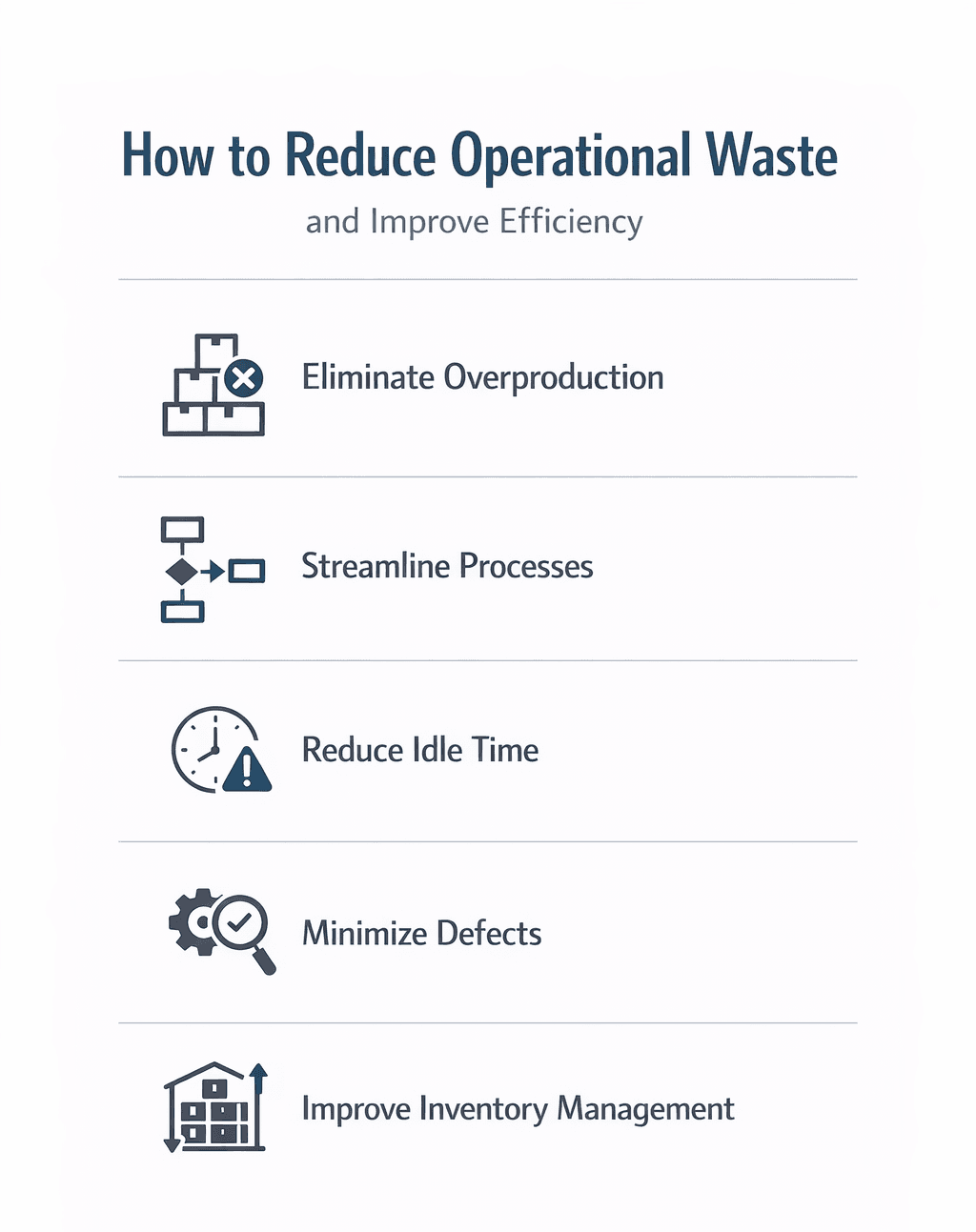
If you want to reduce operational waste and improve efficiency:
- Start with 5–7 measurable daily KPIs.
- Implement Tiered Daily Meetings.
- Standardize work before improving it.
- Build structured problem-solving routines.
- Audit daily management weekly.
A structured Daily Work Management in Indian manufacturing plants can transform productivity without heavy capital investment.
The difference between busy factories and high-performing factories is disciplined daily execution.
FAQs
- What is Daily Work Management in Indian manufacturing plants?
Daily Work Management in Indian manufacturing plants is a structured system that reviews performance, solves problems, and aligns teams daily to reduce operational waste and improve efficiency.
- How does a Daily Work Management System improve productivity?
It improves productivity by increasing visibility, standardizing processes, reducing downtime, and enabling faster problem resolution through daily review mechanisms.
- What is Lean Daily Work Management in India?
Lean Daily Work Management in India integrates lean principles like waste elimination, standard work, and continuous improvement into daily operations.
- How long does it take to implement a Daily Management System?
Typically, 3–6 months are required for structured implementation, training, and stabilization across plant functions.
- Is Daily Work Management suitable for small factories?
Yes. Even small factories benefit from structured Daily Operations Management, especially when resource optimization is critical.
If your plant is struggling with inefficiencies, structured Daily Work Management for Operational Excellence in India is not optional—it is foundational.