For manufacturing leaders, change is no longer an occasional event. It has become a normal part of running a competitive business.
Manufacturers across Kenya face increasing pressure to improve productivity, manage costs, develop workforce capabilities, adopt new technologies, and respond to changing customer expectations. At the same time, regional and international competition continues to grow.
These realities have increased the importance of organizational change for manufacturing organizations of every size.
The importance of organizational change is often associated with new systems, restructuring programs, or major transformation projects. However, at its core, organizational change is about helping an organization adapt its people, processes, leadership practices, and ways of working to achieve better business results.
For manufacturers, successful change can support Operational Excellence, strengthen workforce performance, improve execution, and create a stronger foundation for long-term growth.
What Is Organizational Change?
Organizational change refers to the process of moving an organization from its current state to a desired future state.
Within manufacturing environments, this may include:
- Improving production processes
- Introducing new technologies
- Developing leadership capability
- Building a culture of continuous improvement
- Strengthening workforce engagement
- Improving decision-making structures
- Aligning operations with strategic goals
While the specific objectives may differ from one organization to another, the purpose remains the same: helping the business perform more effectively.
The most successful organizations understand that sustainable improvement requires more than technical solutions. It also requires people throughout the organization to understand, adopt, and support change.
Why Organizational Change Has Become a Business Priority in Kenya
Manufacturers across Kenya are placing greater emphasis on the importance of organizational change as they respond to new business challenges.
Greater Competitive Pressure
Manufacturers are under increasing pressure to improve efficiency while maintaining quality, safety, and customer satisfaction.
Organizations that fail to adapt may find it more difficult to compete in increasingly demanding markets.
Organizational change helps businesses improve how they operate and respond more effectively to changing conditions.
Workforce Expectations Are Changing
Modern manufacturing organizations rely on skilled employees, capable supervisors, and effective leaders.
Employees increasingly expect:
- Clear direction
- Professional development opportunities
- Meaningful communication
- Strong leadership
- Opportunities to contribute
As workforce expectations evolve, organizations must adapt their leadership and management approaches.
This is one reason Kenyan workforce change strategies are becoming a growing priority for manufacturers.
Technology Is Changing Manufacturing
The ongoing digital economy transformation Kenya is experiencing is affecting nearly every industry.
Manufacturers are increasingly exploring:
- Production data analytics
- Digital reporting systems
- Process automation
- Integrated operational technologies
- Performance monitoring tools
Technology can create significant opportunities, but successful implementation depends on how well organizations support employees through change.
Without workforce adoption and leadership support, even the best technology investments may fail to deliver expected results.
Benefits of Business Transformation for Manufacturers in Kenya
Business transformation is often discussed in terms of technology or capital investment. However, transformation is ultimately about improving how the organization operates.
The business transformation benefits that manufacturers in Kenya seek typically include:
Improved Operational Performance
Organizations that align people, processes, and performance objectives are often better positioned to improve productivity and efficiency.
Stronger Workforce Alignment
Employees who understand organizational priorities are more likely to support improvement efforts and contribute to business goals.
Better Execution
Many organizations have strong strategies but struggle with execution.
The importance of organizational change helps translate strategic objectives into consistent actions across the business.
Greater Adaptability
Organizations that develop change capability are often better prepared to respond to market shifts and operational challenges.
Impact of Strategic Change on Manufacturing Performance in Kenya
Strategic change delivers significant shifts in how an organization operates or competes. Impact includes:
- Expanding manufacturing capacity
- Entering new markets
- Introducing new production capabilities
- Improving supply chain performance
- Implementing Operational Excellence programs
The impact of these strategic changes can be substantial for Kenyan manufacturing.
However, strategic initiatives often fail when organizations focus exclusively on technical solutions while overlooking leadership, culture, communication, and workforce engagement.
Successful change requires alignment across the entire organization.
This is why organizational change should be viewed as a business capability rather than a single project.
Organizational Change Enables Operational Excellence in Kenya
Many manufacturers pursue Operational Excellence initiatives to improve performance.
Operational Excellence in Kenya continues to gain importance as organizations seek to strengthen competitiveness and profitability.
While process improvement is essential, Operational Excellence also depends on:
- Leadership behavior
- Accountability
- Communication
- Problem-solving capability
- Employee engagement
- Continuous improvement practices
Organizations that focus solely on systems and processes often struggle to sustain results.
Lasting improvement typically occurs when organizations combine operational initiatives with the importance of effective organizational change.
Leading Organizational Change in Nairobi and Across Kenya
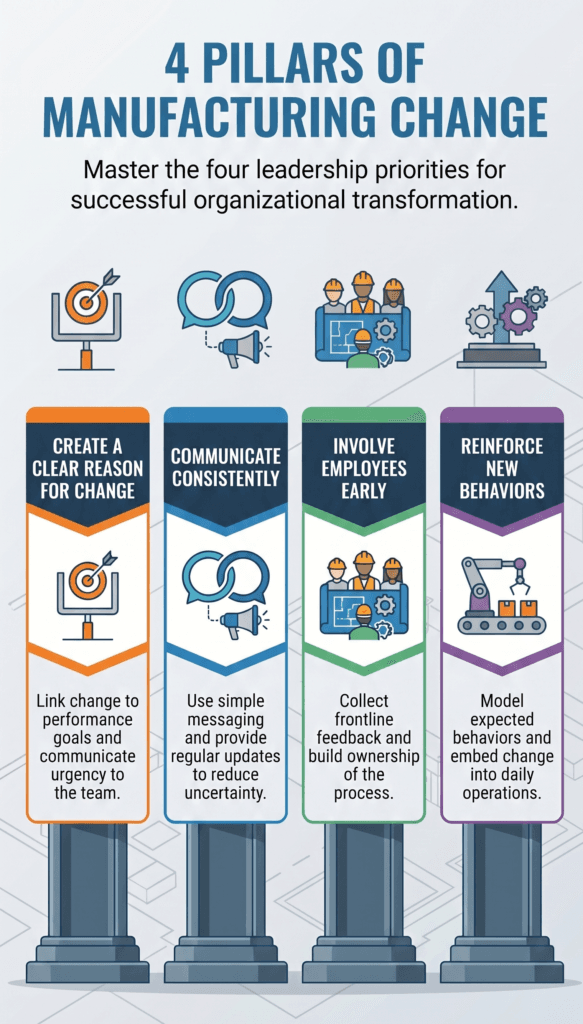
Leading organizational change in Kenya’s manufacturing sector requires a structured and practical approach. Successful leaders focus on a few key priorities.
Create a Clear Reason for Change
Employees are more likely to support change when they understand why it is necessary.
Leaders should clearly connect change initiatives to business objectives and operational challenges.
Communicate Consistently
One of the most common causes of resistance is uncertainty.
Regular communication helps employees understand expectations and progress.
Involve Employees Early
People are more likely to support change when they have opportunities to contribute and provide feedback.
Reinforce New Behaviors
Change becomes sustainable when new ways of working are consistently practiced and supported by leaders.
Corporate Agility for Kenyan Firms
The ability to adapt quickly has become an important competitive advantage.
For Kenyan firms, corporate agility is not simply about reacting faster. It is about creating organizations that can continuously improve and respond effectively to changing business conditions.
For manufacturers, agility can help organizations:
- Respond to customer needs
- Implement improvements faster
- Address operational challenges
- Support innovation
- Maintain competitiveness
The importance of organizational change plays a central role in building this capability.
Importance of Organizational Change in 2026
In 2026, organizational change is no longer occasional. It is now a permanent part of how manufacturing organizations operate.
Moving forward, manufacturers will continue to face:
- Workforce shifts
- Technology adoption challenges
- Market volatility
- Competitive pressure
- Increasing expectations for operational performance
Organizations that develop strong change capabilities today will be better positioned to navigate future challenges and opportunities.
Rather than treating change as an occasional initiative, leading manufacturers are building it into the way they operate.
Conclusion
The importance of organizational change continues to grow across Kenya’s manufacturing sector.
Organizations seeking Operational Excellence, stronger workforce performance, and sustainable growth must be able to adapt as business conditions evolve.
The importance of organizational change is not about implementing isolated projects. It is about creating an organization that can improve, adapt, and execute consistently over time.
Manufacturers that invest in leadership, workforce capability, communication, and continuous improvement are often better positioned to achieve lasting business results and remain competitive in an increasingly demanding environment.
Frequently Asked Questions
Why is organizational change important for manufacturers in Kenya?
Organizational change helps manufacturers improve performance, strengthen workforce alignment, support Operational Excellence, and adapt to changing market conditions.
How does organizational change support business transformation?
Organizational change helps organizations align people, leadership, processes, and culture with transformation objectives, improving the likelihood of successful implementation.
How can leaders communicate the importance of organizational change?
Leaders should clearly explain why change is necessary, how it supports business goals, and what employees can expect throughout the process. Consistent communication helps build trust and engagement.
What are the top factors for successful organizational change?
Leadership commitment, workforce engagement, communication, accountability, capability development, and alignment with business objectives are among the most important success factors.
What is the relationship between Operational Excellence and organizational change?
Operational Excellence initiatives often require changes in behaviours, leadership practices, and organizational culture. Organizational change helps ensure these improvements are adopted and sustained.
Contact us