Five S is easy to describe and harder to picture. Teams hear the words sort, set in order, shine, standardise and sustain, but still ask what a good area should actually look like. This guide gives ten simple shop-floor examples of Five S by area, from machines and assembly benches to stores, packing and dispatch, so teams can see what good practice looks like in their own part of the plant.
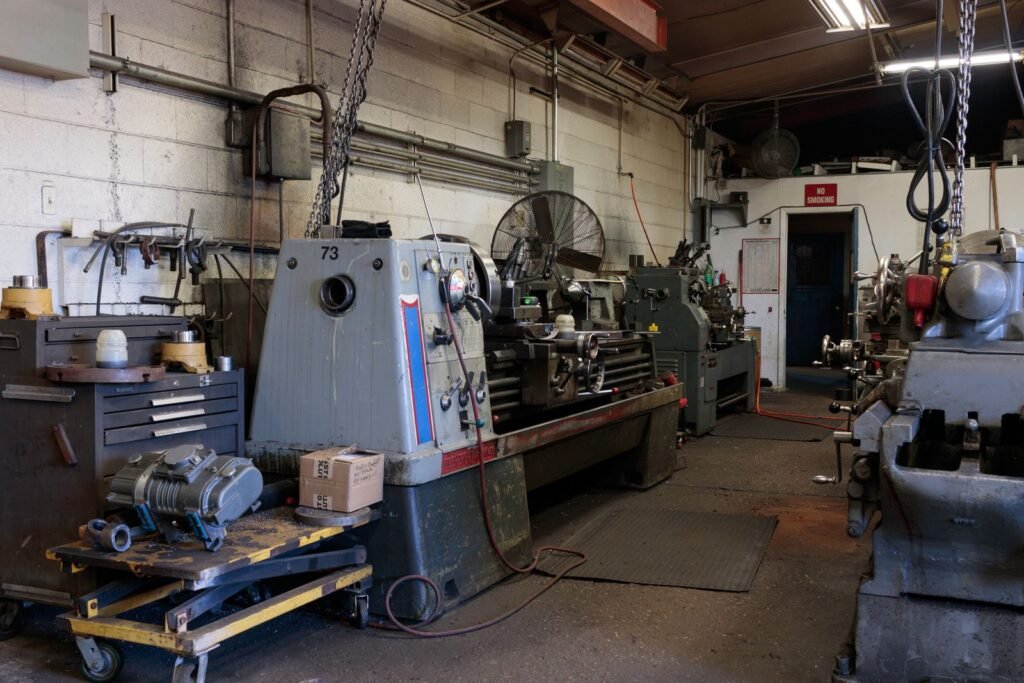
The examples are deliberately practical. They describe what you would see when walking through an area at standard, and what usually goes wrong when it is not. Use them as a starting point, then adapt them to your own products, equipment and people.
What does Five S look like on the shop floor?
On the shop floor, Five S looks like an area where only what is needed is present, everything has a clear and labelled place, equipment is clean and inspected, the standard is visible and the team keeps it that way every shift. Anyone walking through can see what is normal and what is not.
The method, described in more detail under 5S, applies the same way in every area. What changes is what the team needs, how often items are used and what risks the area carries.
| Area | Sort | Set in order | Shine | Standardise |
|---|---|---|---|---|
| Machine area | Remove unused fixtures | Tools at point of use | Clean and inspect daily | Photo of machine at standard |
| Assembly bench | Only current job parts | Parts in sequence of use | Clear bench surface | Bench layout drawing |
| Tool crib | Remove broken tools | Shadow boards, labelled drawers | Clean storage | Issue and return rules |
| Raw material store | Remove obsolete stock | Labelled locations, fast movers in front | Clean racks and aisles | Min-max marks |
| Packing area | Remove old packaging | Materials by product | Clear tables and floor | Packing standard per product |
Example 1: What does Five S look like at a machine?
At a machine, Five S means only the tools, fixtures and gauges needed for current jobs are kept nearby, each in a marked position. Cutting oil, coolant and lubricants are in labelled containers. Chips and scrap go into defined bins, not onto the floor.
The machine itself is clean enough that leaks, loose parts or damage are easy to spot. Inspection points are marked, and the operator checks them as part of a short daily routine. A photo of the machine area at standard is displayed nearby.
Example 2: How should an assembly bench be organised?
At an assembly bench, Five S means only the parts and tools for the current job are on or near the bench. Parts are arranged in the order they are used, often in labelled bins or trays within easy reach. Tools hang on a small board or sit in marked positions.
The bench surface is clear apart from the work itself. Finished units go to a marked outgoing location, and incoming parts arrive at a marked incoming location. A simple drawing or photo shows the agreed bench layout.
Example 3: How does Five S apply in a tool crib?
In a tool crib, Five S means broken, duplicate and obsolete tools are removed. Remaining tools are stored on shadow boards or in labelled drawers, so missing items are obvious at once.
Clear rules cover issuing and returning tools, with a simple record of who has what. Tools needing repair or calibration have their own marked area. The crib is clean, well lit and easy to search, so technicians spend little time looking.
Example 4: What does a well-organised raw material store look like?
In a raw material store, Five S means obsolete and damaged stock has been cleared, and every item has a labelled location. Fast-moving materials sit closest to the issue point, and heavy items are stored low.
Minimum and maximum levels are marked on racks or bins, so shortages and overstocking are visible. Aisles are clear and marked, and receiving, inspection and quarantine areas are clearly separated.
Example 5: How should work in progress be stored?
For work in progress, Five S means each batch has a defined location with a marked limit on how much can wait there. Labels or cards show what the material is, where it is going next and its status.
When work in progress spills outside its marked area, the overflow is a visible signal that flow is blocked somewhere. This turns storage into an early warning, rather than letting material quietly pile up in aisles and corners.
Example 6: What does Five S look like in a packing area?
In a packing area, Five S means old packaging and unused materials are removed, and the materials for each product are stored together in labelled locations. Packing tables are clear except for the job in progress.
A simple packing standard for each product, often with photos, shows how items should be packed, labelled and stacked. This reduces errors and makes it easy for new staff to pack correctly.
Example 7: How does Five S help a dispatch dock?
At a dispatch dock, Five S means marked zones for each customer, route or order. Finished goods waiting for dispatch are clearly separated from those still being checked. Loading areas are kept clear, and vehicle positions are marked.
A status board shows which orders are complete, checked and ready to load. This reduces last-minute searching and helps prevent wrong or incomplete shipments.
Example 8: What does Five S look like at an inspection bench?
At an inspection bench, Five S means gauges and instruments have fixed, labelled positions and clear calibration status. Samples waiting for inspection, under inspection and completed are kept in separate marked areas.
Rejected parts go into a clearly marked, often red, container so they cannot be mixed with good parts. Reference standards and drawings are current and easy to find.
Example 9: How should utility rooms and electrical panels be kept?
Around utility rooms and electrical panels, Five S means the space in front of panels, valves and isolators is kept clear and marked, so they can be reached quickly in an emergency. Nothing is stored in these zones.
Panels, switches and valves are labelled with what they control. Utility rooms are clean and dry, with tools and spares for utilities stored separately from production items.
Example 10: Does Five S apply to locker rooms and common areas?
Yes. In locker rooms, canteens and other common areas, Five S means clear rules for what is kept where, labelled storage, and a shared routine for keeping the space clean.
These areas matter more than they seem. People pass through them every day, and they set the tone for how seriously the plant takes its standards. A well-kept common area supports the same habits on the shop floor.
But there is a more fundamental question worth asking: if someone from another plant walked through each of your areas, would they see the same standard everywhere?
When some areas are excellent and others ignored, Five S becomes a set of showcase zones rather than a way of running the plant.
How do you use these examples in your own plant?
Use the examples as conversation starters, not templates. Walk each area with the team, compare it with the relevant example and ask what applies, what does not and what would make the work easier.
Agree a standard for each area, take photos, and set a short routine to keep it. Start with one or two areas that matter most to production, then extend to others. The Five S overview and the post on surprising facts of Five S give more background, and a 5S visual workplace approach shows how the areas connect into one system.
What mistakes should you avoid when copying examples?
The first mistake is copying layouts from another plant without checking how the work is done. What suits one product or machine may slow another.
The second is focusing only on appearance. A tidy area that still makes people search or walk far has not achieved the purpose of Five S.
The third is setting a standard and never revisiting it. As products, volumes and methods change, the standard for each area should change too.
Frequently asked questions
Which area should start Five S first?
Start with an area that clearly affects production, such as a bottleneck machine, a busy assembly line or the main store. Visible results there build support for the rest.
Do all areas need the same Five S standard?
All areas follow the same method and visual language, but each needs its own standard based on its work, equipment and risks.
How do you keep Five S standards across many areas?
Use standard photos for each area, short daily routines, regular checks by supervisors and audits that rotate across areas and shifts.
Are shop-floor examples useful for training?
Yes. Real examples from the plant, with before and after photos, help operators understand what good looks like far better than definitions alone.
Conclusion: Five S area by area
Five S becomes real when teams can see what it looks like in their own area. Machines, benches, tool cribs, stores, work in progress, packing, dispatch, inspection, utilities and common areas each have their own version of the same method. Use these ten examples to start the conversation, agree a standard for each area and keep it every shift.