Manufacturing is entering a new phase of digital transformation. Across Egypt, organizations are exploring smarter ways to improve operational efficiency, strengthen decision making, and build more connected production environments. At the center of this shift is Industry 4.0 manufacturing, an approach that combines digital technologies, intelligent automation, and real-time data to create more agile manufacturing operations.
Unlike traditional modernization initiatives that often focus on individual equipment upgrades, Industry 4.0 manufacturing connects machines, people, processes, and business systems into a unified ecosystem. This allows manufacturers to gain better visibility into operations, respond more quickly to changing market conditions, and continuously improve performance through data driven insights.
As manufacturers across Egypt continue their digital transformation journeys, understanding the principles of Industry 4.0 is becoming increasingly important. Organizations that adopt a structured approach are better positioned to improve operational resilience, increase productivity, and prepare for future technological advancements.
What Is Industry 4.0 Manufacturing?
Industry 4.0 manufacturing refers to the integration of advanced digital technologies into manufacturing operations. These technologies enable connected systems that collect, analyze, and share information across production environments, helping organizations make faster and more informed decisions.
Rather than treating production, maintenance, quality management, and supply chain operations as separate functions, Industry 4.0 creates a connected manufacturing environment where information flows seamlessly across the organization.
Common technologies that support digital manufacturing include:
- Connected industrial systems
- Cloud computing
- Artificial intelligence and machine learning
- Advanced analytics
- Industrial automation
- Connected manufacturing systems
- Edge computing
- Cybersecurity solutions
Together, these technologies support digital manufacturing technology adoption, allowing manufacturers to improve visibility, optimize workflows, and reduce operational complexity.
Why Industry 4.0 Manufacturing Matters in Egypt
Manufacturers across Egypt are operating in an increasingly competitive environment where efficiency, flexibility, and data-driven decision making have become important business priorities.
Traditional manufacturing methods often rely on disconnected systems, manual reporting, and reactive decision making. These approaches can limit visibility into operations and make it difficult to identify improvement opportunities.
Industry 4.0 manufacturing initiatives focus on addressing these challenges by creating connected operations that support continuous improvement.
Instead of relying solely on historical production reports, organizations can access operational insights in real time. Production managers, maintenance teams, and business leaders gain access to consistent information, allowing them to identify issues earlier and make more informed decisions.
As digital transformation continues across Egypt, connected manufacturing systems are becoming an important foundation for long-term Operational Excellence.
Core Technologies Driving Manufacturing Transformation
Industrial Automation and Data Integration
Modern manufacturing depends on accurate and accessible operational data.
Industrial automation and data integration enable production equipment, sensors, enterprise applications, and operational systems to communicate with one another. Instead of collecting information manually from multiple sources, manufacturers can create a centralized view of production activities.
This connected approach supports faster reporting, improved process visibility, and more effective decision making across manufacturing operations.
Connected Industrial Systems
Connected industrial systems allow machines, sensors, production assets, and software platforms to exchange operational information across the manufacturing environment.
By enabling continuous data collection and communication between equipment and business systems, manufacturers gain greater visibility into production activities, equipment performance, and operational conditions. This connected approach supports more informed decision making, proactive maintenance planning, and ongoing operational improvement.
Connected operational data also creates the foundation for predictive maintenance, production optimization, and continuous performance monitoring. When integrated effectively, these systems help manufacturers move from reactive operations toward more proactive and data driven management.
Artificial Intelligence and Advanced Analytics
Data alone does not improve manufacturing performance. Organizations must also be able to interpret the information they collect.
Artificial intelligence and advanced analytics help manufacturers identify patterns, detect anomalies, forecast operational trends, and support decision making.
Instead of reacting to issues after they occur, manufacturers can identify potential problems earlier and prioritize improvement opportunities more effectively.
Cloud-Based Manufacturing Platforms
Cloud technologies make manufacturing information more accessible across departments while supporting collaboration between operational and business teams.
Cloud platforms also simplify data storage, software updates, and system scalability, making them an important component of digital manufacturing Industry 4.0 Egypt strategies.
Benefits of Industry 4.0 Manufacturing for Egypt’s Industries
Improved Operational Visibility
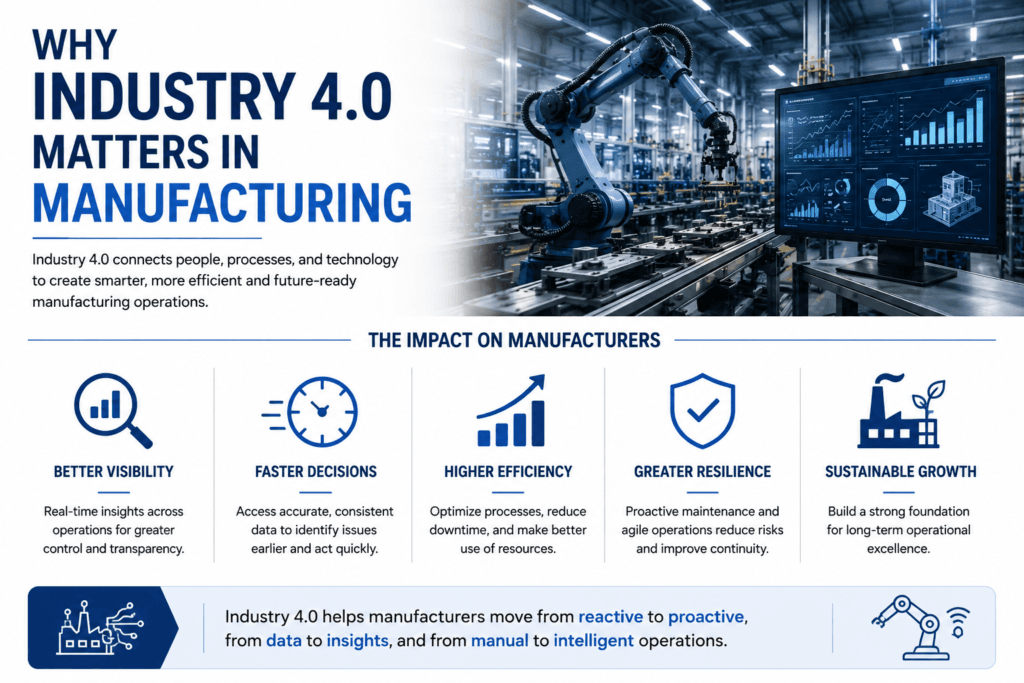
One of the most valuable outcomes of Industry 4.0 manufacturing is greater visibility across production operations.
Connected systems provide a unified view of equipment performance, production activities, maintenance schedules, and operational metrics. This allows manufacturers to monitor operations more effectively and respond to changing conditions with greater confidence.
Better Decision Making
Reliable operational data enables better business decisions.
Instead of relying on manual reporting or isolated data sources, organizations can use real-time information to support production planning, maintenance scheduling, and resource allocation.
This helps leadership teams make informed decisions based on current operational conditions.
Increased Process Efficiency
Connected manufacturing systems help identify inefficiencies that may otherwise remain hidden.
Manufacturers can analyze production workflows, identify process bottlenecks, and continuously improve operational performance through data driven insights.
This approach supports long-term operational improvement without relying solely on periodic reviews.
Greater Operational Flexibility
Manufacturing environments continue to evolve as customer expectations, market conditions, and production requirements change.
Industry 4.0 manufacturing enables organizations to adapt more effectively by providing better visibility, connected systems, and more responsive operational processes.
Stronger Collaboration Across Teams
Digital manufacturing encourages collaboration between production, maintenance, quality, engineering, and business functions.
When everyone has access to consistent operational information, communication improves and cross functional decision making becomes more effective.
Common Challenges During Industry 4.0 Adoption
Although the benefits are significant, successful transformation requires careful planning.
Many organizations begin digital transformation with isolated technology investments rather than a comprehensive strategy. As a result, systems may remain disconnected, limiting the overall value of digital initiatives.
Other common challenges include:
Integrating Legacy Systems
Many manufacturing facilities continue to operate equipment that was not originally designed for connected environments.
A structured integration strategy helps organizations connect existing assets where possible while planning future modernization efforts.
Data Quality and Governance
Connected systems generate large amounts of operational information.
Without clear governance policies, manufacturers may struggle to maintain consistent, reliable, and secure data.
Establishing strong data management practices is an important part of any connected manufacturing systems strategy.
Workforce Readiness
Technology alone does not deliver transformation.
Organizations should ensure employees understand how digital tools support daily operations and provide appropriate training throughout the implementation process.
Successful Industry 4.0 initiatives combine technology adoption with organizational change management.
Building a Connected Manufacturing Systems Strategy
Manufacturers often ask, when should companies start Industry 4.0 manufacturing in Egypt?
The answer is that transformation should begin when organizations have a clear understanding of their operational objectives and business priorities.
Rather than attempting a large-scale transformation all at once, many organizations benefit from a phased approach.
A practical roadmap typically includes:
Assess Current Manufacturing Operations
Evaluate existing systems, operational processes, and digital maturity to identify improvement opportunities.
Define Business Objectives
Establish measurable operational goals that align technology investments with business priorities.
Prioritize High-Value Opportunities
Focus first on projects that improve visibility, operational efficiency, or decision making.
Strengthen Data Integration
Develop a connected data environment where operational information can flow securely across manufacturing systems.
Expand Through Continuous Improvement
Digital transformation is an ongoing journey rather than a one time project.
Organizations should regularly evaluate performance, refine processes, and expand digital capabilities as business needs evolve.
The Future of Industry 4.0 Manufacturing in Egypt
The future of smart manufacturing Industry 4.0 Egypt will likely be defined by increasingly connected operations, greater use of intelligent analytics, and stronger integration between operational and business systems.
Manufacturers are expected to continue investing in technologies that improve visibility, support informed decision making, and enable more agile production environments.
As digital ecosystems mature, organizations will increasingly focus on creating integrated operations where data moves seamlessly across production, maintenance, quality management, and enterprise systems.
Rather than viewing digital transformation as a technology project, successful manufacturers will treat it as an ongoing business strategy centered on continuous improvement.
Conclusion
Industry 4.0 manufacturing represents more than the adoption of new technologies. It is a strategic shift toward connected, data driven manufacturing that supports better decision making, improved operational visibility, and continuous improvement.
For manufacturers across Egypt, the opportunity lies in building digital capabilities through a structured and practical approach. By focusing on connected systems, data integration, workforce readiness, and long term planning, organizations can establish a strong foundation for future growth while remaining adaptable to changing business requirements.
As Industry 4.0 manufacturing continues to evolve, manufacturers that invest in thoughtful digital transformation strategies will be better positioned to improve operational performance and respond confidently to future challenges.
Frequently Asked Questions
What is Industry 4.0 manufacturing and how it applies to Egypt?
Industry 4.0 manufacturing is the integration of connected digital technologies into manufacturing operations. In Egypt, it helps organizations improve operational visibility, streamline processes, and make more informed decisions through data-driven manufacturing.
How can Industry 4.0 manufacturing benefit Egyptian factories?
Industry 4.0 manufacturing can improve operational efficiency, support predictive maintenance, strengthen collaboration, enhance production visibility, and enable continuous process improvement through connected manufacturing systems.
Why should manufacturers adopt Industry 4.0 manufacturing in Egypt?
Manufacturers should consider Industry 4.0 to build more resilient operations, improve productivity, support digital transformation, and create connected manufacturing environments that enable faster and more informed decision making.
How does Industry 4.0 manufacturing improve efficiency in Egypt?
Industry 4.0 improves efficiency by integrating operational data, automating information flow, reducing manual processes, and providing real-time insights that support better production planning and operational management.
When should companies start Industry 4.0 manufacturing in Egypt?
Organizations should begin when they have identified clear business objectives, assessed their current digital maturity, and developed a phased transformation strategy that aligns technology investments with operational priorities.