Manufacturing is becoming increasingly connected, data driven, and responsive to changing business needs. As organizations across Egypt continue their digital transformation journeys, many are exploring the technologies that enable Industry 4.0 manufacturing and support long-term operational improvement.
Rather than relying on isolated systems or standalone automation initiatives, Industry 4.0 manufacturing brings together connected technologies that improve visibility, strengthen collaboration, and support informed decision making across manufacturing operations. The goal is not simply to introduce new technologies but to create an integrated manufacturing environment where systems, data, and people work together more effectively.
For manufacturers in Egypt, understanding these technologies is an important step toward building resilient and adaptable operations. This article explores the core technologies behind Industry 4.0 manufacturing in Egypt, their role in modern manufacturing, and the practical considerations for adopting them as part of a long-term digital transformation strategy.
What Are Industry 4.0 Manufacturing Technologies?
Industry 4.0 manufacturing technologies are the digital tools and connected systems that enable manufacturers to improve operational visibility, streamline processes, and make better informed decisions.
Rather than functioning independently, these technologies work together to create a connected manufacturing environment where operational information flows across production, maintenance, quality, planning, and business systems.
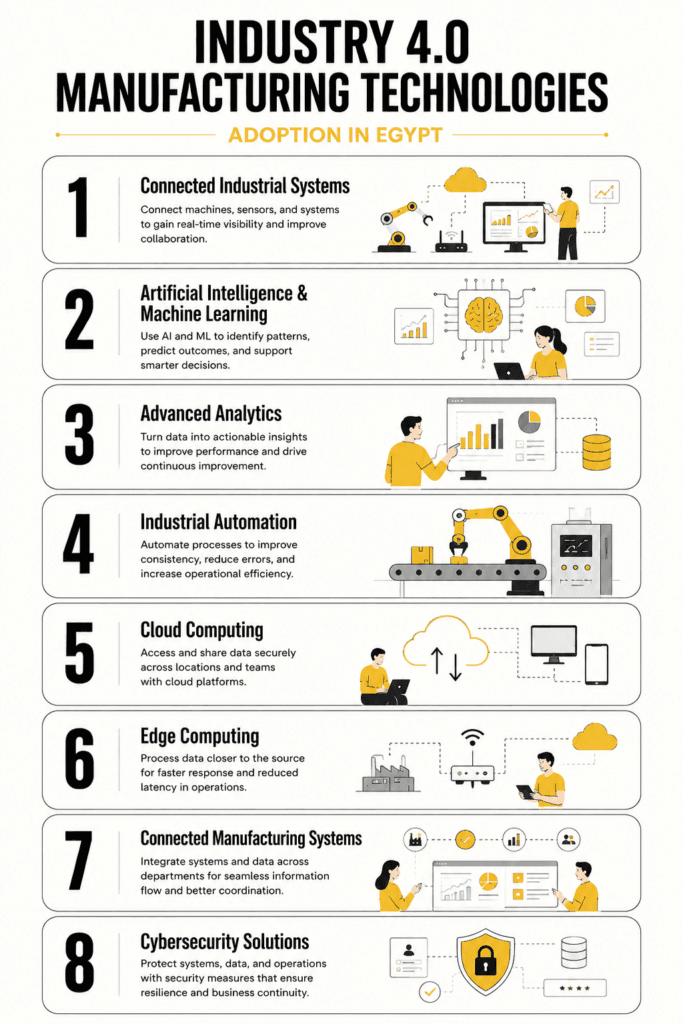
Common technologies supporting Industry 4.0 manufacturing include:
- Connected industrial systems
- Artificial intelligence and machine learning
- Advanced analytics
- Industrial automation
- Cloud computing
- Edge computing
- Connected manufacturing systems
- Cybersecurity solutions
Together, these capabilities support digital manufacturing technology adoption, helping manufacturers create operations that are more efficient, collaborative, and responsive to changing business requirements.
Core Technologies Driving Industry 4.0 Manufacturing
Connected Industrial Systems
Connected industrial systems form the foundation of modern manufacturing environments.
By enabling machines, production assets, sensors, and software platforms to exchange operational information, manufacturers gain better visibility into production activities and operational performance.
A well planned connected manufacturing systems strategy helps ensure that information flows seamlessly across departments, reducing information silos and improving collaboration throughout the organization.
Artificial Intelligence and Machine Learning
Artificial intelligence and machine learning help manufacturers transform operational data into meaningful insights.
These technologies can support production planning, identify operational trends, detect process variations, and provide decision support based on historical and real time information.
Rather than replacing human expertise, artificial intelligence enhances the ability of manufacturing teams to make informed decisions and respond more effectively to changing operational conditions.
Advanced Analytics
Modern manufacturing environments generate significant volumes of operational information.
Advanced analytics helps manufacturers interpret this information by identifying patterns, measuring performance, and supporting continuous improvement initiatives.
As organizations continue digital manufacturing technology adoption, analytics becomes increasingly valuable for improving operational visibility and guiding strategic decision making.
Industrial Automation
Industrial automation continues to play an important role in Industry 4.0 manufacturing.
Automation technologies help improve process consistency, support repetitive manufacturing activities, and enable more standardized production workflows.
When integrated with connected manufacturing systems, automation contributes to greater operational efficiency while providing better access to production information.
Cloud Computing
Cloud computing enables manufacturers to securely access operational information across departments and locations.
Cloud-based platforms support collaboration by making manufacturing data available to production teams, maintenance personnel, engineering functions, and business leaders through centralized digital environments.
Cloud infrastructure also provides flexibility for organizations as they expand digital capabilities over time.
Edge Computing
Edge computing allows certain operational data to be processed closer to manufacturing environments before being shared with broader enterprise systems.
This supports faster responses for time sensitive manufacturing activities while reducing the need to transfer every data point across centralized platforms.
Combined with cloud technologies, edge computing contributes to a more balanced and efficient digital manufacturing environment.
Cybersecurity
As manufacturing systems become increasingly connected, cybersecurity becomes an essential component of Industry 4.0 manufacturing.
Protecting operational technology, manufacturing data, and connected systems requires organizations to establish strong security practices throughout their digital transformation journey.
Cybersecurity should be integrated into technology planning from the beginning to support operational resilience and business continuity.
How These Technologies Work Together
The value of Industry 4.0 manufacturing does not come from implementing individual technologies in isolation. Instead, it comes from integrating them into a connected operational ecosystem.
For example, connected industrial systems collect operational information from production environments. Cloud platforms make that information accessible across the organization. Advanced analytics and artificial intelligence help interpret the data, while industrial automation supports more consistent execution of manufacturing processes.
Together, these technologies enable manufacturers to improve operational visibility, strengthen collaboration, and make more informed decisions across the manufacturing lifecycle.
Choosing the Right Technologies for Manufacturing
Not every technology will deliver the same value for every organization.
Manufacturers should evaluate Industry 4.0 technologies based on business priorities rather than focusing solely on technology trends. Key considerations include:
Business Objectives
Technology investments should align with clearly defined operational goals, whether the priority is improving visibility, increasing efficiency, strengthening collaboration, or supporting continuous improvement.
Existing Infrastructure
Understanding current manufacturing systems helps organizations determine how new technologies can be integrated with existing operations.
Data Integration Requirements
Successful Industry 4.0 manufacturing depends on the ability to connect information across production systems, enterprise applications, and operational platforms.
Scalability
Manufacturers should prioritize technologies that can evolve alongside changing operational requirements and future business growth.
Workforce Readiness
Employees play an essential role in successful technology adoption.
Organizations should ensure teams understand how new technologies support daily operations and provide appropriate training throughout the implementation process.
Common Technology Adoption Challenges
Although Industry 4.0 technologies offer significant opportunities, successful implementation requires careful planning.
Integrating Existing Systems
Many manufacturers operate a combination of established equipment and newer digital platforms.
Developing an integration strategy helps organizations connect existing systems while supporting future modernization efforts.
Data Governance
As connected systems generate more operational information, manufacturers should establish clear practices for maintaining data quality, accessibility, and consistency.
Strong governance improves confidence in operational reporting and supports informed decision making.
Interoperability
Technology platforms should communicate effectively across manufacturing operations.
Selecting compatible systems and establishing integration standards helps create a more connected manufacturing environment.
Change Management
Technology adoption also requires organizational change.
Clear communication, leadership support, employee engagement, and ongoing training all contribute to successful implementation.
Building a Technology Roadmap for Egypt
Manufacturers seeking to strengthen Industry 4.0 manufacturing initiatives can benefit from a structured technology roadmap.
A practical approach includes:
Assess Current Capabilities
Evaluate manufacturing systems, operational processes, and existing digital maturity.
Define Business Priorities
Identify operational objectives that technology investments should support.
Prioritize High-Value Initiatives
Focus first on projects that improve operational visibility, process efficiency, or collaboration.
Strengthen Data Integration
Connect operational information across manufacturing systems to create a more unified view of production activities.
Expand Through Continuous Improvement
Digital transformation is an ongoing process. Manufacturers should regularly evaluate performance, refine implementation strategies, and expand capabilities as business needs evolve.
Organizations undertaking complex transformation initiatives often engage Industry 4.0 manufacturing consulting specialists in Egypt to help assess digital maturity, prioritize technology investments, and develop structured implementation roadmaps. Regardless of the approach, long-term success depends on aligning technology decisions with operational objectives and organizational readiness.
Conclusion
Industry 4.0 manufacturing technologies are transforming how manufacturers collect information, manage operations, and support decision making. However, the greatest value comes not from adopting individual technologies but from integrating them into a connected manufacturing strategy.
For manufacturers across Egypt, the focus should be on selecting technologies that align with business priorities, improve operational visibility, and strengthen collaboration across manufacturing functions.
By taking a structured approach to Industry 4.0 manufacturing, organizations can build connected, scalable, and resilient operations that support continuous improvement and long-term competitiveness.
Frequently Asked Questions
What technologies are used in Industry 4.0 manufacturing?
Industry 4.0 manufacturing commonly includes connected industrial systems, artificial intelligence, machine learning, advanced analytics, industrial automation, cloud computing, edge computing, connected manufacturing systems, and cybersecurity solutions.
Which Industry 4.0 technologies should manufacturers adopt first?
The right starting point depends on an organization’s business objectives and current digital maturity. Many manufacturers begin by improving data integration, strengthening operational visibility, and connecting existing manufacturing systems before expanding into more advanced capabilities.
How does industrial automation support Industry 4.0 manufacturing?
Industrial automation improves process consistency, streamlines repetitive activities, and integrates with connected manufacturing systems to support more efficient and data driven operations.
Why is data integration important in Industry 4.0 manufacturing?
Data integration allows information from production, maintenance, quality, and business systems to be connected, providing manufacturers with a unified view of operations that supports informed decision making and continuous improvement.
How should manufacturers choose Industry 4.0 technologies?
Manufacturers should evaluate technologies based on business goals, existing infrastructure, scalability, workforce readiness, and the ability to integrate with connected manufacturing systems rather than adopting technologies solely based on industry trends.