Inventory management consultants in Egypt help manufacturers optimize stock levels, reduce excess inventory, and improve working capital utilization through structured analysis and process improvements. As businesses face increasing pressure to control costs, improve efficiency, and maintain reliable production schedules, effective inventory optimization has become a key operational priority.
By identifying inventory inefficiencies, improving planning practices, and strengthening inventory control processes, consultants help organizations create more balanced inventory systems. This article explains how inventory management consultants support stock optimization, cost reduction, and improved manufacturing performance in Egypt.
Key Takeaways
- Inventory optimization helps manufacturers maintain the right stock levels while reducing unnecessary costs.
- Inventory consultants identify opportunities to reduce excess, obsolete, and slow-moving inventory.
- Improving stock accuracy supports better production planning and purchasing decisions.
- Sustainable inventory improvements require structured processes, reliable data, and continuous monitoring.
Why Manufacturers Need Inventory Management Consultants
Many manufacturers struggle to identify the root causes behind inventory inefficiencies. High stock levels, frequent shortages, and inaccurate records are often symptoms of deeper process issues. Inventory management consultants help organizations analyze these challenges and develop structured improvement plans.
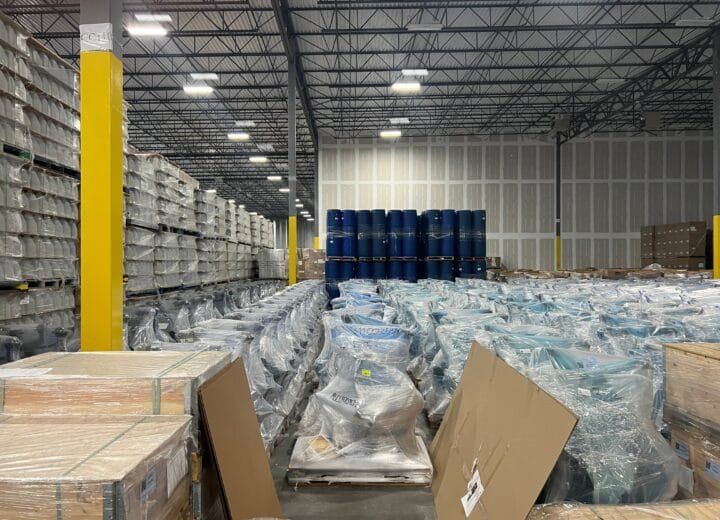
While maintaining sufficient inventory is necessary to support production, excessive stock can create hidden costs. These include storage expenses, increased handling requirements, risk of material obsolescence, and capital being tied up in unused inventory.
On the other hand, insufficient inventory availability can result in production delays, emergency purchasing, extended lead times, and reduced customer responsiveness.
This balance is where inventory management consultants provide value. They help organizations understand their current inventory performance, identify improvement opportunities, and develop practical approaches to optimize stock without negatively affecting operations.
Inventory Problems That Increase Manufacturing Costs
Manufacturers often seek inventory management consulting when they experience challenges such as:
Excess Inventory
Excess inventory often develops due to inaccurate demand assumptions, purchasing decisions based on outdated information, or a lack of structured inventory review processes.
Although keeping additional stock may appear to reduce supply risks, excessive inventory increases carrying costs and can limit available working capital.
Inventory consultants help businesses analyze inventory usage patterns, identify unnecessary stock, and develop strategies to improve inventory efficiency.
Slow-Moving and Obsolete Stock
Materials that remain unused for extended periods consume warehouse space and financial resources.
Common causes include:
- Changes in customer demand
- Product modifications
- Purchasing without updated requirements
- Poor visibility of inventory usage
A structured inventory assessment helps organizations identify slow-moving materials and establish processes for better inventory decisions.
Inaccurate Inventory Records
Stock accuracy is essential for effective manufacturing planning.
When system records do not match actual inventory levels, businesses may experience:
- Incorrect purchasing decisions
- Production interruptions
- Material shortages
- Unnecessary inventory accumulation
Improving stock accuracy allows teams to make decisions based on reliable information rather than assumptions.
How Inventory Management Consultants Optimize Stock
Inventory optimization is not simply about reducing inventory quantities. The objective is to create the right balance between inventory availability, operational requirements, and cost efficiency.
Inventory management consultants typically focus on several areas to improve stock performance.
Assessing Current Inventory Performance
The first step in inventory optimization is understanding the current state.
Consultants analyze inventory performance using indicators such as:
- Inventory turnover
- Stock accuracy levels
- Inventory carrying costs
- Slow-moving inventory
- Material availability
- Inventory usage patterns
This assessment helps identify where inventory costs are increasing and where improvement opportunities exist.
For example, high inventory levels do not always indicate strong inventory performance. They may indicate over-purchasing, inaccurate planning assumptions, or inefficient inventory control processes.
A detailed assessment helps organizations understand the reasons behind inventory challenges before implementing improvements.
Improving Inventory Visibility and Stock Accuracy
Reliable inventory data is the foundation of effective inventory optimization.
Manufacturers need accurate information about:
- Available materials
- Inventory locations
- Stock consumption patterns
- Material requirements
- Inventory movement history
Inventory management consulting often focuses on improving the processes that influence inventory accuracy, including:
- Recording inventory movements correctly
- Establishing clear inventory responsibilities
- Improving reconciliation practices
- Monitoring inventory performance indicators
Better inventory visibility enables purchasing and production teams to make more informed decisions.
Takeaway
Inventory optimization starts with accurate information. Without reliable inventory data, even advanced planning methods can produce ineffective decisions.
Reducing Excess Inventory Costs
Reducing excess inventory is one of the most direct ways organizations can improve cost efficiency.
Excess stock creates costs beyond the original purchase value, including:
- Storage requirements
- Material handling
- Inventory management effort
- Risk of damage or obsolescence
- Reduced working capital flexibility
Inventory consultants help organizations identify where excess stock exists and evaluate opportunities to improve purchasing and inventory planning practices.
The objective is not to reduce inventory blindly but to ensure that inventory levels support actual operational requirements.
Optimizing Inventory Levels for Manufacturing Operations
Maintaining the right inventory level is one of the biggest challenges for manufacturing organizations. Too much inventory increases costs, while insufficient inventory can interrupt production and affect customer commitments.
Inventory optimization helps businesses determine appropriate stock levels based on operational requirements, material availability, demand patterns, and supply conditions.
Inventory management consultants help manufacturers move away from reactive purchasing decisions and develop more structured inventory planning approaches.
Key considerations include:
Understanding Material Requirements
Not all inventory items require the same management approach.
Manufacturers typically need to evaluate:
- Material importance to production
- Usage frequency
- Supplier lead times
- Demand variability
- Replacement availability
Understanding these factors helps organizations prioritize critical materials while avoiding unnecessary accumulation of low-value or rarely used stock.
Balancing Availability and Cost
A common misconception is that reducing inventory always improves efficiency. However, inventory levels that are too low can create production disruptions and increase emergency purchasing costs.
The goal of inventory optimization is to achieve balance:
- Enough inventory to support production
- Reduced unnecessary stock
- Better utilization of working capital
- Improved operational predictability
Inventory consultants help organizations evaluate this balance using data-driven analysis rather than relying only on historical purchasing habits.
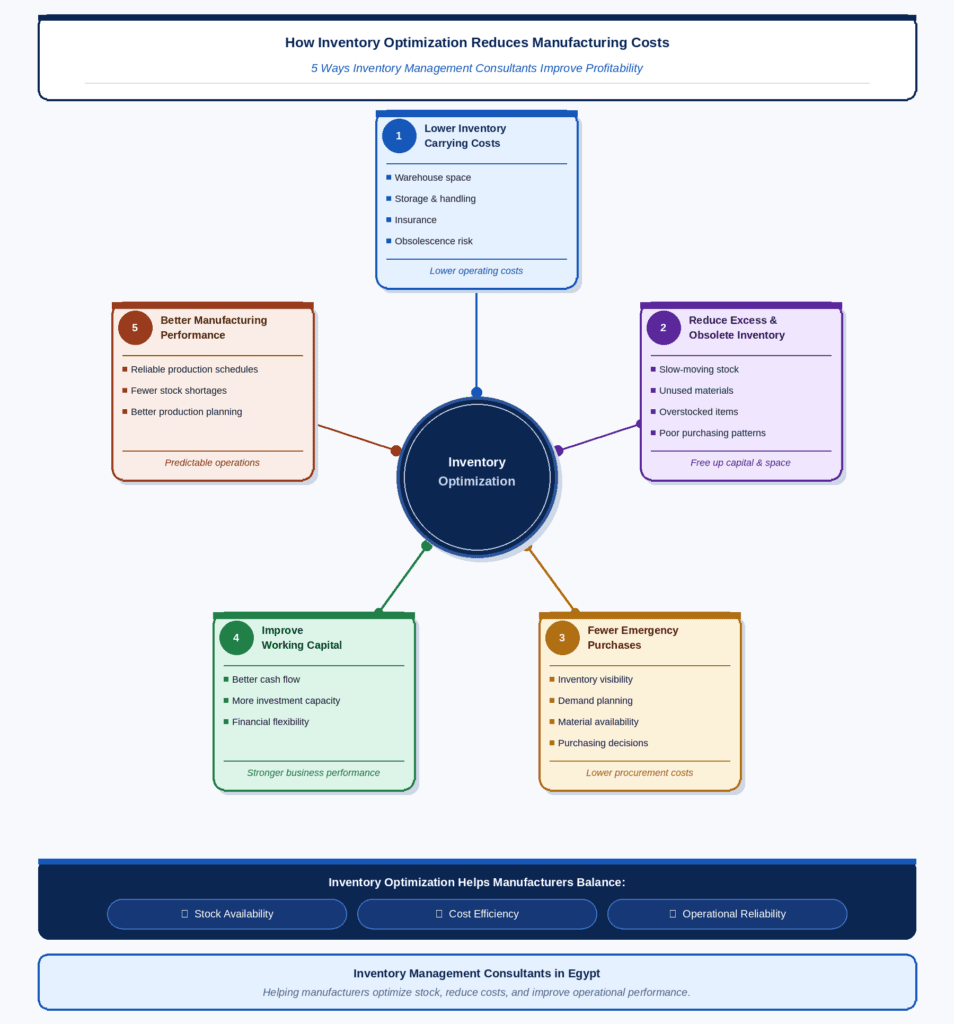
How Inventory Optimization Reduces Costs
Reducing inventory-related costs is one of the primary reasons manufacturers invest in inventory management consulting.
Effective inventory optimization can support cost savings in several areas.
Lower Inventory Carrying Costs
Inventory requires resources beyond the purchase cost of materials.
Carrying costs may include:
- Warehouse space
- Storage handling
- Insurance
- Inventory management effort
- Risk of obsolescence
By identifying unnecessary inventory and improving stock planning, organizations can reduce these additional costs.
Reduced Excess and Obsolete Inventory
Unused inventory represents tied-up capital that could otherwise support business growth initiatives.
Inventory consultants help organizations evaluate:
- Which materials are moving slowly
- Why excess stock has accumulated
- Whether inventory levels match actual demand
- How future purchasing decisions can be improved
This creates a more controlled approach to inventory investment.
Fewer Emergency Purchases
Poor inventory visibility can lead to unexpected material shortages.
When businesses lack accurate inventory information, they may rely on urgent purchasing, which often increases procurement costs and creates operational pressure.
Improved inventory planning helps manufacturers anticipate requirements earlier and make more efficient purchasing decisions.
Reducing Working Capital Tied Up in Inventory
Excess inventory ties up capital that could otherwise support production improvements, expansion, or operational investments. By improving inventory planning and reducing unnecessary stock, manufacturers can improve cash flow without compromising production requirements.
Improving Purchasing Decisions Through Better Inventory Data
Poor inventory visibility often leads to unnecessary purchasing decisions. Without accurate information about available stock, consumption patterns, and material requirements, businesses may purchase materials earlier than required or duplicate existing inventory.
By improving inventory data accuracy and planning processes, inventory management consultants help manufacturers make more informed purchasing decisions and reduce unnecessary inventory investment.
Improving Manufacturing Performance Through Better Inventory Control
Inventory management directly influences manufacturing performance.
Production teams depend on accurate inventory information to understand:
- What materials are available
- What needs to be purchased
- When materials will be required
- Whether production schedules are achievable
Poor inventory control can create unnecessary delays, while optimized inventory processes support smoother operations.
Supporting Factory Planning
Better inventory visibility improves factory planning by ensuring production decisions are based on accurate material information.
For example, when inventory records accurately reflect available materials, production planners can create more reliable schedules and reduce disruptions caused by unexpected shortages.
This connection between inventory and production planning makes inventory management a critical part of manufacturing efficiency.
Takeaway
Optimized inventory does not only reduce costs, it improves operational reliability by ensuring materials are available when production needs them.
The Inventory Management Consulting Approach for Egyptian Manufacturers
A structured consulting approach helps organizations identify improvement opportunities and create sustainable inventory practices.
While every business has different requirements, inventory management consulting commonly follows several stages.
1. Inventory Performance Assessment
The first stage involves understanding current inventory conditions.
This may include reviewing:
- Existing inventory levels
- Stock accuracy
- Inventory movement patterns
- Slow-moving materials
- Current planning practices
The objective here is to identify where inventory performance can be improved.
2. Identifying Improvement Opportunities
After analyzing inventory data, consultants help identify opportunities such as:
- Reducing excess stock
- Improving inventory accuracy
- Strengthening inventory review processes
- Improving material availability
Recommendations should be based on operational requirements and measurable improvement areas.
3. Developing Practical Improvement Actions
Successful inventory improvements require practical processes that teams can maintain.
Improvement actions may focus on:
- Clear inventory procedures
- Better monitoring methods
- Improved coordination between departments
- Defined inventory performance measures
The focus should remain on creating sustainable improvements rather than temporary inventory reductions.
Inventory Management Consulting for Egyptian Manufacturers
Manufacturing companies across Egypt operate in different industrial environments, each with unique inventory requirements.
Effective manufacturing inventory management in Egypt requires understanding production requirements, material availability challenges, and operational constraints across different industrial environments.
Inventory consultants for industrial zones in Egypt can help manufacturers evaluate inventory challenges related to:
- Material availability
- Stock control practices
- Inventory accuracy
- Warehouse processes
- Production support requirements
A structured inventory improvement approach helps businesses create more reliable systems regardless of their industry or operational scale.
Choosing Inventory Management Consultants in Egypt
Selecting the right consulting partner requires evaluating both technical knowledge and practical manufacturing experience.
Organizations should consider:
Understanding of Manufacturing Operations
Inventory challenges are closely connected to production processes, material requirements, and operational workflows.
Consultants with manufacturing experience can better understand how inventory decisions affect production performance.
Data-Driven Improvement Approach
Effective inventory consulting should be based on analysis rather than assumptions.
A strong approach includes:
- Reviewing inventory performance data
- Identifying root causes
- Prioritizing improvement opportunities
- Measuring results
Focus on Sustainable Results
Reducing inventory temporarily is not enough. Long-term improvement requires processes that allow teams to maintain better inventory performance.
Sustainable inventory management depends on:
- Clear responsibilities
- Reliable information
- Defined processes
- Continuous monitoring
Conclusion
Inventory management consultants in Egypt help manufacturers optimize stock levels, improve inventory accuracy, and reduce unnecessary costs through structured inventory improvement approaches.
By analyzing inventory performance, identifying excess stock, improving visibility, and supporting better planning decisions, consultants help organizations create more efficient inventory systems.
Effective inventory optimization is not about reducing stock without analysis. It is about maintaining the right balance between availability, cost efficiency, and operational requirements.
For manufacturers seeking improved efficiency and stronger operational performance, inventory optimization provides a practical path toward better cost control and sustainable business growth.
Frequently Asked Questions (FAQs)
What do inventory management consultants do?
Inventory management consultants help manufacturers analyze inventory performance, identify inefficiencies, and develop strategies to optimize stock levels. They evaluate areas such as inventory accuracy, excess stock, material availability, and planning processes to help businesses reduce costs and improve operational reliability.
How can inventory management consultants help reduce inventory costs?
Inventory management consultants reduce costs by identifying excess inventory, improving stock accuracy, optimizing inventory levels, and reducing unnecessary storage and handling expenses. By analyzing inventory data and processes, consultants help businesses maintain the right amount of stock while avoiding avoidable inventory costs.
How does inventory optimization reduce costs for manufacturers?
Inventory optimization reduces costs by helping manufacturers maintain appropriate stock levels, reduce excess inventory, lower carrying costs, and improve working capital utilization. It also reduces operational disruptions caused by shortages or inaccurate inventory information.
Why is stock accuracy important for manufacturers?
Stock accuracy ensures that businesses have reliable information about available materials and inventory levels. Accurate inventory records help manufacturers make better purchasing decisions, prevent production delays, reduce excess stock, and improve overall operational efficiency.
What should manufacturers consider when choosing inventory management consultants in Egypt?
Manufacturers should consider a consultant’s understanding of industrial operations, experience with inventory improvement processes, data-driven approach, and ability to develop sustainable solutions. The right consulting partner should focus on improving inventory performance while aligning recommendations with business and production requirements.