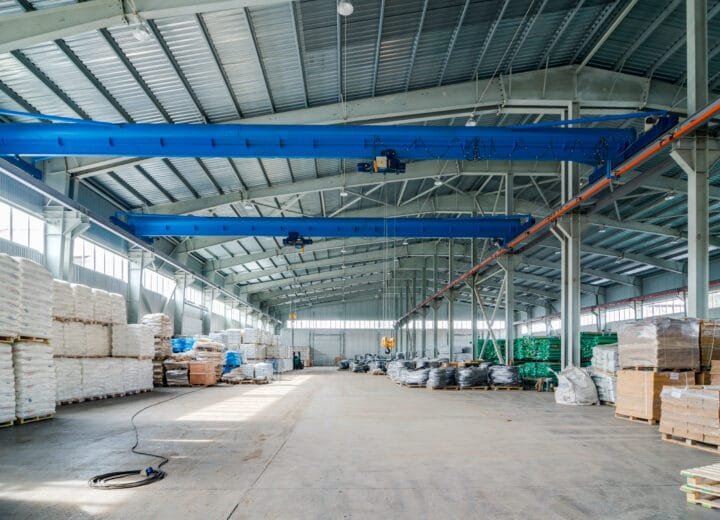
Every manufacturing floor carries hidden operational losses often accepted as part of routine operations.
It is rarely a major breakdown or a delayed supplier that impacts productivity the most. More often, it is the accumulation of small inefficiencies: operators walking repeatedly to collect tools, manual production entries, waiting during material movement, or inspection methods that differ across shifts. Individually, these activities seem minor. Collectively, they reduce output capacity, increase manpower dependency, and create significant hidden costs over time.
These non-value-adding activities (NVAs) exist in almost every manufacturing environment, yet many organisations struggle to quantify their true impact.
A common mistake is assuming that productivity challenges can only be solved through AI, robotics, or large-scale automation investments. In reality, advanced technology delivers results only when applied to stable, measurable, and standardised processes.
Without process visibility, organisations risk automating inefficiency instead of eliminating it.
Before investing in automation, manufacturers need to understand:
- where time is being lost,
- which activities genuinely add value,
- and where improvement opportunities actually exist.
Sustainable productivity improvement begins with process measurement, operational discipline, and data-backed decision-making — not technology alone.
The Reality of Automation Potential
Data from manufacturing productivity studies reveals a massive gap between perceived automation needs and actual operational realities:
-
60% of all occupations involve at least 30% technically automatable activities.
-
44% of process elements in a typical manufacturing line have genuine automation potential.
-
The highest returns don’t come from complex decision-making tools, but from three core areas: data collection, data processing, and predictable physical tasks.
The Overlooked Power of Low-Cost Automation (LCA)
Before committing to high-Capex automation with multi-year payback periods, experienced manufacturers look to Low-Cost Automation (LCA).
LCA involves practical, engineering-driven improvements pneumatic assists, jig redesigns, mistake-proofing fixtures, sensor-based counters, or simple conveyor additions.
-
The Impact: It eliminates physical waste at a fraction of the cost.
-
The Timeline: ROI is typically recovered in under 12 months.
The bias toward dramatic, large-scale robotic systems often blinds leadership teams to an harsh reality: a well-designed jig that eliminates a 45-second retrieval motion often yields a far higher financial return than a multi-crore robot.
ProductivEdge: A Pragmatic 5-Stage Framework
Developed by Faber Infinite Consulting, the ProductivEdge framework merges traditional time and motion study methodologies with a structured automation feasibility model. It moves manufacturing leaders from intuition to evidence across five sequential stages:
-
Map: Document every process flow and handoff before any measurement begins.
-
Measure: Use ILO-compliant time and motion studies for repetitive tasks, or work sampling for non-repetitive roles, timing activities strictly at the element level.
-
Categorize: Filter every element through a 7-type identifier to determine automation candidacy at the source.
-
Prioritize: Score elements using a 10-parameter decision matrix. Only elements scoring above 60% qualify for capital investment.
-
Report: Build a SMART roadmap with clear benefit quantification and simulation-based validation.
Filtering the Noise: The 7-Type Categorization
To evaluate automation candidacy before spending a single rupee on financial modeling, every work element is assigned to one of seven identifier categories:
| ID | Category | Automation Potential |
| 1 | Predictable Physical Activity | High |
| 2 | Collect Data | High |
| 3 | Process Data | High |
| 4 | Unpredictable Physical Activity | Low |
| 5 | Interface / System Interaction | Conditional |
| 6 | Expertise / Judgment | Low |
| 7 | Manage / Coordinate | Low |
In practice, analyzing a standard receiving, inspection, and plate-loading process typically reveals that exactly 4 out of 9 elements carry genuine automation potential. This level of rigor transforms the automation conversation from gut-feel to hard evidence.
The 10-Parameter Filter
Once categorized, elements are scored against a matrix evaluating Automation Enablers (cost, skill levels, resource availability, safety hazards) and Automation Drivers (ROI, impact, ease of implementation, risk, scalability, integration readiness).
If an element doesn’t score above 60%, it is rejected for automation. This strict filter eliminates the two biggest failure modes of manufacturing initiatives: selecting the wrong process, and underestimating implementation risk on processes that appear simple on the surface.
The Bottom Line: What You Actually Achieve
Grounding your factory floor in rigorous International Labour Organisation (ILO) measurement standards using stopwatch element breakdowns for direct labor and activity-based work sampling for indirect roles unlocks three distinct advantages:
-
True Capacity Clarity: You discover your actual output per person, per hour, under real-world conditions.
-
A Dual-Track Roadmap: You cleanly separate immediate, low-risk LCA opportunities from long-term, high-capability strategic investments.
-
A Solid Foundation: You build the clean, standardized process data required to make any future technology deployments genuinely viable.
The goal isn’t to reduce headcount for its own sake it’s to establish the right headcount against the right standard, ensuring your team is deployed where they create genuine value. Stop chasing the automation hype. Eliminate the hidden NVAs first, and automate with precision.
Ready to build your productivity baseline?
Whether you’re evaluating manpower right-sizing, planning an automation roadmap, or looking to deploy AI on a solid operational foundation start with the data.
Faber Infinite Consulting operates across Asia Pacific, Africa, and the Middle East, delivering implementation-driven consulting backed by technology, benchmarking, and training.