Manufacturing is entering a new phase of digital transformation. While many organizations have already begun adopting connected technologies and modernizing their operations, the future of Industry 4.0 manufacturing will be defined by how effectively manufacturers integrate these technologies into long-term business strategies.
Across Egypt, manufacturers are increasingly recognizing that digital transformation is not a one-time initiative. It is an ongoing process of improving operational visibility, strengthening collaboration, enhancing decision making, and building more connected manufacturing environments. Rather than focusing on individual technology investments, organizations are placing greater emphasis on creating integrated systems that support continuous improvement.
As manufacturing continues to evolve, the organizations that succeed will be those that combine technology, people, and processes into a unified strategy. This article explores the trends shaping the future of Industry 4.0 manufacturing in Egypt, the priorities manufacturers should focus on, and how businesses can prepare for the next stage of connected manufacturing.
The Next Phase of Industry 4.0 Manufacturing
The early stages of Industry 4.0 often focused on introducing digital technologies into manufacturing environments. Today, the conversation has shifted toward achieving greater operational maturity through connected systems, integrated data, and informed decision making.
Manufacturers are moving beyond isolated modernization efforts and adopting strategies that connect production, maintenance, quality, planning, and business operations. This broader perspective helps organizations improve coordination, reduce operational silos, and create a stronger foundation for continuous improvement.
The future of manufacturing is therefore less about implementing individual technologies and more about building connected ecosystems where information supports every stage of the manufacturing process.
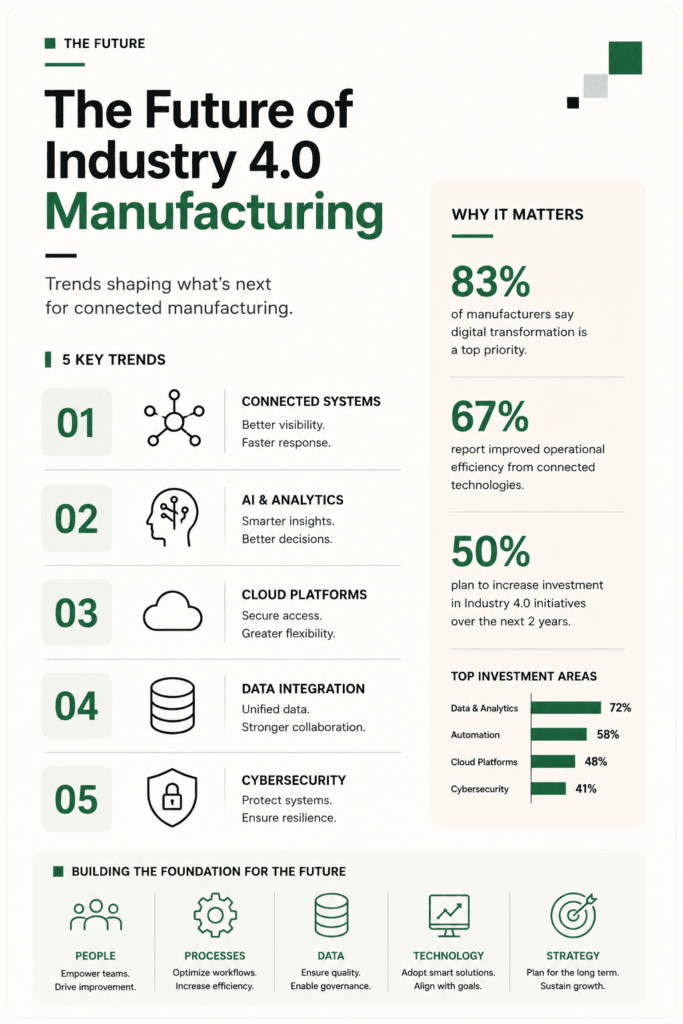
Trends Shaping the Future of Industry 4.0 Manufacturing
Connected Manufacturing Systems
Connected manufacturing systems will continue to play a central role in the evolution of manufacturing operations.
As equipment, software platforms, and operational processes become increasingly integrated, manufacturers gain better visibility into production activities and can respond more effectively to changing operational conditions.
A strong connected manufacturing systems strategy enables information to move seamlessly across departments, improving collaboration and supporting more consistent decision making.
Artificial Intelligence and Advanced Analytics
Artificial intelligence and advanced analytics are expected to become increasingly important tools for interpreting manufacturing data.
Rather than replacing operational expertise, these technologies help manufacturers identify trends, detect anomalies, and generate insights that support planning and process improvement.
As organizations continue their digital manufacturing technology adoption, analytics will play a greater role in helping teams make timely and informed decisions.
Cloud-Based Manufacturing Platforms
Cloud technologies are making manufacturing information more accessible across the organization.
By enabling secure access to operational data from multiple locations, cloud-based platforms improve collaboration between production teams, maintenance personnel, engineering teams, and business leaders.
Cloud infrastructure also supports system scalability, making it easier for manufacturers to expand digital capabilities as operational needs evolve.
Greater Data Integration
Manufacturing systems generate information from multiple sources, including production equipment, quality management systems, maintenance platforms, and enterprise applications.
The future of digital manufacturing and Industry 4.0 in Egypt will depend on how effectively organizations integrate these data sources into a unified operational environment.
When information is connected across systems, manufacturers gain better visibility into performance, reduce duplication of effort, and improve cross functional collaboration.
Cybersecurity as a Business Priority
As manufacturing environments become more connected, cybersecurity will become increasingly important.
Protecting operational technology, production data, and connected systems requires manufacturers to adopt security practices that support both business continuity and operational resilience.
Cybersecurity should therefore be considered a core component of every Industry 4.0 strategy rather than an afterthought.
Why Digital Maturity Will Shape Future Manufacturing
The future of smart manufacturing and Industry 4.0 in Egypt will be influenced not only by technology adoption but also by an organization’s digital maturity.
Digital maturity reflects how effectively technology, people, processes, and data work together to support business objectives.
Manufacturers with stronger digital maturity are typically better positioned to:
Improve Decision Making
Integrated operational data provides decision makers with timely information that supports planning, production management, and continuous improvement.
Increase Operational Agility
Connected systems make it easier to respond to changing production requirements, customer expectations, and business priorities without disrupting operations.
Strengthen Collaboration
Shared access to operational information enables production, maintenance, quality, engineering, and leadership teams to make more coordinated decisions.
Support Continuous Improvement
Connected manufacturing environments make it easier to identify improvement opportunities, evaluate operational performance, and refine manufacturing processes over time.
Preparing for the Future of Industry 4.0 Manufacturing
Organizations that want to remain competitive should focus on building a structured roadmap for digital transformation rather than pursuing isolated technology initiatives.
Assess Current Digital Maturity
Understanding existing systems, operational processes, and data capabilities provides a strong starting point for future transformation efforts.
A digital maturity assessment helps manufacturers identify strengths, prioritize improvement opportunities, and establish realistic implementation goals.
Prioritize Business Outcomes
Technology investments should support measurable business objectives.
Whether the goal is improving operational visibility, strengthening collaboration, or increasing process efficiency, every initiative should align with broader organizational priorities.
Improve Data Integration
Operational information is most valuable when it can be shared across manufacturing systems.
Integrating production, maintenance, quality, and enterprise applications helps manufacturers create a more complete view of operations while supporting better decision making.
Develop Workforce Capabilities
Technology alone cannot deliver successful transformation.
Employees should understand how connected manufacturing systems support their daily responsibilities and how digital tools contribute to broader business goals.
Investing in workforce readiness encourages smoother adoption and strengthens long-term success.
Adopt a Phased Transformation Strategy
Large scale transformation is often more effective when implemented through manageable phases.
By focusing on priority initiatives, evaluating results, and expanding capabilities over time, manufacturers can reduce implementation complexity while supporting continuous improvement.
Challenges That Will Influence the Future of Industry 4.0 Manufacturing
Although the opportunities associated with Industry 4.0 manufacturing continue to grow, manufacturers should also prepare for challenges that may influence future adoption.
Integrating Existing Systems
Many organizations continue to operate a combination of legacy equipment and modern digital platforms.
Developing integration strategies that connect existing assets with newer technologies will remain an important priority.
Managing Data Effectively
As manufacturing operations generate increasing volumes of information, maintaining data quality, governance, and accessibility becomes essential.
Organizations that establish strong data management practices will be better positioned to support reliable decision making.
Strengthening Cybersecurity
Connected manufacturing environments require continuous attention to cybersecurity.
Protecting operational systems, securing digital infrastructure, and maintaining appropriate governance practices should remain ongoing priorities.
Supporting Organizational Change
Successful transformation depends on people as much as technology.
Clear communication, leadership support, employee engagement, and ongoing training all contribute to successful adoption and long-term operational improvement.
Looking Ahead
The future of Industry 4.0 manufacturing will be shaped by organizations that view digital transformation as an ongoing business strategy rather than a single technology project.
Across Egypt, manufacturers are expected to continue strengthening connected manufacturing systems, improving data integration, and building more agile operations that can respond effectively to changing business needs.
Rather than focusing on adopting every emerging technology, successful organizations will prioritize building connected, resilient, and data-driven manufacturing environments where technology supports informed decision making and continuous improvement.
By investing in digital maturity, integrated systems, and workforce readiness, manufacturers can establish a strong foundation for sustainable Operational Excellence while remaining adaptable to future developments.
Frequently Asked Questions
What is the future of Industry 4.0 manufacturing in Egypt?
The future of Industry 4.0 manufacturing in Egypt is expected to focus on connected manufacturing systems, greater data integration, improved operational visibility, and continuous digital transformation that supports long-term business objectives.
Why is Industry 4.0 important for the future of manufacturing?
Industry 4.0 helps manufacturers build connected operations, improve decision making, strengthen collaboration, and create more agile manufacturing environments that can adapt to changing operational requirements.
How can manufacturers prepare for Industry 4.0?
Manufacturers can prepare by assessing their digital maturity, improving data integration, aligning technology investments with business goals, developing workforce capabilities, and implementing transformation through a phased approach.
What technologies will shape the future of manufacturing?
Key technologies include connected industrial systems, cloud computing, artificial intelligence, advanced analytics, industrial automation, edge computing, connected manufacturing systems, and cybersecurity solutions.
When should companies begin their Industry 4.0 manufacturing journey?
Organizations should begin when they have established clear business objectives, assessed their current operational capabilities, and developed a structured roadmap that aligns digital transformation with long-term organizational goals.