Manufacturing organizations are constantly working to improve operational efficiency, maintain consistent quality, and create more structured work environments. One of the most widely adopted Lean practices that supports these goals is Five S in manufacturing.
Also known as 5S Lean Manufacturing, the methodology provides a systematic approach to workplace organization, standardization, and continuous improvement. By creating organized and visual workplaces, Five S helps employees identify problems more easily, reduce unnecessary activities, and maintain consistent operating practices.
For organizations in Egypt, adopting Five S manufacturing practices can support stronger operational foundations by improving how workplaces are arranged, managed, and maintained. Unlike improvement approaches that depend heavily on technology or major investments, Five S focuses on developing better systems and behaviors within existing operations.
The benefits of Five S methodology extend beyond workplace appearance. When implemented effectively, Five S can influence productivity, quality, safety, employee engagement, and the overall ability of organizations to sustain continuous improvement.
What Is Five S in Manufacturing?
Five S in manufacturing is a Lean workplace organization approach based on five principles:
Sort
Sort involves identifying unnecessary items and removing them from the workplace. This helps create more organized environments where employees can focus on essential resources.
Set in Order
Set in Order focuses on arranging required items in logical and accessible locations. Clear placement and visual identification help reduce confusion and improve workflow.
Shine
Shine involves maintaining clean and orderly workplaces while inspecting conditions regularly. Cleaning activities can also help identify abnormalities and improvement opportunities.
Standardize
Standardize creates consistent methods for maintaining workplace organization. Documentation, visual controls, and defined responsibilities help teams follow the same expectations.
Sustain
Sustain ensures that improvements become part of daily operations through regular reviews, employee involvement, and continuous improvement practices.
Together, these principles form the Lean manufacturing Five S framework, which supports organizations in developing disciplined and efficient work environments.
Key Benefits of Five S Lean Manufacturing
Organizations adopt Five S Lean Manufacturing practices in Egypt because the methodology creates practical improvements that support long-term operational performance.
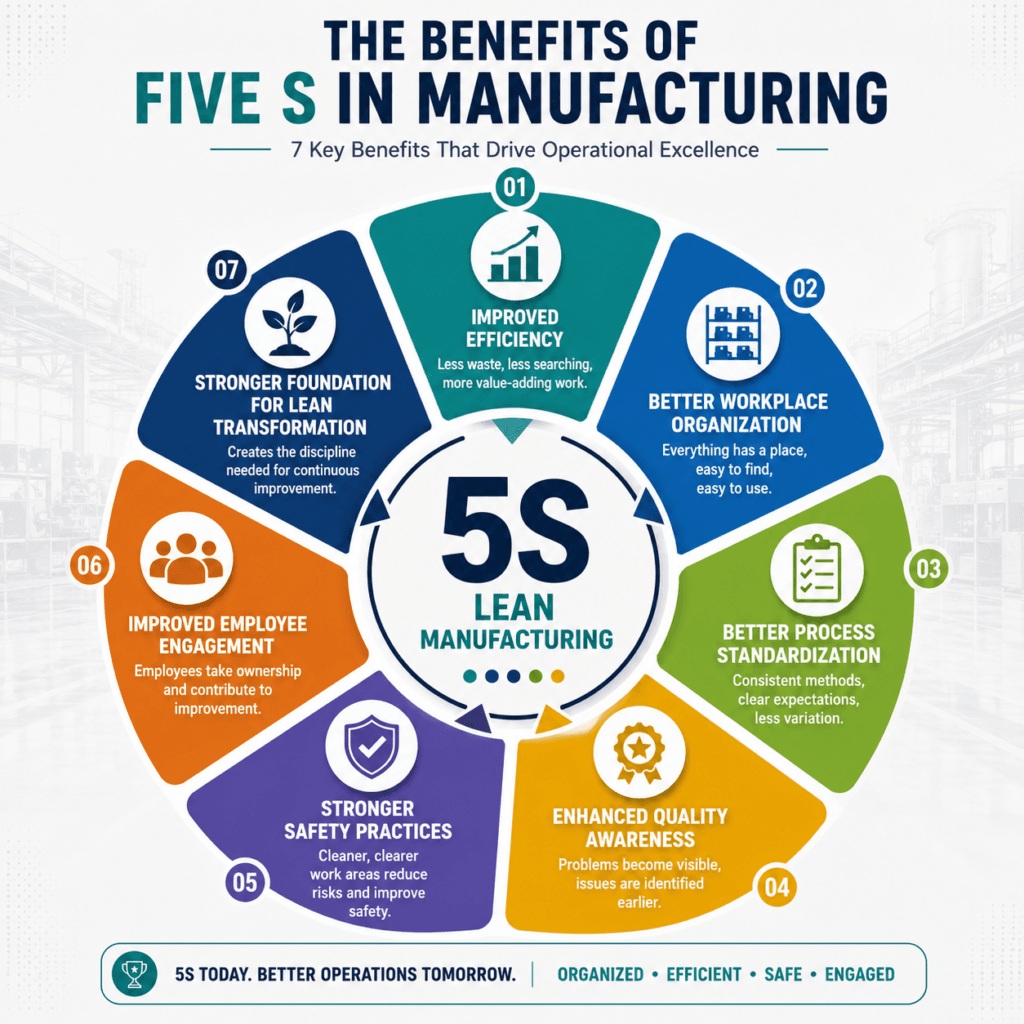
1. Improved Workplace Organization
One of the most immediate benefits of Five S is improved workplace organization.
A disorganized environment can make it difficult for employees to locate tools, materials, information, or equipment needed for daily activities. Through workplace organization using Five S, organizations create structured systems where resources have defined locations and clear identification.
Improved organization helps employees:
- Spend less time searching for resources
- Follow clearer workflows
- Maintain consistent workplace conditions
- Identify missing or misplaced items more easily
A well organized workplace also improves visibility, allowing teams to recognize problems earlier.
2. Increased Operational Efficiency
Efficiency improvements often come from eliminating unnecessary activities rather than simply increasing output.
5S supports efficiency by addressing common forms of workplace waste, including:
- Excessive movement
- Time spent searching for resources
- Unclear work arrangements
- Inconsistent workplace practices
By improving workplace flow and reducing avoidable interruptions, Five S helps employees focus on value adding activities.
The Five S methodology creates a structured environment where processes are easier to understand and maintain.
3. Better Process Standardization
Consistency is essential for reliable manufacturing operations.
Five S supports standardization by establishing clear expectations for how workplaces should be organized and maintained. Visual controls, documented procedures, and regular reviews help teams follow common practices.
Standardization provides several advantages:
- Easier employee training
- More consistent work execution
- Reduced process variation
- Improved understanding of workplace expectations
The Lean Manufacturing Five S framework is often used as a foundation for broader Lean initiatives because it creates the discipline needed for continuous improvement.
4. Enhanced Quality Awareness
Quality improvement depends on identifying issues early and maintaining stable processes.
An organized workplace makes abnormalities easier to recognize. When tools, materials, and processes follow clear standards, deviations become more visible.
Five S can support quality awareness by helping teams:
- Identify unusual conditions
- Maintain organized work areas
- Follow defined processes
- Detect potential issues earlier
While Five S alone does not replace quality management systems, it supports the conditions needed for better process control.
5. Stronger Safety Practices
Workplace organization plays an important role in creating safer working environments.
Five S encourages organizations to maintain clear work areas, improve visibility, and establish better control over workplace conditions.
Safety related improvements may include:
- Clear access areas
- Better organization of resources
- Reduced workplace clutter
- Improved identification of workplace standards
A structured workplace makes it easier for employees to understand expected conditions and maintain them consistently.
6. Improved Employee Engagement
Successful Five S implementation depends on employee participation.
When employees contribute to organizing and improving their work areas, they gain a better understanding of operational challenges and improvement opportunities.
Employee involvement can help create:
- Greater ownership of workplace standards
- More improvement ideas
- Better understanding of processes
- Stronger continuous improvement culture
A sustainable 5S approach requires participation from both leadership and employees.
7. Stronger Foundation for Lean Transformation
Five S is often considered one of the starting points for Lean improvement because it establishes essential workplace discipline.
An organized environment supports the implementation of other Lean practices by making processes more visible and easier to improve.
The relationship between Five S and Lean transformation is based on creating stable conditions where organizations can identify waste, improve processes, and develop continuous improvement capabilities.
Building a Sustainable Five S Implementation Model
The long term value of 5S depends on maintaining improvements after initial implementation.
A sustainable Five S implementation model requires organizations to integrate Five S into everyday management practices.
Create Clear Workplace Standards
Organizations should define what good workplace conditions look like through:
- Visual guidelines
- Standard procedures
- Review criteria
- Defined responsibilities
Clear standards make expectations easier to understand and maintain.
Develop Regular Review Practices
Regular reviews help organizations identify areas where standards may need improvement.
These reviews should focus on learning and improvement rather than simply checking compliance.
Maintain Leadership Support
Leadership involvement helps reinforce the importance of Five S and ensures that workplace organization remains part of operational priorities.
Encourage Continuous Improvement
Five S should not be treated as a one time activity. Continuous improvement allows organizations to adjust standards as processes and operational requirements change.
Why Should Organizations Adopt Five S Methodology in Egypt?
Organizations considering Lean improvement often ask:
Why should factories adopt Five S methodology in Egypt?
The answer is that Five S provides a practical foundation for improving operational discipline and workplace effectiveness.
It helps organizations create structured environments where employees can work more efficiently and where improvement opportunities become easier to identify.
The methodology is flexible and can be adapted across different manufacturing environments because it focuses on universal principles such as organization, standardization, and continuous improvement.
Is Five S Lean Manufacturing Suitable for Egypt Industries?
Yes, Five S Lean Manufacturing is suitable for Egypt industries because it addresses common operational needs that exist across different manufacturing environments.
5S does not depend on a specific type of production process or technology. Instead, it focuses on improving how workplaces are organized, how standards are maintained, and how teams participate in improvement activities.
Organizations at different stages of operational maturity can use Five S to strengthen their improvement systems and support broader Lean objectives.
Conclusion
The benefits of Five S in manufacturing extend far beyond workplace organization. By improving visibility, standardization, efficiency, and employee involvement, Five S helps organizations create stronger operational foundations.
For organizations in Egypt, implementing Five S Lean Manufacturing practices can support continuous improvement by creating workplaces that are easier to manage, monitor, and improve.
The success of 5S depends on consistent application, leadership commitment, employee participation, and a focus on sustainability. When integrated into daily operations, 5S becomes a practical approach for developing more organized and improvement focused manufacturing environments.
Frequently Asked Questions
What are the main benefits of Five S in manufacturing?
The main benefits of Five S in manufacturing include improved workplace organization, better process visibility, stronger standardization, reduced workplace inefficiencies, improved employee involvement, and support for continuous improvement.
How does Five S in manufacturing improve productivity in Egypt?
Five S improves productivity by reducing unnecessary movement, improving workplace organization, making resources easier to access, and creating standardized ways of working. These improvements help employees perform tasks more efficiently.
Why should factories adopt Five S methodology in Egypt?
Factories should adopt the Five S methodology because it provides a structured approach for improving workplace organization, supporting operational discipline, and building a foundation for Lean improvement.
How does workplace organization using Five S support manufacturing operations?
Workplace organization using Five S supports manufacturing operations by improving visibility, reducing unnecessary activities, creating clearer workflows, and helping teams maintain consistent workplace standards.
Is Five S Lean Manufacturing suitable for Egypt industries?
Yes, Five S Lean Manufacturing is suitable for Egypt industries because it is a flexible approach that focuses on universal improvement principles such as organization, standardization, and continuous improvement.