Deploying shop floor transformation initiatives requires a disciplined, step-by-step roadmap. For manufacturing facilities in Egypt looking to eliminate waste and optimize operational performance, the Five S methodology serves as the primary starting point. Successfully transitioning a facility from a reactive, cluttered environment to a streamlined, standardized operation demands careful planning, active leadership, and deep employee engagement.
This implementation guide outlines a comprehensive approach for plant managers and operational leaders seeking to embed 5S Lean manufacturing principles across their facilities. By following a proven deployment model, plants can ensure that workplace organization efforts deliver sustainable, long-term results rather than temporary cosmetic changes.
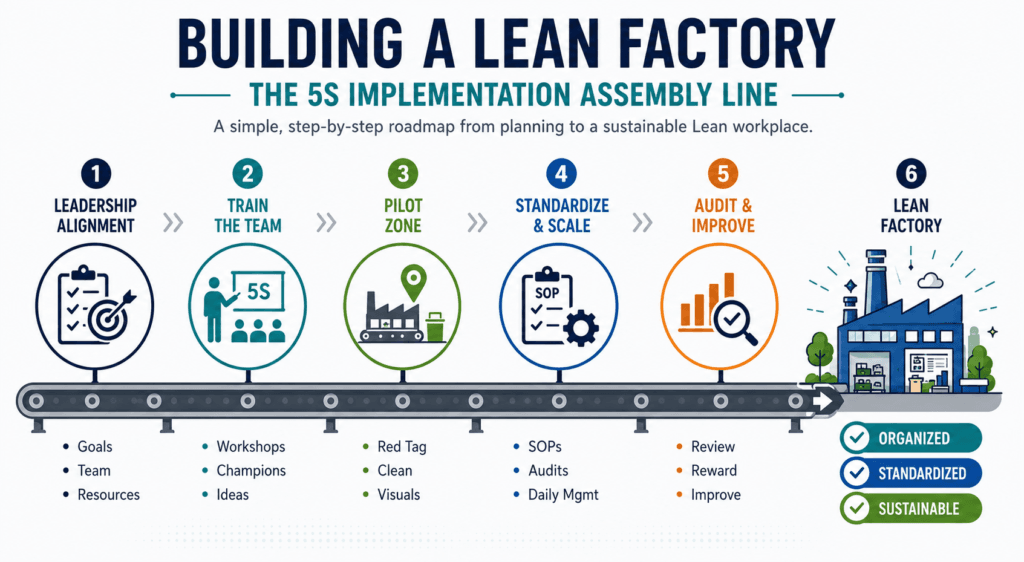
Phase 1: Preparation and Leadership Alignment
Before introducing tools and red tags to the shop floor, leadership must establish clear governance and build internal alignment. Without active management support, even the most well-planned Five S Lean manufacturing Egypt initiatives tend to lose momentum and fail to deliver lasting value.
- Establish a Steering Committee: Form a dedicated deployment team comprising plant managers, production supervisors, quality heads, and frontline champions to oversee the rollout across all departments.
- Define Clear Objectives: Connect the Five S in manufacturing rollout to broader plant goals, such as reducing cycle time, improving safety metrics, increasing floor space utilization, and enhancing overall equipment effectiveness.
- Resource Allocation: Allocate necessary time, budget, and materials (such as shadow boards, floor tape, industrial cleaning supplies, and labeling equipment) to support the initial deployment phases without cutting corners.
- Communication Strategy: Develop a transparent communication plan that explains the purpose of the transformation, addressing potential employee skepticism and highlighting how the initiative will make daily work easier and safer.
Phase 2: Workforce Training and Awareness
The success of any Lean manufacturing 5S framework relies heavily on the daily habits of frontline operators. Education must precede execution so that employees understand the purpose behind each phase rather than viewing the process as an arbitrary cleaning exercise.
- Conduct Interactive Workshops: Provide practical training on the five core pillars: Sort, Set in Order, Shine, Standardize, and Sustain, using real shop floor examples.
- Communicate the ‘Why’: Explain how workplace organization using Five S directly reduces daily frustration, eliminates unnecessary physical strain, and cuts down the time spent searching for tools or materials.
- Appoint Floor Champions: Identify influential operators and team leaders who can act as advocates, peer mentors, and technical guides during the rollout process.
- Feedback Mechanisms: Create channels for operators to share their ideas on ergonomic layouts and storage solutions, ensuring that the system is shaped by the people who use it every day.
Phase 3: Pilot Zone Selection and Execution
Rather than attempting a plant-wide rollout simultaneously, successful implementations begin in a controlled, high-impact environment. This allows teams to test methodologies, iron out procedural kinks, and demonstrate tangible success.
- Select a Pilot Area: Choose a single production line, assembly cell, or tool crib that suffers from visible disorganization or inefficiency, ensuring it has high visibility among the workforce.
- Execute the Initial Sort and Shine: Remove all unneeded items using red-tagging techniques and conduct a deep cleaning of machinery, workstations, and surrounding storage areas.
- Establish Initial Visual Controls: Implement shadow boards, floor markings, and labeled storage locations to define a permanent, logical place for every necessary item.
- Evaluate and Refine: Review the pilot zone’s performance with the frontline team, capture lessons learned, and refine the standard operating procedures (SOPs) before scaling to other plant areas.
Phase 4: Scaling and Standardization Across the Plant
Once the pilot zone proves successful, the framework can be systematically expanded across all plant operations. Standardization ensures that improvements are maintained consistently across different shifts and departments, eliminating variation.
- Develop Standard Operating Procedures (SOPs): Document the newly established workplace organization rules, cleaning routines, and visual control standards in clear, visual formats.
- Implement Routine Audits: Establish daily or weekly checklists and peer review schedules to monitor compliance and identify emerging gaps before they turn into major issues.
- Integrate with Daily Management: Incorporate Five S in manufacturing metrics into shift handover meetings and visual management boards located directly on the shop floor.
- Cross-Departmental Alignment: Ensure that maintenance, quality, and production teams share unified standards so that improvements in one area do not cause friction in another.
Phase 5: Ensuring Long-Term Sustainability
The final and most challenging stage of deployment is maintaining discipline over time. A sustainable Five S implementation model requires continuous reinforcement, cultural integration, and active executive oversight.
- Leadership Gemba Walks: Plant managers should regularly walk the shop floor, engage with operators, and show active interest in maintaining standards, reinforcing that order is an operational priority.
- Recognition and Reward Programs: Celebrate milestones, successful audits, and team contributions to maintain enthusiasm and motivation across all manufacturing shifts.
- Continuous Evolution: Treat the framework as a living system that adapts to changing production requirements, new product introductions, and continuous improvement initiatives.
- Engaging Professional Guidance: Partnering with qualified Five S implementation consultants in Egypt helps facilities navigate change management challenges, design robust audit structures, and secure sustainable operational gains.
Frequently Asked Questions
What is the best approach to implement 5S Lean manufacturing successfully in Egypt?
The best approach involves securing leadership alignment, conducting comprehensive workforce training, starting with a focused pilot zone to demonstrate quick wins, establishing strict standardization, and scaling systematically across all plant operations.
How do Five S implementation consultants Egypt support plant rollouts?
Experienced consultants guide leadership through structured change management, provide expert training, help design effective visual controls, and establish robust audit systems to ensure sustainable governance.
Why is a pilot zone important when deploying the Five S methodology?
A pilot zone allows plants to test implementation tactics, measure baseline improvements, refine standard operating procedures, and build internal confidence and cultural buy-in before scaling plant-wide.
How can factories maintain a sustainable Five S implementation model?
Sustainability is maintained through regular leadership gemba walks, routine peer audits, employee recognition programs, integrating standards into daily shift handovers, and treating the framework as an ongoing operational habit.
What tools are needed for workplace organization using Five S?
Common tools include red tags for sorting, floor tapes and shadow boards for setting in order, cleaning supplies for shining, visual checklists for standardizing, and audit scorecards for sustaining.