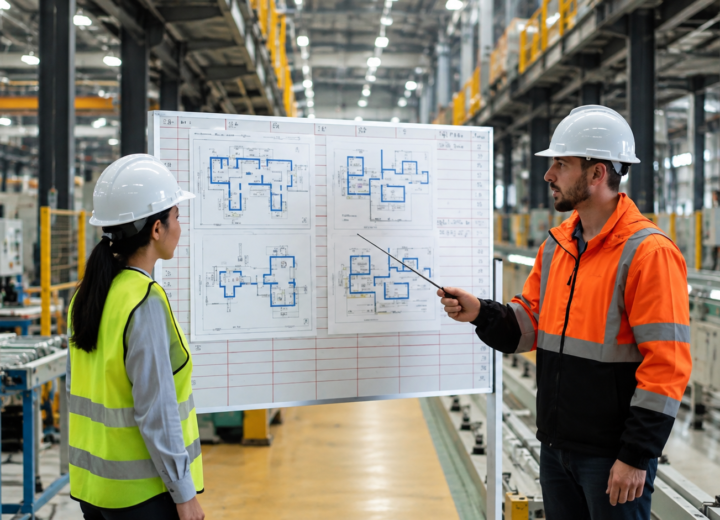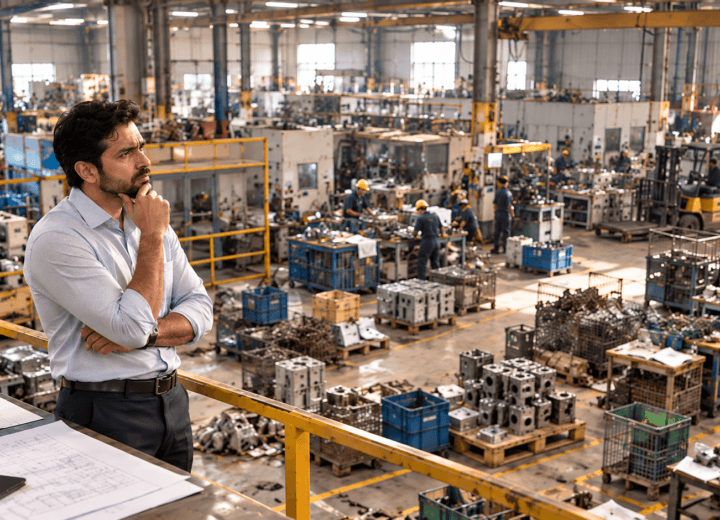
In many organisations, the working day does not begin with a clear priority list. It begins with a customer escalation, an unexpected production issue, an overdue approval, a management request and a message marked “urgent.” By the time teams respond to the immediate demands, the work that actually drives productivity, capacity and long-term performance has been pushed aside.
This is not simply a time-management problem. It is an operational problem.
When Urgency Becomes the Operating System
Most organisations will always have genuine emergencies. A machine breakdown can disrupt production. A delayed shipment can affect a customer. A quality issue may require immediate containment. The problem begins when almost every issue receives the same level of urgency.
Over time, employees and managers become accustomed to operating reactively. Meetings are interrupted, priorities change throughout the day and teams move from one request to another without completing the work that matters most. The organisation may appear highly active, yet activity does not necessarily translate into productivity.
The hidden issue is that urgency often becomes a substitute for prioritisation. When everything is treated as critical, there is no meaningful distinction between what must happen now, what can wait and what should not be done at all.
The Cost of Constant Switching
The impact extends well beyond individual productivity. Frequent changes in priorities create operational instability.
A production planner who repeatedly changes schedules may increase changeovers and disrupt material flow. A procurement team responding continuously to last-minute requirements may carry higher inventory or incur premium freight costs. A manager constantly resolving escalations may have less time for capacity planning, process improvement or developing the team.
The organisation pays for this in multiple ways: lost working hours, longer cycle times, increased rework, excess inventory, delayed decisions and underutilised capacity.
There is also a less visible cost. When people spend most of their time responding to immediate problems, the organisation gradually loses its ability to work proactively. Root causes remain unresolved because there is never enough time to address them.
But There Is a More Fundamental Question Worth Asking:
Why does the organisation keep creating situations in which everything becomes urgent in the first place?
The answer is often found in the system rather than in individual behaviour. Unclear priorities, weak planning processes, poor information flow, excessive approvals, inadequate capacity visibility and unresolved process bottlenecks can continuously generate urgency.
For example, if production priorities are frequently changed because sales, planning and operations are working with different information, asking employees to “manage their time better” will not solve the underlying problem. Similarly, if approvals routinely become bottlenecks, asking managers to work faster addresses the symptom rather than the constraint.
Productivity improves when the operating system enables people to focus.
From Managing Urgency to Managing Flow
Operational Excellence provides a different way of approaching the problem. Instead of asking teams to simply handle more work, organisations can examine how work enters the system, how priorities are determined, where decisions get delayed and where unnecessary effort is created.
This means distinguishing genuine exceptions from routine work, establishing clearer escalation mechanisms and making priorities visible across functions. It also means identifying recurring sources of disruption and addressing their root causes.
The objective is not to eliminate urgency. It is to prevent avoidable urgency from consuming the organisation’s capacity.
When processes are designed around better flow, teams can spend more time completing value-adding work and less time recovering from preventable disruptions. Leaders gain greater visibility into capacity and constraints, while employees can focus on planned priorities without constantly resetting their work.
Productivity Is a System Outcome
An organisation cannot build sustainable productivity by simply asking people to move faster. If the system continuously creates conflicting priorities, interruptions and bottlenecks, increased effort will eventually produce diminishing returns.
The more important question is whether the organisation has designed its processes, priorities and information flows to support focused execution.
When everything feels urgent, the answer is not necessarily to work harder or longer. It is to understand why everything became urgent, remove the sources of avoidable disruption and create an operating environment where the important work can consistently move forward.
That is where productivity becomes more than individual efficiency. It becomes an organisational capability one that improves time utilisation, capacity, cost, flow and ultimately business performance.