Manufacturing is entering a new era.
Across Kenya, manufacturers are embracing automation, data analytics, connected systems, and digital technologies to improve productivity, reduce costs, and strengthen competitiveness. As customer expectations rise and supply chains become more complex, traditional production methods are no longer enough to support long-term growth.
This shift is driving the adoption of smart manufacturing; an approach that combines technology, data, and Operational Excellence to create more efficient and responsive production systems.
Many Kenyan organizations are investing in smarter ways of operating. Most of them are also working with manufacturing consulting firms to align technology investments with operational improvements and ensure sustainable results.
What Is Smart Manufacturing?
Smart manufacturing uses digital technologies and real-time data to improve how factories operate.
Rather than relying on manual reporting and reactive decision-making, smart factories use connected systems to monitor performance, identify issues, and support continuous improvement.
Common features of smart manufacturing include:
- Real-time production monitoring
- Automated workflows and controls
- Connected production equipment
- Predictive maintenance systems
- Digital quality management tools
- Data-driven decision-making
- Supply chain visibility and integration
The goal is not simply to automate processes, but to create operations that are more efficient, agile, and capable of responding quickly to changing business conditions. 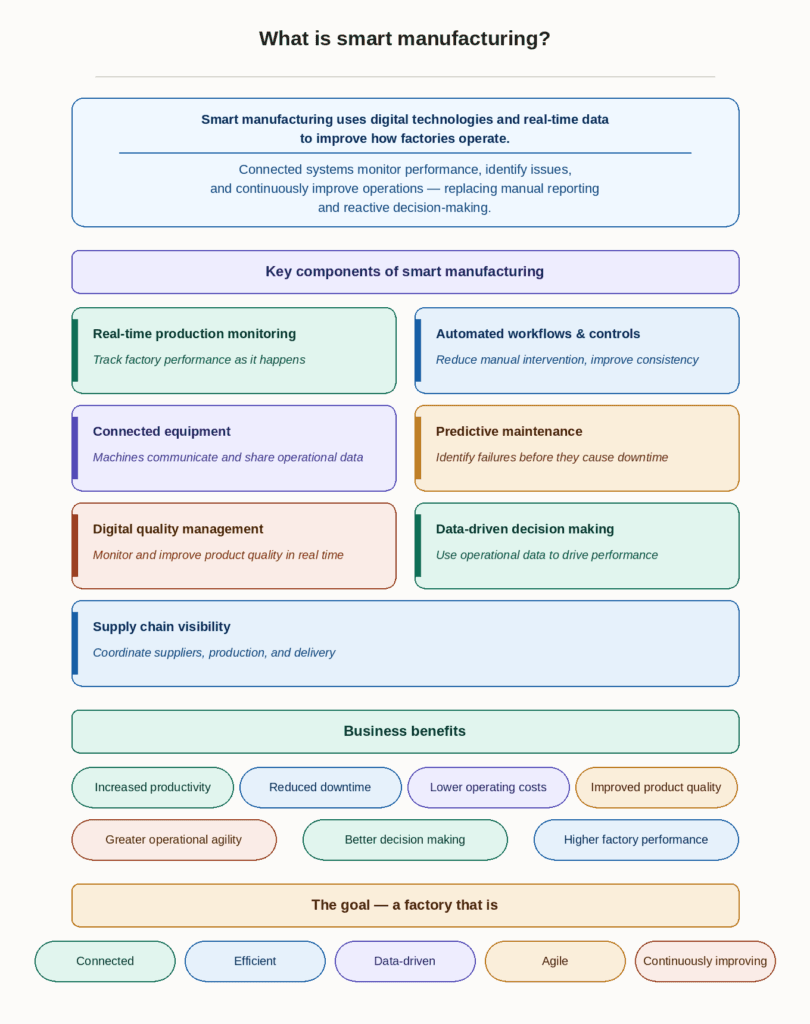
Why Manufacturers in Kenya Are Adopting Smart Operations
Several factors are accelerating the shift toward smart manufacturing across Kenya.
Rising Operating Costs
Manufacturers face increasing pressure from labor, energy, transportation, and raw material costs.
Smart manufacturing helps organizations improve resource utilization, reduce waste, and identify opportunities for efficiency improvements.
Increasing Customer Expectations
Customers expect faster delivery, higher quality, and greater consistency than ever before.
Digital systems provide greater visibility into operations and help manufacturers maintain performance as production volumes increase.
Greater Competitive Pressure
As regional and global competition grows, manufacturers need better operational control and faster decision-making capabilities.
Smart manufacturing helps organizations improve productivity while maintaining quality and profitability.
Supply Chain Complexity
Disruptions and changing market conditions require manufacturers to respond quickly.
Real-time operational data allows organizations to make more informed production and inventory decisions.
The Foundation of Smart Manufacturing
One of the biggest misconceptions about digital transformation is that technology alone solves operational problems.
In reality, successful smart manufacturing starts with strong processes.
Before implementing automation or advanced analytics, manufacturers must understand how work currently flows through the organization.
This is why many manufacturing consulting firms in Kenya begin transformation projects with operational assessments rather than technology deployment.
Key focus areas typically include:
- Production workflows
- Equipment utilization
- Material flow
- Quality systems
- Workforce productivity
- Performance measurement
When core processes are stable and efficient, digital tools can deliver far greater value.
How Manufacturers Build Smarter Operations
Successful transformation typically occurs in stages rather than through a single technology investment.
Improving Operational Visibility
The first step is often gaining better visibility into factory performance.
Manufacturers begin tracking metrics such as:
- Production output
- Machine uptime
- Cycle times
- Defect rates
- Inventory levels
- Throughput performance
This data helps identify bottlenecks and improvement opportunities.
Through manufacturing operations consulting in Kenya, organizations often establish performance dashboards that provide real-time insights into production activities.
Optimizing Production Processes
Technology cannot compensate for inefficient workflows.
Many manufacturers improve operational performance by:
- Eliminating unnecessary process steps
- Reducing production delays
- Improving scheduling accuracy
- Streamlining material handling
- Balancing production lines
Through production optimization consulting, Kenyan organizations can improve flow and increase throughput before introducing automation technologies.
Strengthening Equipment Performance
Equipment reliability is essential in smart manufacturing environments.
Manufacturers increasingly use:
- Preventive maintenance programs
- Predictive maintenance technologies
- Equipment performance monitoring
- Overall Equipment Effectiveness (OEE) tracking
These approaches reduce downtime and improve production consistency.
The Role of Data in Smart Manufacturing
Data is one of the most valuable assets within a modern manufacturing operation.
Rather than relying on assumptions, organizations can use operational data to make better decisions regarding:
- Production planning
- Inventory management
- Quality improvement
- Workforce allocation
- Equipment maintenance
- Capacity planning
This data-driven approach helps organizations improve responsiveness while reducing operational risk.
Many industrial process consulting firms in Kenya support manufacturers in developing systems that transform operational data into actionable insights.
Lean Manufacturing and Smart Factory Transformation
Smart manufacturing and Lean manufacturing are often viewed as separate initiatives, but they are closely connected.
Lean principles help organizations eliminate waste and improve process stability before introducing advanced technologies.
Common Lean tools include:
- Value Stream Mapping (VSM)
- 5S Workplace Organization
- Kaizen Continuous Improvement
- Standardized Work
- Root Cause Analysis
Through Lean Six Sigma process optimization in Kenya, manufacturers create the operational discipline required for successful digital transformation.
Without stable processes, automation often accelerates inefficiencies rather than eliminating them.
Reducing Waste Through Smart Operations
Many smart manufacturing initiatives focus on eliminating operational waste.
Common forms of waste include:
- Excess inventory
- Overproduction
- Waiting time
- Defects and rework
- Unnecessary transportation
- Underutilized resources
Through waste reduction consulting using Six Sigma methodologies, manufacturers can identify inefficiencies and improve overall operational performance.
Reducing waste not only lowers costs but also improves production speed, quality, and customer satisfaction.
How Smart Manufacturing Supports Business Growth
Smart operations provide benefits that extend beyond the factory floor.
Organizations often experience improvements in:
- Production efficiency
- Product quality
- Delivery reliability
- Cost control
- Resource utilization
- Customer satisfaction
- Scalability
As manufacturers grow, digital systems provide the visibility and control needed to manage increasing operational complexity.
This is one reason the role of manufacturing consulting firms in Kenya’s growth continues to expand.
Common Challenges When Implementing Smart Manufacturing Initiatives
Although the benefits are significant, transformation efforts can face obstacles. Some common challenges include:
- Legacy production systems
- Limited operational data
- Workforce resistance to change
- Inconsistent processes
- Poor technology integration
- Lack of internal capabilities
Organizations that address these challenges early typically achieve faster and more sustainable results.
Building a Smart Manufacturing Culture
Technology is only one component of smart manufacturing. Long-term success also depends on culture, leadership, and continuous improvement.
Manufacturers that sustain transformation efforts typically establish:
- Performance measurement systems
- Continuous improvement programs
- Workforce development initiatives
- Standard operating procedures (SOPs)
- Leadership accountability
- Cross-functional collaboration
These elements help ensure that operational improvements continue long after new technologies are implemented.
Conclusion
Smart manufacturing is reshaping how factories operate across Kenya.
By combining digital technologies with Operational Excellence principles, manufacturers can improve efficiency, reduce costs, strengthen quality, and respond more effectively to changing market demands.
However, successful transformation requires more than technology investment. It depends on strong processes, reliable data, workforce engagement, and a commitment to continuous improvement.
Whether through operational optimization, Lean manufacturing, production system redesign, or digital transformation initiatives, manufacturers that build smart operations today will be better positioned for long-term growth and competitiveness.
Frequently Asked Questions
What is smart manufacturing?
Smart manufacturing uses connected technologies, automation, and real-time data to improve production efficiency, quality, and decision-making across manufacturing operations.
How does smart manufacturing improve factory performance?
Smart manufacturing improves visibility, reduces downtime, enhances quality control, increases productivity, and enables faster operational decision-making.
What technologies are commonly used in smart manufacturing?
Common technologies include real-time monitoring systems, predictive maintenance tools, production dashboards, industrial automation systems, data analytics platforms, and connected manufacturing equipment.
Why are Kenyan manufacturers investing in smart operations?
Manufacturers in Kenya are investing in smart operations to reduce costs, improve efficiency, strengthen quality, increase competitiveness, and better manage growing operational complexity.
How do manufacturing consultants support smart manufacturing initiatives?
Manufacturing consultants help organizations assess current operations, optimize workflows, improve performance measurement systems, support digital transformation projects, and build the operational foundations required for successful smart manufacturing.