Production bottlenecks are one of the most common obstacles to manufacturing efficiency.
A single constraint in a production system can slow output, increase operating costs, create delivery delays, and reduce overall profitability. As demand grows and manufacturing operations become more complex, even small inefficiencies can have a significant impact on factory performance.
Across Kenya’s industrial sector, many organizations struggle with bottlenecks that limit throughput and make it difficult to scale production efficiently.
Identifying and eliminating these constraints is essential for manufacturers seeking to improve productivity, maintain quality standards, and remain competitive.
This is one reason many organizations in Kenya work with manufacturing consulting firms to analyze production systems, improve operational flow, and build more efficient manufacturing processes.
What Is a Production Bottleneck?
A production bottleneck occurs when one stage of a manufacturing process limits the overall output of the entire production system. Even when other parts of the factory operate efficiently, a single constraint can reduce throughput across the entire operation.
Common examples include:
- Equipment breakdowns
- Slow production lines
- Inefficient material handling
- Workforce imbalances
- Delays in quality inspections
- Poor production scheduling
- Limited storage or staging capacity
- Supply chain disruptions
For example, a high-speed production line may still fail to meet demand if packaging operations cannot keep pace. Similarly, delays in quality inspection can create backlogs that affect downstream production activities.
Understanding where bottlenecks occur is the first step toward improving overall factory performance.
Why Production Bottlenecks Develop
Most bottlenecks are not caused by a single failure.
Instead, they typically emerge from a combination of process inefficiencies, outdated systems, and operational constraints that accumulate over time.
Common causes include:
- Inefficient factory layouts
- Lack of process standardization
- Limited production visibility
- Manual scheduling systems
- Inconsistent maintenance practices
- Poor communication between departments
- Underutilized equipment
- Inadequate performance measurement
As production volumes increase, these issues often become more visible and more costly.
Without a structured improvement strategy, bottlenecks tend to repeat and can gradually reduce overall operational performance.
The Impact of Bottlenecks on Manufacturing Performance
Production bottlenecks affect more than just output.
They often create a chain reaction that impacts multiple areas of the business.
Common consequences include:
- Reduced production capacity
- Increased operating costs
- Longer lead times
- Higher inventory levels
- Increased overtime expenses
- Quality inconsistencies
- Missed customer deadlines
- Lower profitability
Over time, these issues can reduce competitiveness and make it more difficult for manufacturers to respond to changing market demands.
This is why bottleneck analysis is often a priority within Kenya’s manufacturing operations consulting and broader Operational Excellence initiatives.
How Manufacturing Consultants Identify Bottlenecks
One of the biggest challenges in manufacturing is accurately identifying the true source of production constraints.
What appears to be the problem is not always the root cause.
Manufacturing consultants use structured methodologies to diagnose production inefficiencies and uncover the factors limiting throughput.
Process Mapping and Flow Analysis
The first step is understanding how materials, information, and work move through the factory.
Consultants evaluate:
- Production workflows
- Material movement
- Work-in-progress(WIP) inventory
- Production handoffs
- Equipment utilization
Through process mapping and flow analysis, manufacturers gain a clearer understanding of where delays and inefficiencies occur.
Performance Data Analysis
In Kenya, modern industrial process consulting firms rely heavily on data to identify production constraints.
Key metrics often include:
- Throughput rates
- Cycle times
- Machine uptime and downtime
- Defect rates
- WIP levels
- Changeover times
This data-driven approach helps organizations focus on measurable performance issues rather than assumptions.
Root Cause Analysis
Once bottlenecks are identified, consultants investigate why they occur.
Common techniques include:
- Five Whys Analysis
- Fishbone (Ishikawa) Diagrams
- Pareto Analysis
- Cause-and-Effect Mapping
These tools help uncover the underlying factors contributing to production constraints and recurring operational issues.
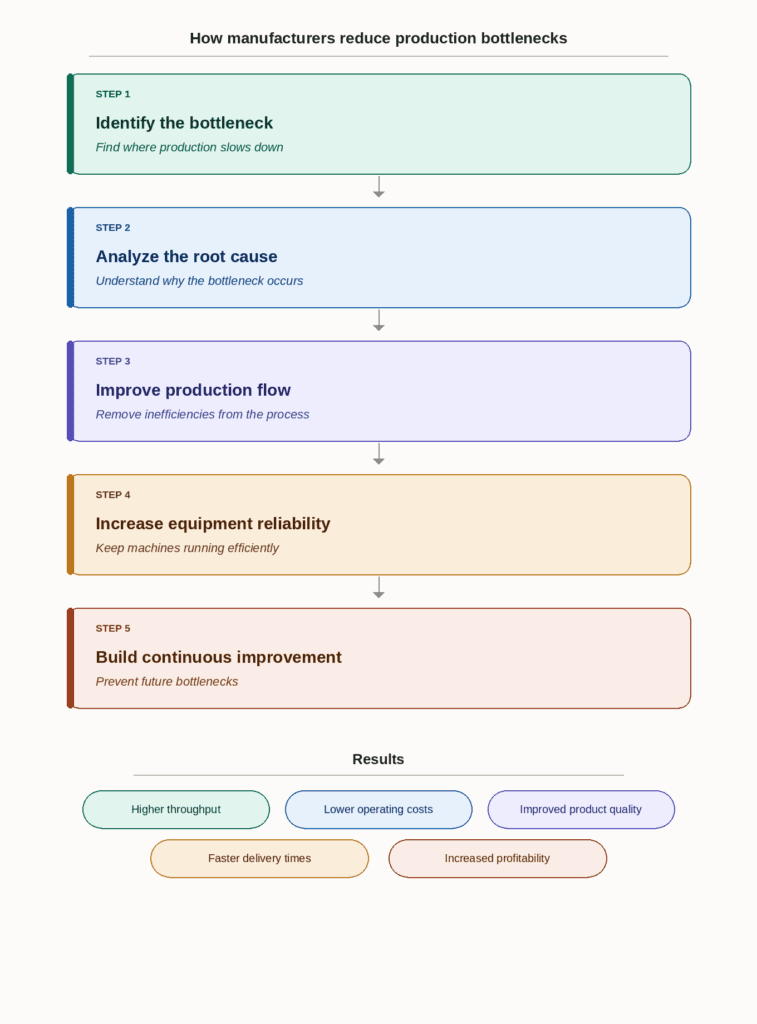
How Manufacturers Eliminate Production Bottlenecks
Solving bottlenecks requires more than simply increasing resources.
The most effective improvements focus on optimizing the production system as a whole.
Improving Production Flow
Through production optimization consulting, manufacturers in Kenya often redesign workflows to improve process flow and reduce delays.
Typical improvements include:
- Balancing production lines
- Reducing idle time
- Improving process sequencing
- Streamlining material movement
- Eliminating unnecessary process steps
These changes help create smoother and more predictable production operations.
Strengthening Performance Management
Through factory performance improvement consulting, manufacturers establish systems that continuously monitor operational performance.
Key areas include:
- Output tracking
- Downtime monitoring
- Machine utilization
- Quality performance
- Production planning accuracy
Greater visibility enables faster decision-making and more effective resource allocation.
Reducing Operational Waste
Many bottlenecks are closely linked to waste within production systems.
Common forms of waste include:
- Excess inventory
- Overproduction
- Waiting time
- Rework and defects
- Unnecessary transportation
- Inefficient movement
Through waste reduction consulting and Six Sigma methodologies, manufacturers can eliminate activities that consume resources without adding value.
Reducing waste often improves both throughput and profitability.
Optimizing Equipment Reliability
Equipment failures remain one of the most common causes of production bottlenecks.
Manufacturers can improve reliability through:
- Preventive maintenance programs
- Predictive maintenance strategies
- Equipment performance monitoring
- Root cause failure analysis
- Overall Equipment Effectiveness (OEE) tracking
Improved reliability reduces downtime and increases production consistency.
Lean Manufacturing and Bottleneck Reduction
Many organizations use Lean manufacturing principles to improve production flow and eliminate constraints.
Common Lean tools include:
- Value Stream Mapping (VSM)
- 5S Workplace Organization
- Kaizen Continuous Improvement
- Standardized Work
- Just-in-Time (JIT)
Through Lean Six Sigma process optimization in Kenya, manufacturers can systematically identify inefficiencies and improve throughput without major capital investment.
The goal is to create processes that deliver maximum customer value while minimizing waste and delays.
The Role of Manufacturing Consultants in Kenya’s Industrial Growth
The role of manufacturing consulting firms in Kenya’s growth extends beyond solving immediate production problems.
Consultants help organizations:
- Increase production capacity
- Improve quality consistency
- Strengthen supply chain performance
- Reduce operating costs
- Improve responsiveness to customer demand
- Support factory modernization initiatives
As Kenya’s manufacturing sector continues to expand, efficient production systems will become increasingly important for maintaining competitiveness in both local and export markets.
When Should a Manufacturer Seek External Support?
Many organizations wait until bottlenecks severely affect production before seeking assistance. However, early intervention often delivers the greatest value.
Manufacturers should consider consulting support when they experience:
- Frequent production delays
- Rising operating costs
- Persistent equipment downtime
- Difficulty meeting customer demand
- Quality inconsistencies
- Inventory management challenges
- Production capacity limitations
Addressing these issues early can prevent small inefficiencies from becoming major operational barriers.
Building Sustainable Operational Excellence
Eliminating a bottleneck is important, but preventing future bottlenecks is equally critical.
This is where Operational Excellence becomes essential.
Manufacturing consulting firms focused on Operational Excellence in Kenya help organizations establish:
- Standardized operating procedures (SOPs)
- Performance measurement systems
- Continuous improvement programs
- Workforce development initiatives
- Real-time production monitoring
These systems help manufacturers sustain performance gains and continuously improve operations over time.
Conclusion
Production bottlenecks remain one of the most significant barriers to manufacturing efficiency and growth.
Left unresolved, they can reduce output, increase costs, create quality issues, and limit an organization’s ability to meet customer demand.
By identifying constraints, improving production flow, reducing waste, and strengthening operational systems, manufacturers can significantly improve productivity and competitiveness.
Whether through process optimization, Lean manufacturing, Six Sigma methodologies, or broader Operational Excellence initiatives, manufacturing consulting firms in Kenya help organizations create more efficient and scalable production systems.
As industrial demand continues to grow, manufacturers that proactively address bottlenecks will be better positioned to improve performance, support expansion, and achieve long-term success.
Frequently Asked Questions
What is a production bottleneck?
A production bottleneck is any stage in a manufacturing process that limits the overall output of the production system, reducing throughput and creating delays.
How do manufacturing consultants identify bottlenecks?
Manufacturing consultants use process mapping, workflow analysis, performance data, and root cause analysis to identify the factors limiting production efficiency.
How can manufacturers reduce production bottlenecks?
Manufacturers can reduce bottlenecks by improving workflow design, optimizing equipment reliability, reducing waste, improving scheduling, and strengthening performance management systems.
What causes production bottlenecks in factories?
Common causes include equipment downtime, inefficient layouts, poor scheduling, quality inspection delays, workforce imbalances, and inadequate production visibility.
Why is bottleneck analysis important?
Bottleneck analysis helps manufacturers increase throughput, improve resource utilization, reduce costs, and create more efficient production systems.