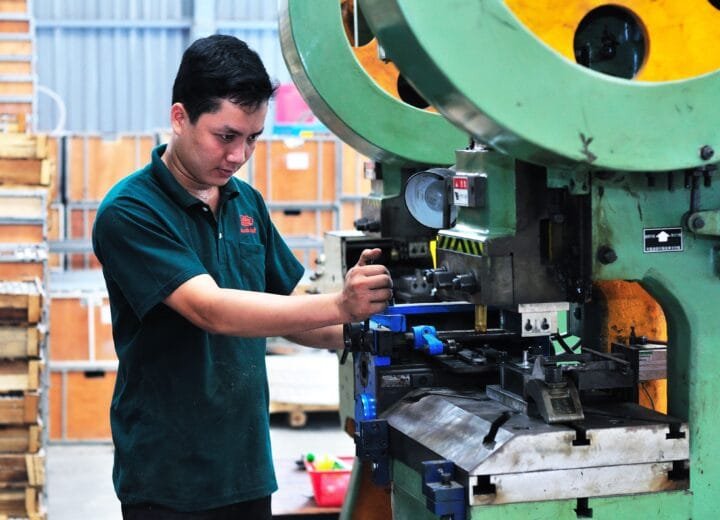
The Egyptian economic landscape is undergoing an unprecedented evolution. Driven by economic reforms, rapid industrial development, and regional competition, companies are realizing that old methods are becoming obsolete. To remain resilient, businesses must evolve from legacy operations to dynamic, agile operating models. This structural evolution also highlights the importance of organizational change.
Yet, executing a successful business transformation is not simple. Many initiatives stall because leadership focuses purely on acquiring new technology or machinery, ignoring the human and operational systems required to sustain them. Real business change in Egypt requires a deliberate strategy.
This comprehensive guide unpacks why organizational change management is a survival imperative in Egypt, details the primary hurdles companies face, and provides proven organizational change solutions for Egypt to drive sustainable growth.
Why Organizational Change Is Critical for Egyptian Companies
The importance of organizational change in Egypt stems from a hyper-competitive regional marketplace. Whether navigating volatile exchange rates, supply chain disruptions, or digital transformation, static businesses gradually lose their competitive edge.
Implementing a structured organizational change strategy yields vital competitive benefits:
- Accelerates Business Transformation: It ensures that structural alterations, process overhauls, and technological integrations are adopted rapidly by the workforce.
- Drives Productivity Improvement: By eliminating systemic bottlenecks, organizations maximize their daily output and revenue per employee.
- Fosters Operational Excellence: Change management replaces reactive fire fighting with predictable, optimized workflows.
- Deepens Competitive Positioning: Agility allows Egyptian firms to meet global supply standards and expand export potential seamlessly.
The Core Challenges of Organizational Change in Egypt
Understanding the challenges of organizational change in Egypt requires looking past boardroom strategies down to the shop floor. True transformation often collides with deeply embedded cultural and operational frameworks.
1. Cultural Resistance and Legacy Mindsets
Human workforces naturally grow comfortable with existing routines. When new processes are introduced without proper contextualization, employees feel monitored, managers feel controlled, and owners fear a loss of operational flexibility. Without building belief in the new systems, change initiatives encounter active or passive resistance.
2. The Strategic Misdiagnosis
When margins shrink or order fulfillment delays peak, Egyptian leadership often misdiagnoses the issue as a capacity bottleneck. The default reaction is to throw money at the problem by buying more equipment or adding shifts. However, expanding an unmeasured, unoptimized process simply multiplies the waste. Extra capacity cannot fix broken baseline data.
3. Disconnect Between Quoting and the Gemba
In many manufacturing operations, pricing and cycle times are built on idealized office assumptions rather than how work actually flows at the workstation. This creates an unmeasured gap where micro delays, setup variations, and unnecessary movement quietly drain profitability.
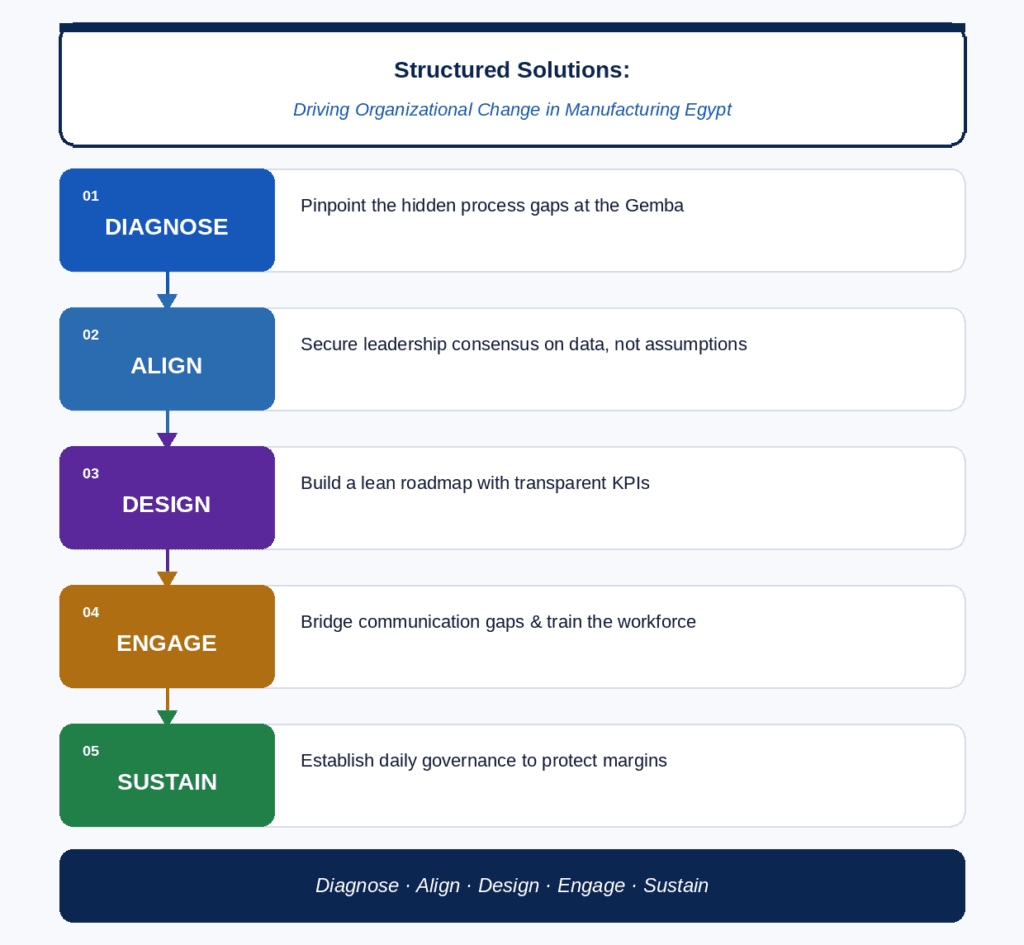
Structured Solutions: Driving Organizational Change in Manufacturing Egypt
Industrial growth is central to the national economic vision, making the importance of organizational change for Egypt’s manufacturing sector undeniable. To convert operational friction into profitability, businesses must implement structured, data driven frameworks.
Deploying Lean Manufacturing Principles
To eliminate non value added waste, companies must integrate Lean Manufacturing methodologies into their organizational change strategy. This involves mapping value streams, conducting rigid Time and Motion Studies (TMS), and optimizing factory layouts to minimize unnecessary material handling and human movement.
Bridging Communication and Skill Gaps
Change fails when treated as an isolated event rather than a behavioral journey. Successful transformations require leadership to communicate the narrative before the numbers. Frontline operators and middle management must receive hands-on training on site, allowing them to understand how process updates directly ease their daily workloads.
Daily Operations Management for Egyptian Businesses
A vital component of sustainable organizational development is stabilizing how tasks are supervised on a day to day basis. There is a fundamental difference between Daily Work Management (DWM) and traditional management in Egypt.
| Operational Metric | Traditional Management in Egypt | Daily Work Management (DWM) |
| Leadership Approach | Hierarchical, reactive, and top down | Collaborative, proactive, and focused at the Gemba |
| Problem Solving | Post mortem analysis after errors occur | Real time variance tracking and rapid root cause analysis |
| Process Definition | Based on fluid, unverified office assumptions | Rooted in standardized work and observed cycle times |
| Resource Utilization | Overloading capacity to mask underlying waste | Optimizing line balance and eliminating friction |
Implementing a robust framework for daily operations management for Egyptian businesses ensures that process improvements do not fade after the initial launch. It institutes structured shift handovers, visual performance dashboards, and daily stand up meetings that empower teams to maintain new performance thresholds.
Cultivating a Culture of Continual Improvement
Ultimately, the goal of organizational change management in Egypt is to build an adaptable enterprise. Rather than forcing cosmetic restructuring, businesses must align strategy, process design, and workplace culture.
When you anchor your operational cycle times in observed reality, eliminate non value added waste, and implement continuous review cycles, transformation shifts from a corporate hurdle into an ongoing competitive capability.
Frequently Asked Questions
Why organizational change is critical for Egyptian companies today?
Egyptian companies face dynamic regulatory updates, shifting market demands, and intense regional competition. Change management ensures businesses remain agile, optimize labor costs, protect their margins, and successfully navigate large scale digital transitions.
What are the main challenges of organizational change in Egypt?
The primary challenges include middle management inertia, cultural resistance to new workflows, communication gaps between leadership and frontline workers, and the tendency to mask operational inefficiencies by purchasing unneeded capacity.
What is the difference between organizational development and change management?
Organizational development focuses on building long term capabilities, cultural health, and systemic scalability over an extended period. Change management is the structured process of transitioning specific teams, technologies, or workflows from a current state to a defined future state.
How does Lean manufacturing support business transformation?
Lean manufacturing provides the practical tools needed to locate and eliminate waste within a process. By reducing cycle time variations, optimizing floor layouts, and standardizing work, it provides the clean, data driven baseline required for an effective transformation.