Modern manufacturing environments are more connected, automated, and data-driven than ever before. Yet despite advances in planning systems, operational visibility, and production technology, many organizations continue to face delays, bottlenecks, rising operational costs, and inconsistent flow across operations.
The challenge is that operational waste rarely appears as one large visible issue. Instead, it exists in small inefficiencies distributed throughout the system—waiting for materials, unnecessary movement, excess approvals, disconnected workflows, rework, and poor coordination between processes.
Individually, these inefficiencies may appear manageable. Collectively, they create operational friction that affects productivity, responsiveness, and scalability.
What makes the issue more difficult is that many of these inefficiencies gradually become normalized. Teams adapt to them. Workarounds emerge. Operations continue functioning, but often with hidden losses embedded inside daily execution.
Reducing operational waste therefore requires more than isolated improvement initiatives. It requires a structured operational approach focused on improving flow, reducing friction, and continuously aligning execution with value creation.
1. Observe the Process Directly
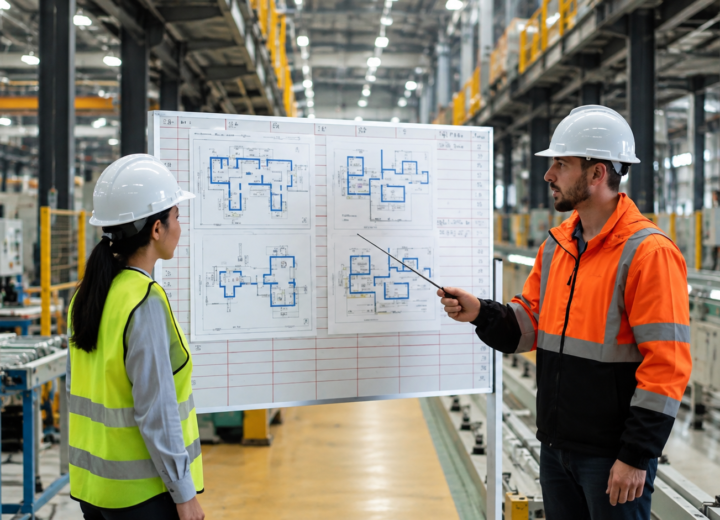
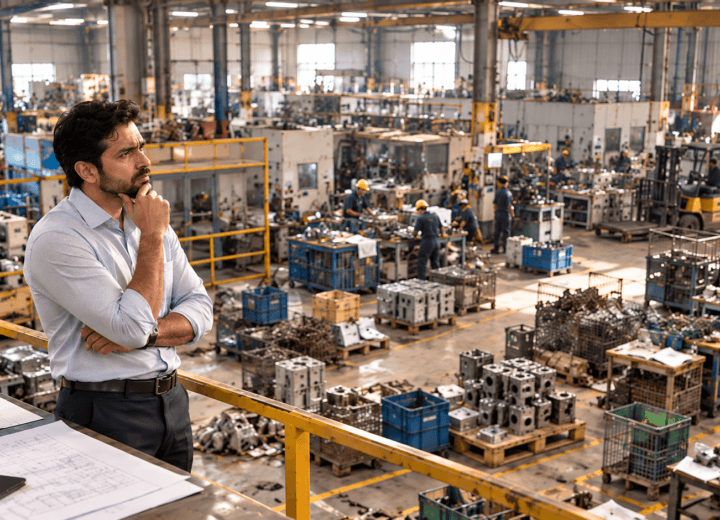
Operational dashboards and production reports provide visibility, but they rarely capture how work actually behaves on the shop floor. Many inefficiencies only become visible through direct observation of material flow, waiting points, operator movement, process interruptions, and communication delays between functions.
In many manufacturing environments, teams gradually adapt to inefficient workflows through temporary fixes and workarounds. Over time, these behaviors become embedded into the process itself, making inefficiencies harder to identify through data alone.
Direct observation helps expose the gap between designed operations and operational reality.
2. Focus on Flow Instead of Activity
One of the most common operational mistakes is confusing activity with productivity. Machines may continue running and teams may remain occupied, yet the overall system can still suffer from delays, bottlenecks, excess movement, and inefficient coordination.
Operational waste commonly appears in forms such as:
- Excess transportation
- Waiting time between processes
- Overproduction
- Rework and quality corrections
- Inventory accumulation
The objective is not maximizing isolated efficiency within individual processes. The objective is improving the continuity of flow across the entire operation.
3. Simplify Before Automating
Organizations frequently attempt to solve inefficiencies through automation or digital systems. While technology can improve execution speed and visibility, it cannot compensate for poorly designed workflows.
Automating operational complexity often amplifies inefficiency rather than eliminating it.
Before introducing automation, organizations should evaluate whether workflows can first be simplified, standardized, or reduced in complexity. In many cases, operational gains come not from adding more systems, but from removing unnecessary process friction.
Technology creates the greatest value when applied to stable and efficient processes.
4. Standardize Critical Operational Practices
Operational inconsistency creates variability, and variability increases waste. When tasks are performed differently across shifts, teams, or production lines, organizations experience uneven quality, reduced predictability, and greater operational instability.
Standardization helps establish:
- Clear operational baselines
- More predictable execution
- Faster issue identification
- Improved coordination across teams
Importantly, standardization should not be viewed as restricting flexibility. Instead, it creates the operational stability required for sustainable improvement.
5. Build Continuous Improvement into Daily Operations
Operational waste evolves continuously alongside changes in production schedules, workforce conditions, customer demand, and product complexity. As a result, waste reduction cannot remain dependent on periodic transformation projects alone.
The most effective manufacturing organizations create environments where improvement becomes part of normal operational behavior. Employees closest to the process often identify inefficiencies long before leadership does, particularly those related to workflow interruptions, material handling, and unnecessary operational complexity.
Sustainable operational excellence emerges when continuous improvement becomes embedded into daily execution rather than treated as a separate initiative.
6. Measure Flow, Not Just Output
Many organizations focus heavily on utilization and production volume while overlooking the efficiency of operational flow itself. An operation may achieve production targets while still carrying excessive lead times, bottlenecks, idle inventory, and rework loops within the system.
For this reason, organizations must evaluate performance through both output and flow-based metrics, including:
- Throughput time
- Waiting time
- Process continuity
- Cycle efficiency
- Inventory movement
Improving operational flow often creates broader gains across productivity, responsiveness, quality, and working capital simultaneously.
Final Perspective
Operational waste is rarely eliminated through isolated optimization efforts. Sustainable improvement requires continuously identifying where friction exists, where flow is interrupted, and which activities no longer contribute meaningfully to operational performance.
The most effective manufacturing organizations are not necessarily those operating at the highest activity levels.
They are the ones designed to operate with greater clarity, consistency, and flow.