
In Egypt, inventory management has become an increasingly important business priority as organizations look for better ways to control costs, improve operational efficiency, and maintain reliable supply and production processes.
Inventory is not simply a collection of materials stored in warehouses. It represents invested capital, operational resources, and a direct connection between purchasing decisions, production performance, and customer satisfaction.
For Egyptian businesses operating in competitive markets, effective inventory management helps create better visibility, reduce unnecessary costs, and support sustainable business growth.
Key Takeaways
- Inventory management affects profitability, cash flow, and operational efficiency.
- Accurate inventory information improves purchasing, planning, and business decisions.
- Poor inventory control can lead to higher costs, shortages, and operational disruptions.
- Effective inventory practices help businesses improve reliability and support future growth.
Why Inventory Management Is a Strategic Business Function
Many organizations view inventory as a warehouse responsibility. However, inventory decisions influence almost every part of business operations.
The way a company manages inventory affects:
- Financial performance
- Production continuity
- Customer service
- Purchasing decisions
- Resource utilization
Inventory represents a significant investment, especially for manufacturing businesses that manage raw materials, components, work-in-progress (WIP), and finished products.
Maintaining too much inventory can increase costs and reduce financial flexibility. Maintaining too little inventory can create shortages and disrupt operations.
Effective inventory management helps businesses find the right balance between availability and cost.
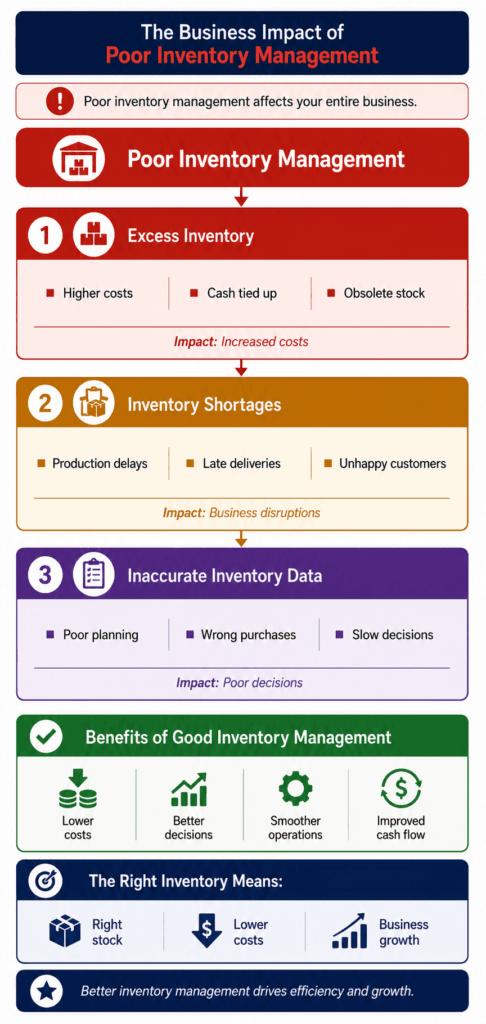
The Business Impact of Poor Inventory Management
Poor inventory control can create challenges that extend beyond storage areas. Inventory problems often affect purchasing, production, finance, and customer relationships.
Excess Inventory Increases Operating Costs
Excess inventory occurs when businesses hold more stock than required for their operational needs.
While additional inventory may appear to provide security against shortages, it can create several challenges:
- Increased storage requirements
- Higher handling costs
- Greater risk of obsolete materials
- Capital tied up in unused stock
Inventory that remains unused for long periods represents resources that could otherwise support business improvements, expansion, or operational investments.
Effective inventory control helps organizations understand what stock is required, what stock is excessive, and where improvements can be made.
Inventory Shortages Disrupt Operations
While excess inventory creates cost challenges, insufficient inventory can affect business continuity.
Material shortages may result in:
- Production delays
- Emergency purchasing
- Missed delivery commitments
- Reduced customer satisfaction
For manufacturing businesses, maintaining material availability is especially important because production schedules depend on having the right resources at the right time.
Balanced inventory management helps businesses avoid both unnecessary stock accumulation and operational disruptions.
Inaccurate Inventory Data Leads to Poor Decisions
Inventory accuracy is one of the foundations of effective business planning.
When recorded inventory levels do not match actual stock availability, organizations may make decisions based on incorrect information.
This can lead to:
- Purchasing materials that are already available
- Delayed production decisions
- Difficulty planning future requirements
- Reduced confidence in inventory information
Accurate inventory data improves visibility and enables businesses to make better operational decisions.
Why Inventory Management Is Important for Egyptian Businesses
Businesses in Egypt operate across different industries and operational environments, from manufacturing facilities to distribution operations.
Regardless of industry, inventory management plays an important role in controlling costs, improving efficiency, and supporting reliable operations.
Managing Operational Costs More Effectively
Inventory-related costs extend beyond the purchase price of materials.
Businesses must consider:
- Storage requirements
- Handling activities
- Inventory management effort
- Risk of outdated materials
- Working capital tied to stock
Better inventory management helps organizations identify opportunities to improve cost efficiency while maintaining required stock availability.
Improving Efficiency in Competitive Markets
Operational efficiency has become an important factor for businesses seeking sustainable growth.
Better inventory practices support efficiency by helping organizations:
- Reduce unnecessary stock
- Improve planning accuracy
- Minimize disruptions
- Use resources more effectively
Businesses with better inventory visibility can respond more effectively to changing requirements and operational challenges.
Supporting Manufacturing Growth
Manufacturing businesses in Egypt depend heavily on effective inventory practices.
Successful manufacturing inventory management requires coordination between:
- Material availability
- Production schedules
- Purchasing activities
- Customer requirements
When inventory information is reliable, production teams can plan more effectively and reduce delays caused by material shortages.
How Inventory Management Supports Business Growth
Inventory management is closely connected to business growth because it influences how effectively organizations use resources, serve customers, and scale operations.
As businesses grow, inventory requirements often become more complex. Companies may handle more products, more suppliers, larger production volumes, and increased customer expectations.
Without effective inventory practices, growth can create additional challenges such as higher costs, reduced visibility, and operational inefficiencies.
Better Working Capital Utilization
Inventory represents capital that businesses have invested but cannot use elsewhere until products or materials are consumed or sold.
When excessive inventory accumulates, it can reduce financial flexibility by tying up resources that could support:
- Business expansion
- Operational improvements
- Equipment investments
- Process improvements
Effective inventory management helps organizations maintain appropriate stock levels while improving the use of available capital.
The goal is not to minimize inventory at all costs but to ensure that inventory investments support actual business requirements.
Improving Operational Efficiency
Operational efficiency depends on having reliable processes and accurate information.
Better inventory management supports efficiency by helping businesses:
- Understand available stock
- Plan requirements more accurately
- Reduce unnecessary inventory movement
- Improve coordination between departments
When purchasing, production, finance, and operations teams work with reliable inventory information, decision-making becomes faster and more consistent.
Strengthening Customer Service
Inventory availability directly influences customer satisfaction.
Businesses need to balance two important objectives:
- Maintaining enough stock to meet customer requirements
- Avoiding unnecessary inventory accumulation
Poor inventory management can lead to product shortages, delayed deliveries, and reduced customer confidence.
Effective inventory practices improve reliability by helping businesses better understand demand, availability, and operational capacity.
The Role of Inventory Accuracy in Better Decision-Making
Inventory accuracy is a critical factor in successful inventory management.
Accurate inventory information gives businesses confidence when making decisions about purchasing, production planning, and resource allocation.
When inventory records reflect actual stock conditions, organizations can better answer important questions:
- What materials are currently available?
- What needs to be purchased?
- Which items require closer monitoring?
- How much inventory is required for future operations?
How Businesses Improve Inventory Accuracy
Improving inventory accuracy requires consistent processes and attention to inventory information quality.
Common practices include:
Maintaining Reliable Inventory Records
Accurate records provide the foundation for better inventory decisions.
Businesses need clear processes for recording:
- Stock movements
- Material usage
- Receipts
- Inventory adjustments
Establishing Clear Inventory Responsibilities
Inventory accuracy depends on coordination between different teams.
Purchasing, warehouse, production, and finance functions all influence inventory information.
Clearly defined responsibilities help reduce errors and improve accountability.
Monitoring Inventory Performance
Regular monitoring helps businesses identify issues before they become larger operational problems.
Common inventory performance indicators include:
- Inventory accuracy
- Inventory turnover
- Slow-moving inventory
- Stock availability
These indicators help organizations understand inventory performance and identify improvement opportunities.
Inventory Management Challenges Facing Businesses in Egypt
Although every organization has unique requirements, many Egyptian businesses face common inventory-related challenges as they work to improve efficiency and manage costs.
Managing Changing Demand Requirements
Customer demand can change due to market conditions, seasonal requirements, product changes, or business growth.
Businesses need inventory practices that allow them to adapt while avoiding unnecessary stock accumulation.
Better inventory visibility helps organizations make more informed decisions when requirements change.
Balancing Inventory Availability and Cost
One of the biggest inventory challenges is finding the right balance between having enough stock and controlling costs.
Too much inventory can increase expenses, while too little inventory can create operational disruptions.
Effective inventory control helps businesses evaluate inventory requirements based on operational needs rather than relying only on assumptions.
Managing Increasing Inventory Complexity
As businesses expand, inventory management often becomes more challenging.
Growth may introduce:
- More products
- More suppliers
- Additional storage locations
- Increased transaction volume
Without structured inventory processes, complexity can reduce visibility and make decision-making more difficult.
How Inventory Management Supports Manufacturing Operations
Manufacturing businesses rely on inventory availability to maintain smooth production processes.
Raw materials, components, and finished goods must be managed effectively to support production requirements and customer commitments.
Supporting Production Planning
Production planning depends on accurate information about material availability.
Reliable inventory information helps businesses understand:
- Available materials
- Future requirements
- Potential shortages
- Production readiness
Better inventory management supports more predictable production schedules and reduces disruptions caused by unexpected material issues.
Improving Material Availability
Manufacturers need materials available when required, but they also need to avoid unnecessary inventory accumulation.
Effective manufacturing inventory management in Egypt focuses on creating better coordination between inventory levels and production requirements.
When businesses improve inventory visibility and planning, they can make better decisions about purchasing, production, and resource allocation.
Inventory Management Practices That Improve Business Performance
Businesses can improve inventory performance by establishing structured practices that increase visibility, accuracy, and control.
Maintain Accurate Inventory Information
Reliable inventory data helps businesses make better operational decisions.
Organizations should ensure that inventory information is updated consistently and reflects actual stock conditions.
Review Inventory Performance Regularly
Regular inventory reviews help identify:
- Excess stock
- Slow-moving materials
- Inventory discrepancies
- Changing requirements
Ongoing monitoring allows businesses to respond earlier to potential issues.
Improve Cross-Functional Coordination
Inventory management is not limited to one department.
Purchasing, operations, finance, production, and sales teams all influence inventory performance.
Better coordination helps organizations align inventory decisions with overall business objectives.
Inventory Management and Sustainable Business Growth in Egypt
Effective inventory management supports long-term business growth in Egypt by creating stronger operational foundations.
Businesses that improve inventory practices can benefit from:
- Better cost control
- Improved resource utilization
- More reliable operations
- Stronger decision-making
As organizations grow, inventory management becomes increasingly important because operational complexity increases alongside business expansion.
A structured approach to inventory helps businesses remain flexible, responsive, and prepared for future opportunities.
Conclusion
Inventory management is a strategic business function that influences efficiency, profitability, and long-term growth.
For Egyptian businesses, effective inventory management helps improve stock visibility, control costs, support production requirements, and strengthen operational reliability.
By maintaining accurate inventory information, improving processes, and balancing stock availability with business needs, organizations can create stronger foundations for sustainable growth.
Successful inventory management is not simply about holding more or less stock. It is about making better decisions that support operational performance, customer satisfaction, and business objectives.
Frequently Asked Questions (FAQs)
Why is inventory management important for businesses?
Inventory management is important because it affects costs, cash flow, operational efficiency, and customer service. Effective inventory practices help businesses maintain appropriate stock levels, improve planning, reduce unnecessary expenses, and support reliable operations.
How does inventory management reduce costs?
Inventory management reduces costs by helping businesses avoid excess stock, improve inventory accuracy, reduce storage requirements, and use working capital more effectively. Better inventory control allows organizations to maintain the right amount of stock while reducing avoidable expenses.
What happens when businesses have poor inventory control?
Poor inventory control can result in excess inventory, stock shortages, inaccurate information, higher operating costs, production disruptions, and difficulty making informed business decisions.
Why is inventory accuracy important?
Inventory accuracy is important because businesses rely on inventory information to make purchasing, production, and operational decisions. Accurate records improve visibility, reduce errors, and help prevent shortages or unnecessary inventory accumulation.
How does inventory management support business growth?
Inventory management supports business growth by improving resource utilization, strengthening operational efficiency, reducing unnecessary costs, and helping businesses scale their operations with better visibility and control.
Contact us