Lean inventory management is becoming an important focus for manufacturers in Egypt looking to improve efficiency, reduce waste, and create more responsive production systems through structured process improvement.
By applying Lean principles and Just-in-Time (JIT) practices, businesses can improve material flow, reduce unnecessary inventory, and align stock levels more closely with actual production requirements. This article explains how Lean inventory management works, the role of JIT practices, and how manufacturers can improve inventory efficiency through structured process improvement.
Key Takeaways
- Lean inventory management focuses on reducing unnecessary inventory waste while maintaining production requirements.
- JIT inventory practices help businesses align material availability with actual demand and production needs.
- Successful Lean implementation depends on accurate information, stable processes, and effective coordination.
- Reducing inventory should focus on eliminating waste, not simply lowering stock levels.
What Is Lean Inventory Management?
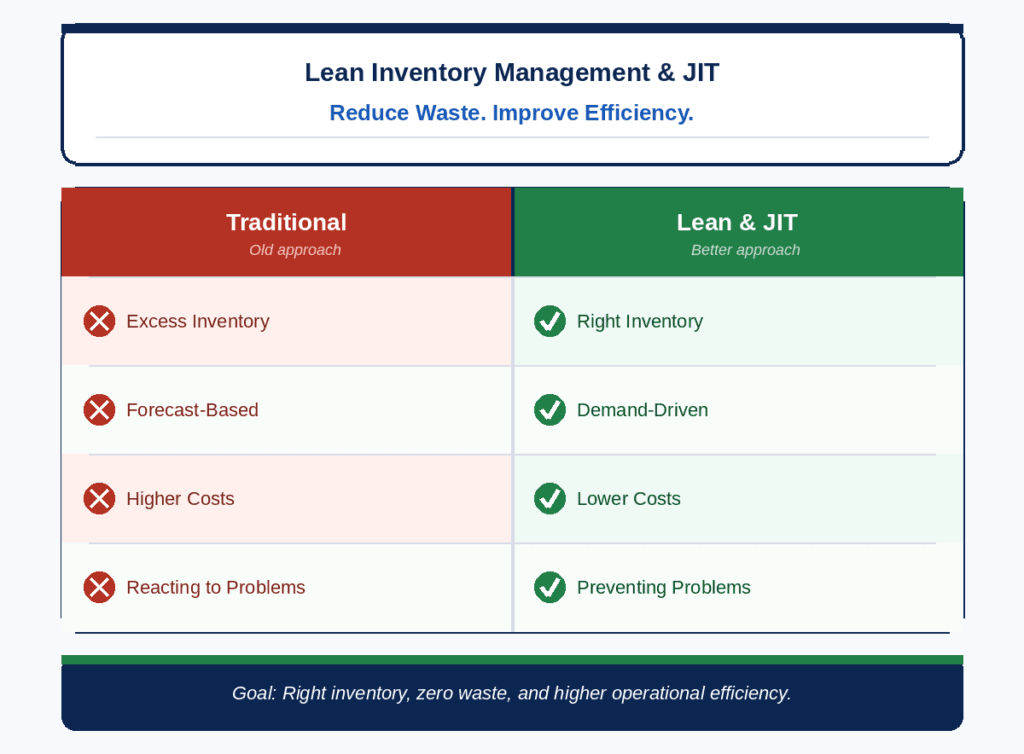
Lean inventory management is an approach that applies Lean Manufacturing principles to inventory control. The main objective is to maintain the inventory required to support operations while reducing unnecessary stock, delays, and waste.
Unlike traditional approaches that may prioritize maintaining large inventory buffers, Lean inventory management focuses on understanding why excess inventory exists and improving the processes behind it.
Inventory itself is not always a problem. However, unnecessary inventory can indicate underlying operational issues such as:
- Poor demand planning
- Inefficient production processes
- Long lead times
- Lack of inventory visibility
- Unbalanced material flow
Lean inventory practices help businesses identify these issues and improve the systems that influence inventory performance.
The Connection Between Lean Manufacturing and Inventory
Lean Manufacturing is based on the principle of maximizing value while minimizing activities that do not add value for the customer.
Inventory is considered one of the major areas where waste can appear because excess stock consumes resources without directly improving output.
Common inventory-related waste includes:
Excess Inventory
Holding more materials than required can increase:
- Storage requirements
- Handling activities
- Risk of obsolete materials
- Working capital tied up in stock
Lean approaches aim to understand why excess inventory exists and improve the processes creating it.
Waiting and Delays
Poor inventory flow can create waiting time within production operations.
Examples include:
- Production waiting for materials
- Delays caused by missing components
- Time spent searching for inventory
Improving material flow helps reduce interruptions and supports smoother production activities.
Overproduction
Producing more than required can create unnecessary finished goods inventory.
Lean thinking emphasizes aligning production with actual requirements rather than producing based only on forecasts or assumptions.
Understanding Just-in-Time (JIT) Inventory Practices
Just-in-Time (JIT) inventory is an approach where materials are supplied or produced closer to the time they are needed.
The objective is to reduce unnecessary inventory while ensuring that production continues smoothly.
In Egypt, JIT inventory management practices are based on improving coordination between:
- Production requirements
- Material availability
- Supplier schedules
- Demand information
JIT does not mean eliminating inventory completely. Instead, it focuses on maintaining appropriate inventory levels based on operational needs.
How JIT Inventory Management Works
Successful JIT implementation requires more than simply reducing stock levels.
It depends on several supporting factors:
Reliable Demand Information
Businesses need accurate information about production requirements and customer demand.
Poor demand visibility can create either:
- Excess inventory
- Material shortages
Stable Production Processes
JIT works best when production processes are predictable and consistent.
Frequent disruptions, quality issues, or process instability can make inventory reduction difficult.
Supplier Coordination
JIT requires effective coordination with suppliers.
Businesses need confidence that materials can be available when required without creating unnecessary delays.
Accurate Inventory Information
Reliable inventory data is essential for understanding:
- Current stock levels
- Material consumption
- Future requirements
Without accurate information, reducing inventory can increase operational risk.
The Relationship Between JIT and Inventory Optimization
JIT is one approach within broader inventory optimization.
Inventory optimization focuses on finding the right balance between:
- Inventory availability
- Operational requirements
- Cost efficiency
- Demand variability
While JIT aims to reduce unnecessary inventory through improved timing and coordination, inventory optimization considers the wider factors that influence stock decisions.
Together, these approaches help businesses create more efficient inventory systems.
Why Egyptian Manufacturers Are Exploring Lean Inventory Practices
Manufacturers are continuously looking for ways to improve efficiency, manage costs, and create more reliable production systems. As operations become more complex, businesses need inventory approaches that provide better visibility while avoiding unnecessary stock accumulation.
Lean inventory management practices help manufacturers in Egypt focus on improving the processes that influence inventory performance rather than simply increasing or reducing stock levels.
By identifying sources of waste and improving material flow, businesses can create more efficient operations that support productivity and long-term performance.
Reducing Inventory Waste Through Lean Practices
One of the main objectives of Lean inventory management is reducing waste that does not contribute value to customers or operations.
Inventory waste can occur in several forms.
Reducing Excess Inventory
Excess inventory often develops due to:
- Unclear demand requirements
- Large purchasing quantities
- Poor inventory visibility
- Inefficient replenishment practices
Lean inventory management approaches encourage businesses to understand the reasons behind excess stock and improve the processes causing unnecessary accumulation.
The objective is not to reduce inventory without analysis, but to create inventory levels that better match operational requirements.
Improving Material Flow
Efficient material flow helps manufacturers reduce delays and improve production performance.
Poor material flow can create:
- Unnecessary movement
- Waiting time
- Production interruptions
- Additional handling activities
Lean inventory practices focus on improving how materials move through operations, from receiving and storage to production use.
Better flow allows businesses to identify bottlenecks and improve overall efficiency.
Reducing Unnecessary Production Activities
Producing materials or finished goods earlier than required can increase inventory levels and create additional costs.
Lean thinking encourages organizations to align production activities more closely with actual requirements.
This helps reduce:
- Unnecessary finished goods inventory
- Storage requirements
- Resource utilization on non-priority activities
Key Lean Inventory Practices for Manufacturers in Egypt
Lean inventory management relies on structured practices that improve visibility, control, and operational consistency.
Inventory Classification and Prioritization
Not all inventory items require the same level of attention.
Inventory classification helps businesses prioritize management efforts based on factors such as:
- Value
- Usage frequency
- Operational importance
A common approach is ABC analysis:
A Items
High-value or critical items that require closer monitoring and control.
B Items
Items with moderate value or importance that require regular review.
C Items
Lower-value items that may be managed through simpler control methods.
By prioritizing inventory, businesses can focus improvement efforts where they create the greatest impact.
Improving Inventory Planning
Effective Lean inventory practices depend on better planning.
Businesses can improve inventory planning by considering:
- Material requirements
- Production schedules
- Usage patterns
- Supplier lead times
Better planning reduces the need for unnecessary inventory buffers and improves material availability.
Standardizing Inventory Processes
Standardized processes create consistency across inventory activities.
Important areas include:
- Receiving materials
- Recording inventory movements
- Issuing materials to production
- Updating inventory information
Without standard processes, inventory accuracy can decline and improvement efforts become difficult to maintain.
Strengthening Stock Control Practices
Strong stock control practices help businesses maintain better visibility and reduce inventory-related problems.
Examples include:
- Regular inventory reviews
- Clear inventory responsibilities
- Monitoring inventory performance
- Maintaining accurate records
These practices support better decision-making and help identify issues earlier.
Benefits of Lean Inventory Management
When implemented effectively, Lean inventory practices can support improvements across manufacturing operations.
Lower Inventory Costs
Reducing unnecessary inventory can help businesses decrease costs related to:
- Storage
- Handling
- Obsolete materials
- Excess stock
Better inventory control also improves the use of working capital by reducing resources tied up in unnecessary inventory.
Improved Production Efficiency
Manufacturing operations depend on reliable material availability.
Lean inventory practices support production efficiency by improving:
- Material flow
- Production coordination
- Planning visibility
When inventory processes are better aligned with production needs, businesses can reduce disruptions and improve operational reliability.
Better Inventory Visibility
Lean approaches encourage businesses to understand how inventory moves through their operations.
Improved visibility helps organizations identify:
- Where inventory accumulates
- Where delays occur
- Which processes require improvement
Better visibility supports faster and more informed decisions.
Challenges of Implementing JIT Inventory Practices
Although JIT can provide significant efficiency improvements, successful implementation requires careful planning.
Businesses should consider several challenges before reducing inventory levels.
Supplier Reliability
JIT depends on consistent supplier performance.
If materials are not available when required, reduced inventory levels may increase the risk of production interruptions.
Strong supplier coordination is therefore an important factor in successful JIT practices.
Accurate Demand Planning
JIT relies on understanding actual production and customer requirements.
Unexpected changes in demand can create challenges if businesses do not have sufficient flexibility within their supply and production processes.
Process Stability
Reducing inventory requires confidence in operational processes.
Quality issues, production delays, or inconsistent workflows can make Lean inventory implementation more difficult.
Businesses need stable processes before significantly reducing inventory buffers.
Cross-Functional Coordination
Inventory decisions involve multiple departments, including:
- Purchasing
- Production
- Operations
- Finance
Successful Lean inventory management requires alignment between teams to ensure decisions support overall business objectives.
Lean Inventory Management and Manufacturing Performance in Egypt
Manufacturing inventory management practices are closely connected to production efficiency in Egypt.
Inventory is not an isolated function. It directly affects how smoothly manufacturing operations run.
Better inventory management supports:
- Reliable material availability
- Improved production planning
- Reduced operational disruptions
- Better resource utilization
By applying Lean principles, manufacturers can focus on improving the entire flow of materials rather than managing inventory only as stored stock.
Building a Continuous Improvement Approach
Lean inventory management is not a one-time initiative. Long-term improvement requires continuous evaluation of inventory processes and operational performance.
A continuous improvement approach involves:
Measuring Current Performance
Businesses need visibility into areas such as:
- Inventory accuracy
- Material availability
- Inventory movement
- Stock levels
Identifying Sources of Waste
Organizations should regularly evaluate where inefficiencies exist.
Examples include:
- Excess stock
- Delayed processes
- Unnecessary movement
- Poor coordination
Improving Processes Over Time
Lean thinking focuses on ongoing improvement rather than temporary changes.
By continuously reviewing processes, businesses can gradually improve inventory efficiency and operational performance.
Conclusion
Lean inventory management practices provide manufacturers in Egypt with a structured approach to reducing waste, improving material flow, and creating more efficient inventory systems.
By applying Lean principles and JIT practices, businesses can improve inventory visibility, reduce unnecessary stock, and better align inventory levels with operational requirements.
However, successful inventory improvement is not simply about holding less stock. It requires accurate information, reliable processes, supplier coordination, and continuous improvement.
For manufacturers seeking stronger operational performance, Lean inventory management provides a practical framework for improving efficiency while maintaining the availability required for successful production.
Frequently Asked Questions (FAQs)
What is Lean inventory management?
Lean inventory management is an approach that focuses on reducing unnecessary inventory waste while maintaining the materials required for efficient operations. It applies Lean Manufacturing principles to improve inventory flow, reduce inefficiencies, and support better resource utilization.
What is JIT inventory management?
Just-in-Time (JIT) inventory management is an approach where materials are supplied or produced closer to the time they are needed. The goal is to reduce unnecessary inventory while maintaining smooth production flow and operational reliability.
Does JIT inventory management mean keeping zero inventory?
No. JIT does not mean eliminating inventory completely. Instead, it focuses on maintaining the appropriate inventory level based on production requirements, demand information, and supply conditions.
What are the benefits of Lean inventory management?
Lean inventory management can help businesses reduce inventory waste, lower carrying costs, improve material flow, increase inventory visibility, and support more efficient manufacturing operations.
What challenges can businesses face when implementing JIT practices?
Businesses may face challenges related to supplier reliability, demand changes, process stability, and coordination between departments. Successful JIT implementation requires accurate information and well-controlled operational processes.
Contact us