
Egypt’s economy is evolving rapidly, with businesses across manufacturing, logistics, healthcare, construction, energy, and services facing growing pressure to improve efficiency while remaining competitive. Rising customer expectations, digital transformation, and the need to optimize costs have encouraged organizations to look beyond traditional management practices and adopt structured improvement methodologies.
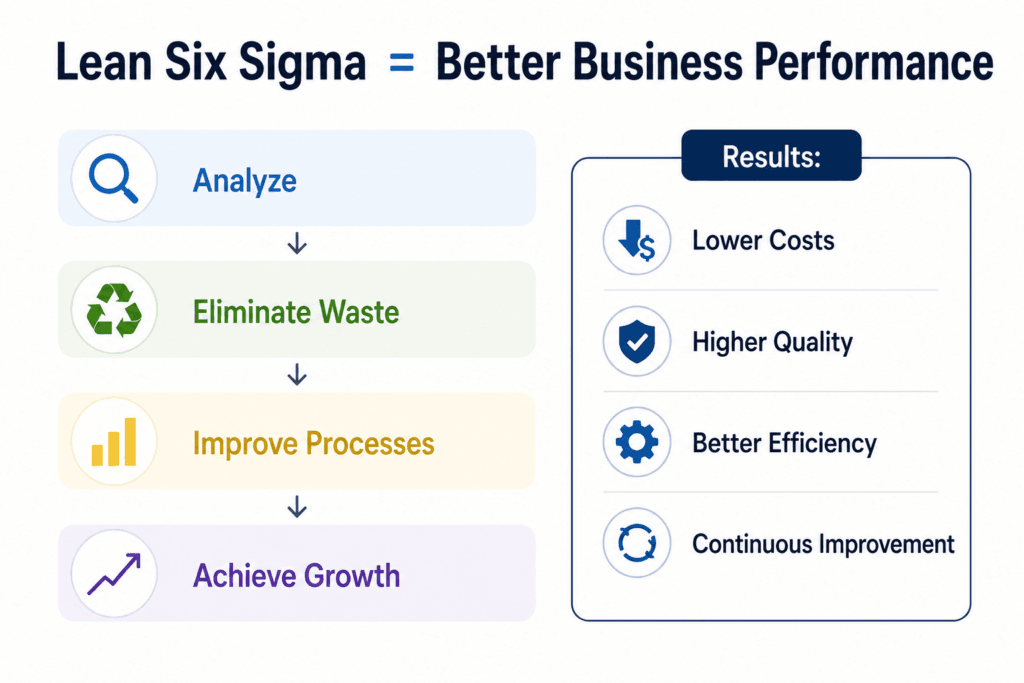
Among the most widely recognized approaches is Lean Six Sigma, a methodology that combines Lean principles for eliminating waste with Six Sigma’s data-driven techniques for reducing process variation. Together, these methods help organizations improve productivity, enhance quality, and create sustainable operational improvements.
For organizations seeking structured implementation, Lean Six Sigma consulting services provide the expertise needed to identify inefficiencies, prioritize improvement opportunities, and establish processes that support long-term Operational Excellence. In Egypt, where many businesses are expanding regionally and investing in modernization, adopting Lean Six Sigma can strengthen competitiveness while supporting sustainable growth.
Why Lean Six Sigma Matters for Egypt’s Growing Industries
Economic development has created new opportunities across multiple sectors in Egypt. At the same time, organizations must manage increasing operational complexity, fluctuating market conditions, evolving customer expectations, and stricter quality requirements.
Many organizations experience challenges such as:
- Process bottlenecks that slow operations
- High operational costs
- Rework and quality issues
- Long customer response times
- Inefficient resource utilization
- Inconsistent process performance across departments
Rather than addressing these issues individually, Lean Six Sigma focuses on improving the entire process through structured analysis and continuous improvement.
A Lean Six Sigma consultant for Egypt typically begins by understanding existing workflows, identifying root causes of inefficiencies, and developing measurable improvement initiatives aligned with business objectives.
Understanding Lean Six Sigma
Lean Six Sigma combines two complementary methodologies.
Lean: Eliminating Waste
Lean focuses on creating greater customer value while using fewer resources. It identifies activities that do not contribute value and works to eliminate them.
Common forms of waste include:
- Waiting time
- Excess inventory
- Unnecessary movement
- Overproduction
- Defects
- Excess processing
- Transportation inefficiencies
Removing these sources of waste often results in faster processes, lower operating costs, and improved customer satisfaction.
Six Sigma: Reducing Process Variation
Six Sigma emphasizes consistency and quality by using data to identify the root causes of defects and process variation. Its widely adopted DMAIC framework includes:
Define
Identify the business problem, customer requirements, and improvement objectives.
Measure
Collect reliable process data to understand current performance.
Analyze
Identify the factors contributing to inefficiencies or quality issues.
Improve
Implement targeted improvements based on analytical findings.
Control
Monitor performance to sustain improvements over time.
When combined, Lean and Six Sigma create a practical framework for Lean Six Sigma process optimization, enabling organizations to improve efficiency while maintaining quality.
How Lean Six Sigma Consulting Services Support Business Growth
Many organizations understand the importance of process improvement but face challenges in determining where to begin or how to sustain results. This is where Lean Six Sigma consulting services for Egypt can provide valuable guidance.
Assessing Existing Processes
The first step is developing a clear understanding of current operations. Consultants typically work with stakeholders to:
- Map critical business processes
- Identify delays and bottlenecks
- Analyze operational data
- Evaluate process maturity
- Prioritize improvement opportunities
This structured assessment helps organizations focus resources where improvements can deliver the greatest business impact.
Aligning Process Improvement with Business Goals
Successful process improvement is not simply about reducing costs.
Effective Lean Six Sigma business consulting initiatives for Egypt align operational improvements with broader organizational priorities such as:
- Improving customer satisfaction
- Supporting business expansion
- Enhancing product or service quality
- Increasing operational agility
- Reducing business risks
- Improving employee productivity
This alignment ensures that improvement efforts contribute directly to strategic objectives rather than isolated operational changes.
Building a Culture of Continuous Improvement
One of the long-term advantages of Lean Six Sigma is that it encourages organizations to move beyond one-time improvement projects.
Instead, businesses begin developing a culture where employees regularly identify opportunities to improve processes, solve operational problems, and measure performance using data.
This emphasis on Six Sigma continuous improvement methods supports sustainable Operational Excellence rather than temporary efficiency gains.
The Role of a Certified Lean Six Sigma Consultant
Organizations often ask whether internal teams alone can drive successful transformation.
While internal knowledge is essential, a certified Lean Six Sigma consultant for Egyptian businesses can bring structured methodologies, objective analysis, and experience facilitating cross-functional improvement initiatives.
Consultants help organizations establish measurable improvement frameworks, guide teams through analytical problem-solving techniques, and support change management throughout implementation.
Rather than relying on assumptions, improvement recommendations are typically based on process data, performance metrics, and root cause analysis, helping organizations make informed operational decisions.
Supporting Digital Transformation Through Process Improvement
Many organizations associate digital transformation with adopting new technologies. However, technology alone rarely resolves operational inefficiencies. If an existing process contains unnecessary steps or recurring bottlenecks, digitizing it may simply make those issues happen faster.
This is where Lean Six Sigma process improvement initiatives can add value. By analyzing and improving processes before or alongside technology implementation, Egyptian businesses can create stronger foundations for digital transformation.
For example, organizations may use process mapping and data analysis to simplify approval workflows, eliminate duplicate activities, or standardize procedures before introducing automation tools. This helps ensure that technology investments support measurable business outcomes rather than adding complexity to inefficient processes.
Choosing the Right Lean Six Sigma Consulting Services
Selecting the right consulting partner is an important step in any improvement initiative. Beyond technical knowledge, organizations should look for consultants who understand how process improvement aligns with broader business objectives and organizational change.
When evaluating Lean Six Sigma consulting services for Egypt, consider factors such as:
Industry Understanding
Different industries face different operational challenges. A consultant should understand the operational context in which recommendations will be implemented.
Structured Methodology
A well-defined methodology helps ensure that improvement initiatives are measurable and repeatable. Consultants should be able to explain how they assess current processes, identify priorities, measure performance, and monitor results over time.
Data-Driven Decision Making
Effective Lean Six Sigma projects rely on evidence rather than assumptions. Consultants should use process metrics, workflow analysis, and performance data to identify improvement opportunities and evaluate outcomes.
Collaboration with Internal Teams
Sustainable improvement depends on employee engagement. Consultants who work collaboratively with leadership and operational teams are better positioned to support knowledge sharing and encourage long-term adoption of continuous improvement practices.
Common Challenges During Lean Six Sigma Implementation
While Lean Six Sigma offers a structured framework for improvement, organizations may encounter challenges during implementation. Recognizing these early can help businesses plan more effectively.
Resistance to Change
Employees may be hesitant to adopt new processes, particularly if the purpose and expected benefits are unclear. Transparent communication, leadership support, and involving teams in improvement initiatives can help build engagement.
Limited Process Visibility
Organizations sometimes lack documented workflows or reliable operational data. Developing a clear understanding of current-state processes is often the first step before meaningful improvements can be introduced.
Focusing Only on Cost Reduction
Although reducing operational costs is a common objective, Lean Six Sigma is equally focused on improving quality, customer experience, and process consistency. A balanced approach typically delivers more sustainable business value.
Maintaining Improvements
Implementing changes is only part of the journey. Organizations also need mechanisms to monitor performance, review key metrics, and continuously refine processes to ensure improvements are maintained over time.
Why Continuous Improvement Creates Long-Term Value
One of the defining characteristics of Lean Six Sigma is its emphasis on continuous improvement rather than one-time projects.
As organizations grow, customer expectations change, regulations evolve, and markets become more competitive. Processes that perform well today may require adjustment in the future. Establishing a culture of ongoing evaluation and improvement helps businesses remain adaptable.
By embedding continuous improvement into everyday operations, organizations can:
- Improve operational resilience
- Respond more effectively to changing market conditions
- Enhance customer satisfaction through consistent service quality
- Support informed decision-making using performance data
- Encourage collaboration across departments
Over time, these incremental improvements can contribute to stronger operational performance and support sustainable business growth.
Conclusion
For organizations in Egypt, improving operational performance is no longer solely about reducing costs; it is about building efficient, scalable, and customer-focused processes that support long-term success.
Lean Six Sigma consulting services provide a structured, data-driven approach to identifying inefficiencies, improving quality, and fostering a culture of continuous improvement. Whether an organization operates in manufacturing, healthcare, logistics, financial services, or another sector, applying Lean and Six Sigma principles can help strengthen operational capabilities and support strategic growth.
Businesses considering process improvement initiatives should begin with a clear understanding of their current operations, measurable objectives, and a commitment to continuous learning. With a structured methodology and collaboration across teams, Lean Six Sigma can become an important foundation for Operational Excellence and sustainable business performance.
Frequently Asked Questions
How does Lean Six Sigma consulting services help Egypt firms?
Lean Six Sigma consulting services help organizations in Egypt identify inefficiencies, reduce waste, improve quality, and optimize business processes using structured, data-driven methodologies. These improvements can enhance operational performance, customer satisfaction, and long-term competitiveness.
Why hire a Lean Six Sigma consultant for Egypt businesses?
A Lean Six Sigma consultant provides an objective assessment of existing processes, applies proven improvement frameworks such as DMAIC, facilitates collaboration across teams, and helps organizations implement sustainable process improvements aligned with business goals.
What results can Lean Six Sigma consulting services deliver?
Results vary depending on an organization’s objectives and implementation approach, but common outcomes include improved process efficiency, reduced operational waste, enhanced quality, shorter cycle times, better resource utilization, and stronger operational consistency.
How does a Lean Six Sigma consultant improve processes in Egypt?
Consultants analyze current workflows, identify root causes of operational challenges, recommend process improvements based on data, and establish monitoring mechanisms to help organizations sustain performance improvements over time.
Is Lean Six Sigma consulting service worth it in Egypt?
For organizations seeking greater operational efficiency, improved quality, and scalable growth, Lean Six Sigma offers a structured framework that can support informed decision-making and continuous improvement. The value of any initiative depends on clearly defined objectives, leadership commitment, and effective implementation.
Contact us