Industrial efficiency has evolved from a competitive advantage into a core survival mechanism across modern markets. Across Egypt, manufacturing facilities face tightening margins, rising input costs, and escalating demands for sustainable operations. Industrial plants often grapple with hidden operational friction. This friction materializes as idle equipment, excessive inventory, defective output, and wasted raw materials.
Addressing these challenges requires moving away from reactive firefighting and adopting systematic methodologies. Implementing structured waste reduction initiatives in Egypt’s manufacturing industry allows facilities to recover lost capacity, protect bottom line profitability, and optimize resource allocation without heavy capital expenditure. Long-term industrial success relies heavily on changing the daily mindset of shop-floor operators and management alike, transforming how plants view raw materials, energy consumption, and human effort.
Understanding Operational Waste in Manufacturing
To eliminate waste effectively, production teams must first define what constitutes waste across the entire value chain. Grounded in continuous improvement principles, industrial waste is broadly categorized into non-value-adding activities that consume time, energy, and materials while adding zero value for the end customer.
- Overproduction: Manufacturing items before they are required by customer demand, tying up working capital, masking process flaws, and consuming valuable storage space.
- Waiting: Operators or machinery sitting idle due to material delays, unbalanced workflows, or unaddressed machine downtime.
- Transportation: Unnecessary movement of materials or components between workstations due to suboptimal factory layouts and poor facility planning.
- Processing Inefficiencies: Performing redundant steps or over-engineering components in ways that add no real value from the customer perspective.
- Inventory Excess: Accumulating excess raw materials, work-in-progress (WIP), or finished goods that create cash flow bottlenecks and hide underlying process instability.
- Motion Waste: Awkward physical movements, bending, reaching, or excessive searching for tools caused by poor workplace organization and workstation design.
- Defects: Output that fails to meet quality standards, resulting in scrap, costly rework, customer dissatisfaction, and increased unit costs.
Understanding these categories helps plant engineers pinpoint exactly where resources are leaking out of the production cycle. When teams visualize these wastes daily, cultural resistance to change diminishes, paving the way for targeted interventions.
Core Methods for Industrial Waste Reduction in Egypt
Achieving sustainable manufacturing industry waste reduction outcomes in Egypt depends on deploying proven, shop-floor-driven methodologies. Rather than purchasing expensive new machinery, plant leaders can leverage practical operational techniques to streamline production and maximize output.
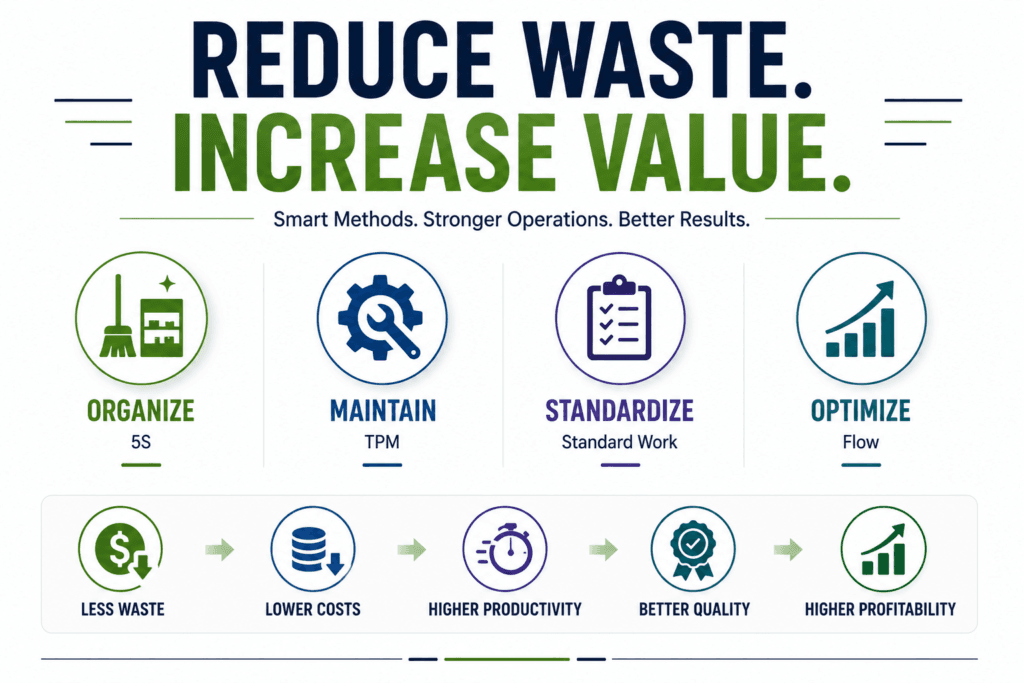
1. The 5S Workplace Organization Framework
Clutter, unorganized tooling, and messy shop floors create invisible operational costs that accumulate over every shift. Operators spend valuable time searching for components, which extends cycle times and reduces hourly output. The 5S framework provides a disciplined approach to environmental organization:
- Sort: Remove all unnecessary items, obsolete tools, and broken equipment from the workspace.
- Set in Order: Arrange essential tools and materials logically for immediate accessibility and clear visibility.
- Shine: Clean equipment and work areas regularly to spot minor anomalies, leaks, or wear before major breakdowns occur.
- Standardize: Establish clear visual rules, color coding, and checklists for maintaining the first three pillars consistently.
- Sustain: Embed these routines into daily operational culture through audits, leadership commitment, and habit formation.
2. Line Balancing and Flow Optimization
An unbalanced production line creates natural bottlenecks, where one slow workstation forces surrounding teams into unproductivity while building high work-in-progress inventory. Line balancing involves breaking down operations and redistributing tasks evenly across the available workforce. Equalizing cycle times smooths out product movement, eliminates waiting periods, and maximizes output using current staffing levels without adding stress to operators.
3. Process Standardization and Standard Work
Variability is the enemy of efficiency. When different operators complete the same task using varying methods, quality fluctuates, safety risks increase, and waste multiplies. Documenting the safest, fastest, and least wasteful way to complete a task creates a single source of truth. Displaying these standards visually at the workstation ensures consistent execution across shifts, making training faster and anomalies immediately noticeable.
4. Total Productive Maintenance (TPM)
Unplanned equipment failures disrupt delivery schedules and waste valuable manufacturing hours. Total Productive Maintenance shifts the maintenance paradigm from reactive repairs to proactive care. By empowering operators to perform basic cleaning, lubrication, and inspection routines, maintenance technicians can focus on advanced engineering reliability and root cause analysis. This partnership dramatically reduces micro-stoppages and extends machine life.
Strategic Advantages of Waste Elimination
Optimizing operations through structured waste reduction consulting manufacturing practices yields compounding benefits for industrial enterprises across Egypt:
- Lower Cost Per Unit: Eliminating scrap, rework, and material loss directly decreases operational expenses, improving margins even in volatile economic climates.
- Maximized Asset Utilization: Improving equipment reliability and reducing changeover times unlocks hidden capacity without expanding physical real estate or buying new assets.
- Enhanced Delivery Performance: Streamlined workflows shorten lead times, ensuring consistent on-time delivery for regional and international customers, which builds market trust.
- Stronger Environmental Compliance: Minimizing resource waste aligns industrial output with broader ecological and sustainability expectations, reducing disposal fees and regulatory friction.
- Improved Employee Morale: Clean, organized, and balanced workspaces reduce physical fatigue and frustration, fostering a culture of ownership and active problem-solving among workers.
Frequently Asked Questions
How does waste reduction in the manufacturing industry help in Egypt?
Waste reduction helps Egyptian manufacturers combat inflationary pressures and rising input costs by optimizing local resource utilization. By removing inefficiencies, factories increase local output, improve product quality, and strengthen the competitiveness of Egypt’s industrial sector on a global scale.
Why is waste reduction in the manufacturing industry important in Egypt?
Many regional plants face margin compression due to macroeconomic fluctuations. Waste reduction provides a self-funding mechanism to protect profitability by converting internal process friction and idle capacity into productive output without requiring major capital expenditure.
What drives waste reduction in the manufacturing industry in Egypt?
Key drivers include the rising cost of raw materials, intense global competition, stringent customer delivery expectations, and a corporate shift toward sustainable, Lean operating models that emphasize resource conservation.
How can waste reduction in the manufacturing industry cut costs in Egypt?
Waste reduction eliminates expensive non-value-adding activities such as excessive inventory holding costs, scrap generation, machine downtime, and labor inefficiencies. By streamlining workflows, companies produce more value using fewer resources.
When should factories focus on waste reduction in Egypt?
Industrial facilities should treat waste reduction as a continuous daily practice rather than a one-time fix. However, factories must prioritize immediate waste audits when experiencing rising defect rates, frequent machine bottlenecks, delayed lead times, or compressed profit margins.
Contact us