Organizations across the Saudi energy sector operate in environments where operational consistency, coordination, and continuous improvement are essential to achieving reliable business performance. As operational priorities become more dynamic, Daily Work Management (DWM) is evolving from a routine management practice into a strategic system that supports better decision making, stronger collaboration, and greater operational visibility. By embedding structured daily routines into everyday operations, organizations can strengthen execution, improve responsiveness, and build a culture of continuous improvement that supports long-term Operational Excellence.
Key Takeaways
- Daily Work Management is becoming a strategic management system for improving operational performance.
- Standardized daily routines strengthen communication, accountability, and operational consistency.
- Better operational visibility enables faster and more informed decision making.
- Leadership engagement and employee collaboration remain essential for long-term success.
- Continuous improvement will play an increasingly important role in shaping the future of Daily Work Management.
Why Daily Work Management Matters in the Saudi Energy Sector
Organizations in the Saudi energy sector manage complex operations that require consistent execution, effective communication, and disciplined performance management. Maintaining operational reliability depends not only on well-designed processes but also on how effectively teams manage daily activities.
Without structured management routines, organizations may experience communication gaps, delayed issue resolution, inconsistent follow up, and reduced operational visibility. Over time, these challenges can affect productivity, coordination, and continuous improvement efforts.
Daily Work Management provides a practical framework that helps Saudi Arabia organizations align daily priorities, improve collaboration, and strengthen operational discipline while supporting broader Operational Excellence strategies in KSA.
How Daily Work Management Is Evolving
Traditional Daily Work Management focused primarily on reviewing operational performance and addressing immediate issues.
Today, organizations are expanding their role to support broader business objectives by improving collaboration, strengthening accountability, and creating greater transparency across operations.
Rather than functioning as a standalone management activity, Lean Daily Management is becoming an integral part of how organizations coordinate work, manage performance, and drive continuous improvement.
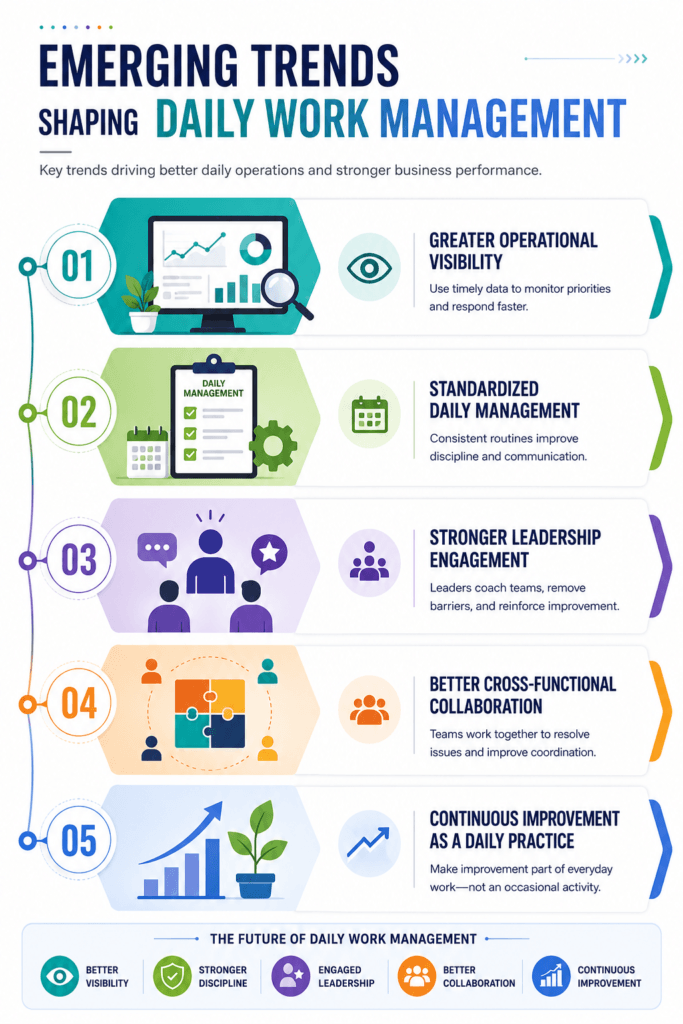
Emerging Trends Shaping Daily Work Management
Greater Operational Visibility
Organizations increasingly rely on timely operational information to support daily decision making.
Integrated performance dashboards and visual management practices help leaders monitor priorities, identify operational issues, and coordinate improvement activities more effectively.
Improved visibility also enables teams to respond more quickly to changing operational conditions.
Standardized Daily Management
As organizations continue to improve operational performance, standardized management routines are becoming increasingly important.
Implementing standardized DWM Operations helps establish consistency in daily reviews, performance discussions, issue tracking, and follow up activities across multiple teams.
This consistency strengthens operational discipline while improving communication throughout the organization.
Stronger Leadership Engagement
The future of Daily Work Management depends on active leadership participation.
Leaders are increasingly expected to coach teams, facilitate problem solving, remove operational barriers, and reinforce continuous improvement rather than simply review performance metrics.
Visible leadership engagement helps build accountability while encouraging greater collaboration across the organization.
Better Cross Functional Collaboration
Operational Excellence requires departments to work together rather than operate independently.
Daily Work Management encourages regular communication between teams, enabling organizations to resolve issues more efficiently and improve coordination across business functions.
This collaborative approach supports faster decision making while strengthening organizational alignment.
Continuous Improvement as a Daily Practice
Continuous improvement is becoming more closely integrated into everyday operations.
Organizations are encouraging employees to identify improvement opportunities during routine work, discuss ideas during daily reviews, and implement practical changes that strengthen operational performance over time.
Embedding improvement into daily management routines supports long-term Operational Excellence while creating a culture of learning and adaptability.
The Growing Role of Daily Work Management in Operational Excellence
As organizations continue to strengthen operational capabilities, Daily Work Management is becoming an essential component of sustainable performance improvement.
Rather than relying only on periodic improvement initiatives, organizations are using structured daily management routines to create consistent operational discipline and reinforce organizational objectives.
Key areas where Daily Work Management supports Operational Excellence include:
- Improving communication across teams
- Increasing operational visibility
- Strengthening accountability
- Supporting faster issue resolution
- Aligning daily priorities with business objectives
- Reinforcing continuous improvement practices
Together, these capabilities help organizations build more resilient and responsive operations.
Best Practices for Preparing for the Future
Strengthen Standardized Management Systems
Consistent daily routines create the foundation for long-term Operational Excellence.
Improve Leadership Capability
Leaders should actively support coaching, collaboration, and continuous improvement during daily management activities.
Increase Operational Visibility
Accessible operational information enables faster decisions and improves coordination across teams.
Encourage Employee Participation
Employees should be empowered to identify operational issues and contribute improvement ideas during daily reviews.
Embed Continuous Improvement into Everyday Operations
Organizations that make improvement part of routine management are better positioned to sustain operational performance over time.
This approach reflects the principles of Lean Daily Work, where Operational Excellence is achieved through disciplined execution and ongoing refinement.
Common Challenges for the Future
Maintaining Consistency Across Operations
As organizations grow, maintaining standardized management practices becomes increasingly important.
Sustaining Employee Engagement
Daily Work Management depends on active participation from employees and leaders alike.
Balancing Standardization with Flexibility
Organizations must establish consistent routines while remaining adaptable to changing operational priorities.
Maintaining Improvement Momentum
Continuous improvement requires regular review, leadership commitment, and structured follow up to ensure improvements are sustained.
Conclusion
The future of Daily Work Management in the Saudi energy sector will be shaped by stronger operational discipline, greater collaboration, and a deeper commitment to continuous improvement. As organizations continue to strengthen operational excellence, Daily Work Management will evolve from a routine management practice into a strategic capability that supports better execution and more informed decision making.
By establishing standardized management routines, improving operational visibility, encouraging leadership engagement, and embedding continuous improvement into everyday work, organizations can build resilient operations that are prepared to meet future business challenges while sustaining long-term performance.
Frequently Asked Questions
What is the role of Daily Work Management in the Saudi energy sector?
Daily Work Management helps organizations improve operational consistency, strengthen communication, increase accountability, and support continuous improvement through structured daily management routines.
How is Daily Work Management evolving in Saudi Arabia?
Organizations are expanding Daily Work Management beyond routine performance reviews by integrating stronger leadership practices, better operational visibility, standardized management systems, and continuous improvement into daily operations.
Why is Daily Work Management important for Operational Excellence?
Daily Work Management strengthens operational discipline by improving communication, aligning priorities, monitoring performance, and enabling faster problem resolution.
What are the key trends shaping the future of Daily Work Management?
Key trends include greater operational visibility, standardized daily management, stronger leadership engagement, improved cross functional collaboration, and continuous improvement as part of everyday work.
How can organizations prepare for the future of Daily Work Management?
Organizations should establish standardized daily routines, strengthen leadership capability, improve operational visibility, encourage employee participation, and continuously refine management practices to support long-term Operational Excellence.