
Manufacturing and industrial organizations across Saudi Arabia are operating in an environment shaped by evolving business priorities, Operational Excellence initiatives, and increasing expectations for efficiency and agility. To remain competitive, organizations must do more than improve processes or adopt new technologies. They must also strengthen leadership, align teams, and build cultures that embrace continuous improvement. This highlights the growing importance of organizational change, enabling businesses to adapt effectively, improve performance, and create a strong foundation for long term success.
Key Takeaways
- Organizational change helps businesses adapt to changing operational and market requirements.
- Successful transformation requires alignment between leadership, people, processes, and organizational goals.
- A structured change management strategy improves employee engagement and supports sustainable business transformation.
- Organizational culture plays a critical role in determining the success of change initiatives.
- Continuous improvement enables organizations to sustain change and strengthen long-term operational performance.
Why Organizational Change Matters
Organizations continually evolve to meet changing business needs, improve operational performance, and remain competitive. While process improvements and technology investments contribute to business growth, they deliver lasting value only when supported by organizational alignment and effective change management.
The importance of organizational change lies in its ability to help organizations adapt without disrupting business continuity. It enables businesses to improve collaboration, strengthen decision making, establish more effective ways of working, and create an environment where improvement becomes part of everyday operations.
For manufacturing and industrial organizations across Saudi Arabia, organizational change is becoming an essential component of long-term business transformation and Operational Excellence.
What Is Organizational Change?
Organizational change refers to the structured process of preparing, implementing, and sustaining changes that improve how an organization operates.
These changes may involve leadership practices, organizational structures, business processes, communication methods, performance management systems, or workplace culture.
Rather than focusing only on individual improvements, organizational change management in Saudi Arabia emphasizes aligning people, processes, and business objectives to support sustainable organizational performance.
Successful organizational change is not simply about introducing new initiatives. It is about ensuring those initiatives are understood, accepted, and consistently applied across the organization.
Key Drivers of Organizational Change in Saudi Manufacturing and Industrial Companies
Operational Excellence
Organizations are continually seeking opportunities to improve efficiency, strengthen operational consistency, and eliminate unnecessary complexity.
Many Operational Excellence strategies in KSA rely on organizational change to ensure that new processes, management practices, and improvement initiatives become part of everyday operations.
Business Transformation
As organizations evolve, they often need to rethink how they operate, collaborate, and deliver value.
Business transformation in Saudi Arabia requires changes that extend beyond systems or processes to include leadership, organizational structures, and employee engagement.
Organizational Growth
Growth introduces new operational challenges, additional management responsibilities, and increased organizational complexity.
Organizational change helps businesses establish governance, clarify responsibilities, and strengthen coordination across teams as they expand.
Continuous Improvement
Organizations committed to continuous improvement regularly evaluate existing practices and identify opportunities to strengthen operational performance.
Embedding continuous improvement into organizational culture helps ensure that change becomes an ongoing capability rather than an occasional initiative.
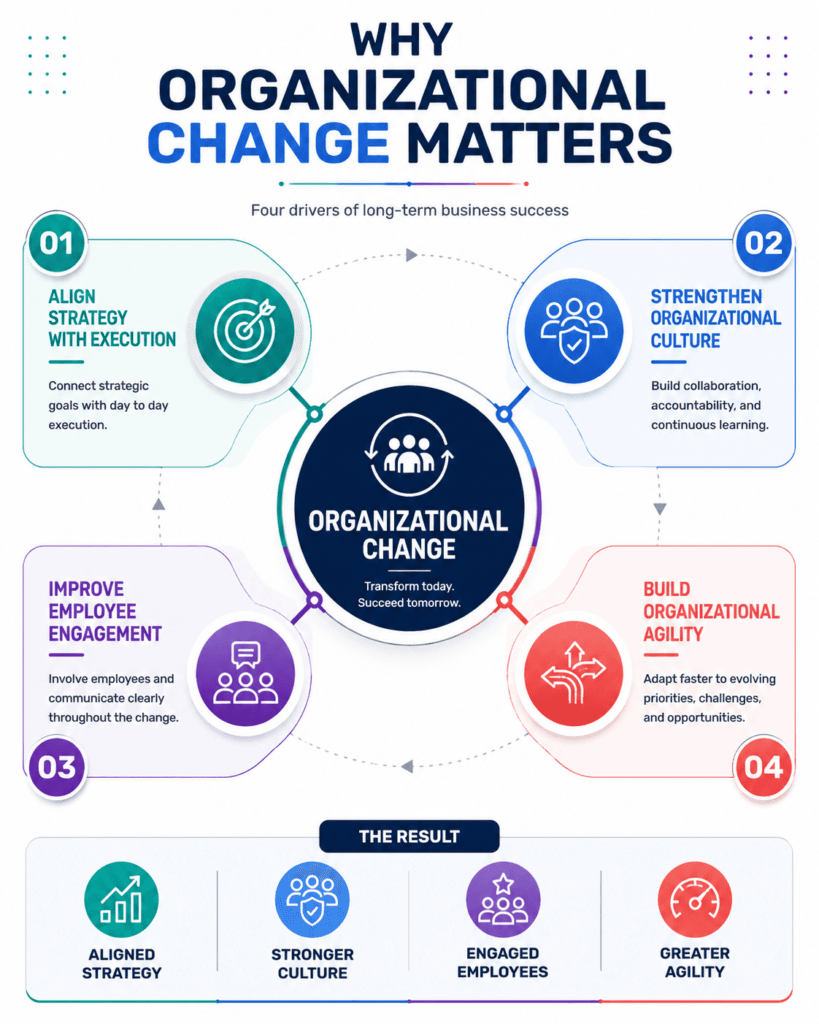
The Importance of Organizational Change for Long-Term Success
Aligning Strategy with Execution
Business strategies achieve meaningful results only when employees understand organizational priorities and work toward shared objectives.
Organizational change creates the alignment needed to connect strategic goals with day to day execution.
Strengthening Organizational Culture
A positive organizational culture supports collaboration, accountability, and continuous learning.
Developing a strong organizational culture in Saudi Arabia enables organizations to encourage employee participation while supporting sustainable business transformation.
Improving Employee Engagement
Employees are more likely to support organizational change when they understand its purpose and have opportunities to contribute throughout the transformation process.
Clear communication, leadership involvement, and structured feedback help strengthen engagement while reducing uncertainty.
Building Organizational Agility
Organizations that embrace structured change are better prepared to respond to evolving business priorities, operational challenges, and new opportunities.
This adaptability helps businesses remain resilient in an increasingly dynamic environment.
Building an Effective Organizational Change Strategy
Successful transformation depends on a structured and well-planned approach.
Establish a Clear Vision
Leadership should communicate why change is necessary and how it supports long-term business objectives.
A shared vision helps employees understand the purpose of transformation while creating organizational alignment.
Assess Organizational Readiness
Understanding current capabilities, organizational culture, leadership readiness, and existing business processes provides a stronger foundation for successful implementation.
Engage Leadership
Leaders play a critical role in guiding organizational change.
Visible leadership commitment helps build trust, encourage participation, and reinforce accountability throughout the organization.
Involve Employees
Successful organizational change depends on employee involvement rather than top down implementation alone.
Encouraging collaboration, feedback, and participation strengthens ownership while improving adoption.
Monitor Progress
Organizations should regularly evaluate progress, review performance, and refine implementation plans to ensure change initiatives remain aligned with business objectives.
A structured change management process supports continuous learning while helping organizations sustain improvements over time.
The Role of Organizational Culture During Change
Organizational culture influences how employees respond to new initiatives, leadership decisions, and operational improvements.
Cultures that encourage collaboration, learning, and continuous improvement are generally better positioned to support successful transformation.
Developing a culture that values communication, accountability, and adaptability enables organizations to strengthen change readiness while supporting long-term business success.
Rather than treating culture as a separate initiative, organizations should integrate cultural transformation into broader business and operational improvement efforts.
Best Practices for Managing Organizational Change
Communicate Consistently
Regular communication helps employees understand organizational priorities, implementation progress, and expected outcomes.
Align Leadership
Leadership teams should communicate consistent messages while actively supporting organizational change initiatives.
Build Cross Functional Collaboration
Transformation is most successful when departments work together toward common organizational objectives.
Reinforce Continuous Improvement
Organizations should encourage employees to identify opportunities for improvement throughout the change journey.
Review and Adapt
Organizational change should remain flexible enough to respond to new information, operational priorities, and business requirements.
Common Pitfalls to Avoid
Treating Change as a One-Time Initiative
Successful transformation requires continuous evaluation and reinforcement rather than isolated projects.
Limited Leadership Involvement
Without active leadership participation, organizational change may lose momentum and employee confidence.
Poor Communication
Unclear messaging can create uncertainty and reduce employee engagement.
Ignoring Organizational Culture
Change initiatives are more likely to succeed when they align with organizational values while encouraging positive cultural development.
Conclusion
The importance of organizational change continues to grow as manufacturing and industrial organizations across Saudi Arabia strengthen Operational Excellence, improve business performance, and prepare for future opportunities. Successful transformation requires more than new processes or technologies. It depends on leadership alignment, employee engagement, organizational culture, and a structured approach to change management.
By developing a clear organizational change strategy, encouraging collaboration, and embedding continuous improvement into everyday operations, businesses can strengthen resilience, improve execution, and create a solid foundation for sustainable long-term success.
Frequently Asked Questions
Why is the importance of organizational change growing?
Organizations face evolving business requirements, increasing operational complexity, and greater expectations for agility. Organizational change helps businesses adapt while improving performance and supporting sustainable growth.
What is organizational change management?
Organizational change management is a structured approach to planning, implementing, and sustaining changes that improve organizational performance while supporting employees throughout the transformation process.
How does organizational change support manufacturing and industrial companies?
Organizational change helps strengthen leadership alignment, improve operational consistency, enhance collaboration, support continuous improvement, and prepare organizations for long-term business transformation.
What role does organizational culture play in organizational change?
Organizational culture influences employee engagement, collaboration, adaptability, and the successful adoption of new ways of working during change initiatives.
How can organizations build an effective organizational change strategy?
An effective strategy includes a clear vision, leadership commitment, employee engagement, structured communication, performance monitoring, and continuous improvement to ensure sustainable transformation.