
Organizational change is essential for businesses seeking to improve performance, strengthen Operational Excellence, and adapt to evolving business priorities. However, implementing change is often more challenging than planning it. Even well designed transformation initiatives can face resistance, communication gaps, and inconsistent execution if they are not supported by a structured approach. Understanding the common challenges of organizational change enables organizations across Saudi Arabia to develop effective strategies that strengthen leadership alignment, engage employees, and sustain long-term business transformation.
Key Takeaways
- Organizational change requires leadership commitment, structured planning, and effective communication.
- Resistance to change is one of the most common barriers to successful transformation.
- Organizational culture plays a significant role in how employees adapt to change.
- Employee engagement and clear governance improve the likelihood of successful implementation.
- Continuous improvement helps organizations sustain change long after implementation.
Why Organizational Change Can Be Challenging
Organizational change affects people, processes, leadership practices, and the way work is carried out across the business. As a result, successful transformation depends on more than introducing new initiatives or business strategies.
The importance of organizational change lies in helping organizations manage these transitions in a structured and sustainable way. Without a clear strategy, even well intentioned improvements may struggle to achieve lasting results.
Organizations implementing organizational change management in Saudi Arabia often encounter similar challenges regardless of the size or complexity of the transformation.
Common Challenges of Organizational Change
Resistance to Change
Employees may be uncertain about new ways of working, changes in responsibilities, or evolving organizational priorities.
Resistance does not always indicate opposition to change itself. It often reflects a lack of clarity, limited involvement, or concerns about how change will affect daily work.
Organizations that involve employees early, communicate openly, and encourage participation are more likely to build trust and support successful implementation.
Limited Leadership Alignment
Organizational change requires visible and consistent leadership.
When leaders communicate different priorities or demonstrate varying levels of commitment, employees may receive mixed messages that slow adoption and reduce confidence in the transformation.
Strong leadership alignment helps reinforce organizational objectives while maintaining momentum throughout the change process.
Communication Gaps
Communication is one of the most important elements of successful organizational change.
Without regular updates, employees may misunderstand the purpose of change, become uncertain about expectations, or lose confidence in the implementation process.
Organizations should establish structured communication plans that provide clear, timely, and consistent information throughout the transformation journey.
Organizational Culture
Every organization has established values, behaviors, and ways of working.
If change initiatives do not consider organizational culture in Saudi Arabia, employees may find it difficult to adopt new practices or embrace different ways of working.
Developing a culture that values collaboration, learning, and continuous improvement strengthens organizational readiness for change.
Unclear Roles and Responsibilities
Transformation initiatives often involve multiple teams working toward shared objectives.
Without clearly defined responsibilities, implementation efforts can become inconsistent, resulting in duplicated work, delayed decisions, and reduced accountability.
A structured governance framework helps clarify ownership while supporting more effective execution.
Maintaining Momentum
Many organizations begin transformation initiatives with enthusiasm but find it difficult to sustain progress over time.
As priorities shift, regular reviews become less frequent and improvement activities lose visibility.
Embedding continuous improvement into everyday management practices helps organizations maintain focus while reinforcing long-term change.
The Role of Leadership in Overcoming Change Challenges
Leadership plays a central role in guiding organizational transformation.
Successful leaders do more than approve change initiatives. They communicate the vision, engage employees, remove barriers, and reinforce desired behaviors throughout the implementation process.
Organizations pursuing Operational Excellence strategies in KSA benefit from leadership teams that actively support collaboration, accountability, and continuous improvement.
Visible leadership participation also strengthens trust while helping employees understand how organizational change contributes to broader business objectives.
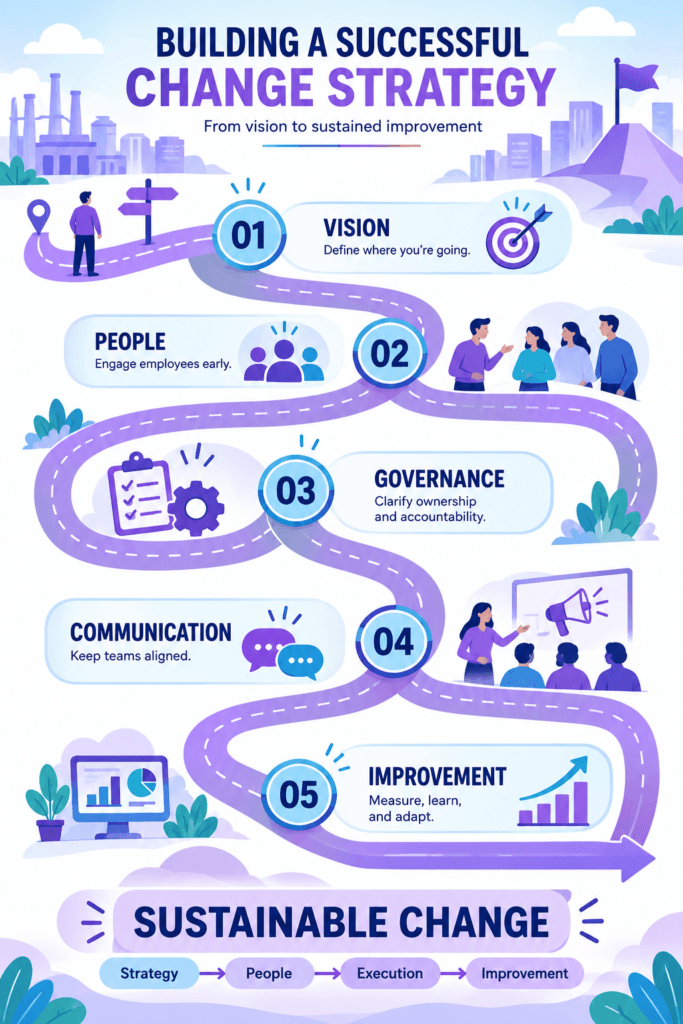
Building a Structured Organizational Change Strategy
A structured organizational change strategy for Saudi Arabia provides organizations with a clear framework for managing transformation while reducing implementation risks.
Key elements include:
Defining a Clear Vision
Employees should understand why change is necessary and how it supports organizational goals.
Engaging Employees Early
Participation encourages ownership while reducing uncertainty during implementation.
Establishing Strong Governance
Clearly defined responsibilities, decision making processes, and regular progress reviews improve accountability.
Supporting Continuous Communication
Frequent communication helps maintain alignment and reinforces organizational priorities.
Monitoring Progress
Organizations should review implementation regularly, gather feedback, and refine their approach as business needs evolve.
A structured change management process enables organizations to respond effectively while maintaining focus on long-term objectives.
Best Practices for Managing Organizational Change
Build Leadership Commitment
Leaders should consistently support organizational change through visible participation and regular communication.
Strengthen Organizational Culture
Encourage collaboration, learning, and continuous improvement to improve organizational readiness.
Prioritize Employee Engagement
Employees should have opportunities to ask questions, share feedback, and contribute to improvement initiatives.
Focus on Continuous Improvement
Successful transformation is sustained through ongoing evaluation and refinement rather than one-time implementation.
Align Change with Business Strategy
Organizational change should support broader business priorities while strengthening operational performance and organizational capability.
This integrated approach supports business transformation across Saudi Arabia by connecting strategic objectives with effective execution.
Looking Ahead
The pace of organizational change is expected to continue as businesses strengthen Operational Excellence, improve organizational agility, and respond to evolving market requirements.
Organizations that invest in leadership capability, structured governance, employee engagement, and continuous improvement will be better positioned to manage future transformation initiatives successfully.
By developing stronger organizational capabilities today, businesses can improve resilience while preparing for future opportunities.
Conclusion
Organizational change presents challenges, but it also creates opportunities for businesses to improve performance, strengthen organizational capability, and build long-term resilience. The most successful organizations recognize that transformation depends not only on strategy but also on leadership, communication, employee engagement, and organizational culture.
For organizations across Saudi Arabia, adopting a structured approach to organizational change management helps reduce implementation challenges while supporting sustainable business transformation. By addressing common barriers proactively and embedding continuous improvement into everyday operations, organizations can strengthen Operational Excellence and achieve lasting organizational success.
Frequently Asked Questions
What are the biggest challenges of organizational change?
Common challenges include resistance to change, limited leadership alignment, communication gaps, organizational culture, unclear responsibilities, and sustaining improvement over time.
Why is organizational change important for organizations in Saudi Arabia?
Organizational change helps organizations improve operational performance, strengthen business resilience, support continuous improvement, and adapt to evolving business requirements.
How can organizations overcome resistance to change?
Organizations can reduce resistance by communicating clearly, involving employees early, providing leadership support, and creating opportunities for participation throughout the transformation process.
What role does organizational culture play in organizational change?
Organizational culture influences how employees respond to change, collaborate with others, and adopt new ways of working. A positive culture supports more effective and sustainable transformation.
How does a structured change management process improve organizational change?
A structured change management process provides clear governance, defined responsibilities, consistent communication, and regular progress reviews, helping organizations implement change more effectively while sustaining long-term improvements.