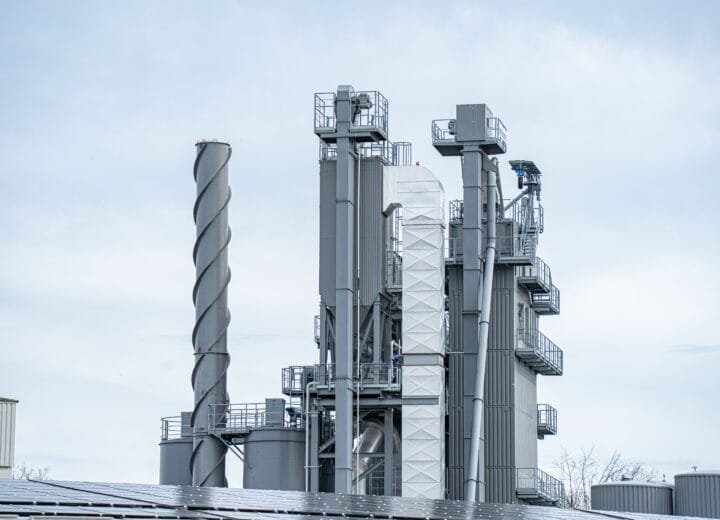
Energy represents a critical operating input for large-scale manufacturing organizations and industrial plants across the Kingdom of Saudi Arabia. Optimizing how energy is consumed supports lower overall operating costs, improves resource utilization, and drives stronger operational performance.
However, effective cost reduction in manufacturing that Saudi Arabia organizations pursue should never rely on cutting energy use at the direct expense of plant productivity or process reliability. The overarching objective is to identify unnecessary resource consumption, improve equipment and process performance, and build a more efficient operating model. Energy efficiency is therefore deeply connected with operational efficiency in KSA manufacturing, waste reduction, maintenance discipline, smart automation, and continuous improvement.
Why Energy Efficiency Matters for Manufacturing Operations
Energy consumption is influenced by far more than the sheer volume of production taking place on the factory floor. It is directly impacted by equipment health, operating practices, process design, idle periods, maintenance routines, production scheduling, and asset utilization.
For instance, industrial equipment that remains active during periods of low or zero production consumes power without generating equivalent output. Similarly, poorly maintained machinery often requires significantly more energy to perform standard tasks.
This means energy efficiency must be approached as a core operational improvement opportunity rather than a passive utility management exercise. The pivotal question for plant managers is:
“Where is energy being consumed without creating sufficient operational value?”
Answering that single question unlocks substantial opportunities for combined energy and cost optimization.
10 Strategic Approaches to Energy Efficiency and Cost Reduction
1. Establish an Energy Consumption Baseline
The first step in any structured energy efficiency initiative is mapping current consumption patterns. Without a solid baseline, measuring whether an intervention produced a genuine financial or operational result becomes impossible.
Organizations should analyze energy consumption across relevant dimensions:
- Individual production processes
- Heavy machinery and equipment classes
- Specific operating shifts and time windows
- Core production activities and facilities
- Support functions and auxiliary systems
The depth of analysis should mirror the plant’s operational structure. Energy data should then be evaluated alongside core operational metrics, such as output volume, equipment utilization, downtime hours, and process cycle times, to build an accurate picture of efficiency.
2. Identify Energy Waste in Processes
Energy waste occurs when equipment operates unnecessarily or when manufacturing processes lack efficient resource design. Common examples include heavy machinery running during idle shift periods, unoptimized process temperatures, excessive cycle times, and losses stemming from deferred maintenance.
A rigorous process review helps isolate these opportunities, bridging the gap between general waste reduction and energy efficiency. Eliminating unnecessary process steps cuts both cycle time and power consumption, aligning resource use closely with actual output.
3. Improve Equipment Efficiency
Equipment condition directly influences energy performance. Aging, unmaintained, or poorly calibrated machinery demands more power to deliver expected outputs. Plant maintenance teams contribute significantly to energy savings by investigating equipment anomalies associated with rising power draws.
Key questions for maintenance teams include:
- Is the machinery operating according to original design specifications?
- Are there recurring performance anomalies or thermal losses?
- Does energy consumption spike as mechanical wear increases?
- Are control settings and operating speeds appropriate?
The goal is elevating equipment reliability and energy efficiency simultaneously rather than treating maintenance purely as an expense line.
4. Reduce Idle and Unnecessary Operating Time
A practical area for immediate savings involves equipment that continues running when productive work is paused. This often results from legacy operating routines, inflexible shift schedules, or poor visibility into machine status.
Comparing equipment active windows against actual production schedules exposes major inefficiencies. Correcting these gaps through better scheduling and clearer operating procedures represents a straightforward application of operational cost reduction that Saudi Arabia manufacturing plants can implement rapidly.
5. Connect Energy Use With Production Performance
Tracking total utility bills provides little insight into true operational efficiency, as overall consumption naturally fluctuates with production volume. A meaningful analysis evaluates energy consumption relative to actual output.
Organizations should track energy metrics alongside operational indicators:
- Production output and labor productivity
- Equipment utilization rates and cycle times
- Unplanned downtime and quality yield
- End-to-end process lead times
This comparison separates genuine efficiency gains from normal volume-driven shifts in utility usage.
6. Use OEE to Investigate Equipment Losses
Overall Equipment Effectiveness (OEE) serves as a powerful diagnostic framework. By breaking performance down into availability, performance speed, and quality yield, teams uncover operational losses that drain resources.
For instance, frequent unplanned stoppages trigger repeated high-power start-up cycles. Reduced operating speeds prolong power-on durations, while quality defects necessitate energy-intensive reprocessing. Using OEE to track these root losses uncovers hidden energy optimization pathways.
7. Improve Production Scheduling
Inefficient production scheduling drives unnecessary equipment start-ups, complex changeovers, and extended idle running periods. Aligning sequencing with actual customer demand ensures machinery operates only when required.
Reviewing production sequences, batch sizes, and inter-process dependencies minimizes idle energy burn, integrating energy conservation seamlessly into standard workflow management.
8. Reduce Rework and Scrap
Quality defects multiply resource consumption. When an output fails inspection and requires repair, sorting, or material replacement, the plant expends additional labor, machine hours, and energy.
Root cause analysis ensures defects are addressed at the source, whether originating from raw materials, operator methods, or machine tolerances, simultaneously lowering quality costs and energy waste.
9. Use Automation and Digital Monitoring Selectively
Digital technologies offer real-time visibility into power consumption and machine health. Automated data logging eliminates manual record-keeping errors, while advanced analytics flag abnormal energy spikes before they escalate.
However, technology must follow a defined operational problem. Before investing in smart monitoring systems, plants must clarify what data is missing, what decisions the data will drive, and how ROI will be measured.
10. Build Energy Efficiency Into Continuous Improvement
Energy optimization cannot remain a one-time project. As equipment ages and product mixes shift, performance drifts. Integrating energy metrics into Lean and Operational Excellence frameworks ensures continuous monitoring through a structured improvement cycle: Measure Identify Analyze Improve Standardize Monitor.
How Lean Supports Energy Cost Reduction
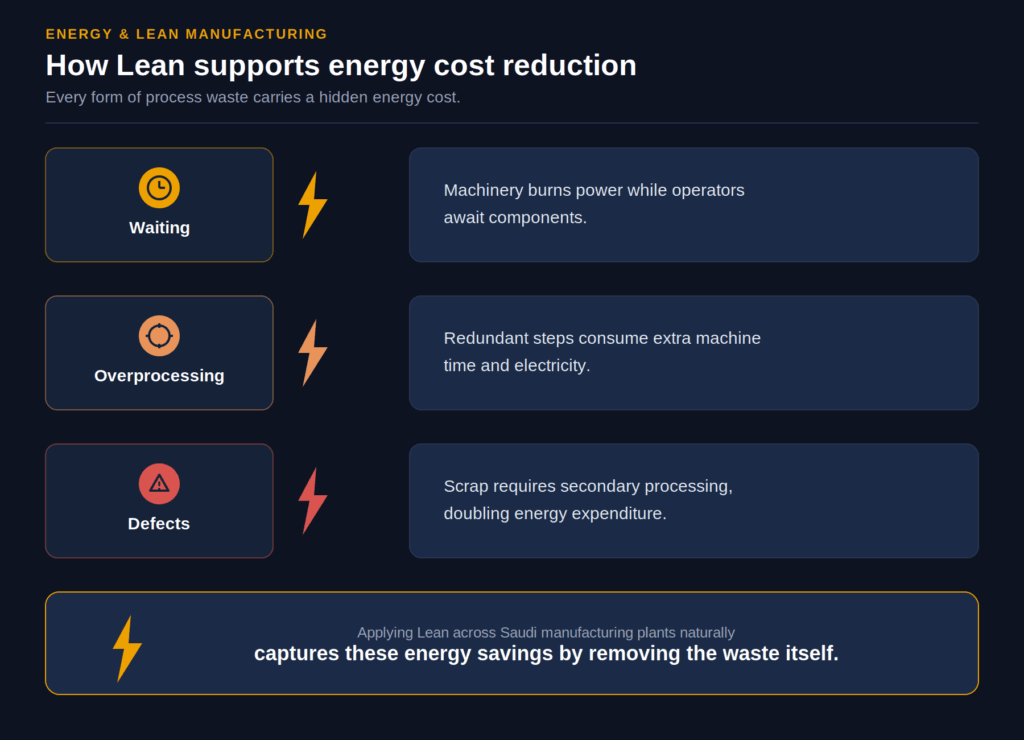
Lean methodologies and energy efficiency share a natural synergy because most forms of process waste inherently consume power:
- Waiting: Machinery burns power while operators await components.
- Overprocessing: Redundant steps consume extra machine time and electricity.
- Defects: Scrap requires secondary processing, doubling energy expenditure.
Applying Lean principles to manufacturing plants across Saudi Arabia naturally captures these energy-saving opportunities by eliminating non-value-adding activities.
Energy Efficiency and Green Manufacturing
Sustainability and operational performance go hand in hand. Enterprises evaluating cost savings through green energy adoption in Saudi industry must anchor their initiatives in operational feasibility. The focus should always remain on measurable, sustainable improvements that enhance business resilience without sacrificing output quality.
Common Energy Cost Reduction Mistakes
- Focusing Only on Total Consumption: Failing to adjust energy metrics relative to production output.
- Cutting Energy Without Analyzing Productivity: Forcing shutdowns that disrupt upstream or downstream workflow.
- Ignoring Preventative Maintenance: Allowing degraded machinery to silently inflate power consumption.
- Treating Tech as a Silver Bullet: Installing digital monitoring systems without fixing underlying process flaws.
- Neglecting Quality Losses: Overlooking the heavy power footprint of scrap and rework loops.
- Failing to Standardize Gains: Letting energy performance slip back after initial project completion.
Conclusion
Energy efficiency forms a critical pillar of the operational cost reduction strategies that Saudi Arabian industrial organizations pursue. The strongest financial returns emerge from optimizing the processes behind power consumption rather than focusing strictly on utility bills. By eliminating waste, enhancing asset reliability, and integrating energy metrics into continuous improvement programs, plants achieve sustainable, long-term competitiveness.
Frequently Asked Questions
How can Saudi manufacturers reduce energy waste?
Manufacturers minimize energy waste by improving equipment utilization, eliminating idle running time, resolving maintenance backlogs, optimizing production scheduling, reducing scrap, and monitoring energy use against output.
How does energy efficiency contribute to cost reduction?
Energy efficiency cuts unnecessary resource consumption, lowering operational utility expenses while simultaneously improving asset health and manufacturing throughput.
How can Lean help reduce energy waste?
Lean frameworks eliminate operational waste; such as waiting, overprocessing, and defects; which directly reduces the energy wasted by inefficient factory workflows.
Can automation improve energy efficiency?
Yes, industrial automation improves energy efficiency by providing precise control over machine operating windows, preventing idle runtimes, and standardizing process speeds.
How should organizations measure energy efficiency improvements?
Firms measure success by establishing clear baselines and tracking energy consumption relative to operational outputs, productivity rates, OEE scores, and scrap metrics.